




Aerodynamics in Formula 1 is the study and management of how air flows around and under the car. This discipline has two primary, often competing, goals: generating downforce to push the tyres into the road and increasing cornering speed, while simultaneously minimising drag to allow the car to accelerate and achieve competitive top speeds.
Engineers dedicate significant effort to optimising the ratio between downforce and drag, as a car that produces more downforce for the same amount of drag will be faster across all sections of a circuit.
Aerodynamics and the generation of downforce in Formula 1
Downforce is a vertical aerodynamic force that pushes a Formula 1 car downwards onto the track surface. This force is generated as the car moves air over specially shaped surfaces, primarily the front wing, rear wing, and floor.
Modern F1 cars can generate several times their own weight in downforce at high speeds, which provides enormous lateral grip. This additional vertical load allows Grand Prix cars to maintain cornering speeds that would cause a standard road car to lose control.
The wings on an F1 car are designed like inverted aeroplane wings, meaning the curved surface faces downwards. Air accelerates underneath the wing element and moves more slowly above it, creating a pressure difference that pushes the car towards the track.
A significant amount of downforce is also generated by the car’s floor, particularly through the ground effect. This phenomenon occurs when the speed of the air flowing through the underside of the vehicle increases due to the reduced distance between the car’s bottom and the track.
The ground effect creates a low-pressure area underneath the car, effectively sucking it down onto the asphalt. This method of downforce generation is often more aerodynamically efficient than wings, as it can produce substantial downforce with less associated drag.
Understanding drag and its reduction in Formula 1 cars
Drag is the aerodynamic resistance a Formula 1 car encounters as it pushes through the air. This resistive force increases with the square of the car’s speed, making straight-line performance highly sensitive to the car’s aerodynamic slipperiness.


Drag is the sum of pressure and friction forces acting against the direction of travel. Pressure drag results from air stacking up in front of the car and separating behind it, while friction drag comes from the boundary layer scrubbing along the car’s bodywork.
The largest drag-producing components on an F1 car typically include the front and rear wings, the exposed wheels and tyres, cooling inlets and exits, and the shaped underfloor. Even the driver’s helmet and cockpit surround contribute to drag.
Teams constantly seek to improve aerodynamic efficiency, which is the ratio of downforce to drag. This involves generating more downforce with the least possible drag penalty.
From 2011 to 2025, Formula 1 cars featured a Drag Reduction System (DRS), which was a movable flap on the rear wing. When activated in designated zones, DRS would open the flap, reducing the wing’s surface area and thus decreasing drag to provide a temporary boost in straight-line speed for overtaking.
The evolution of aerodynamic components
Aerodynamics became a defining performance factor in Formula 1 in May 1968, with Graham Hill’s Lotus 49B featuring a front wing and a small rear spoiler at Monaco. Early wings led to significant safety and performance debates.
By 1969, FIA regulations mandated that wings be integrated into the bodywork and fixed in place. This marked one of the sport’s initial major regulatory responses to aerodynamic innovation.
The front wing is the first part of the car to interact with the air, playing a fundamental role in managing airflow over and around the entire vehicle. It generates between 25% and 40% of the car’s total downforce.
Front wings are multi-element designs, featuring flaps and endplates that fine-tune airflow management, optimise downforce, and reduce drag. These elements help guide air over the top and around the car’s sidepods, working in conjunction with the floor.
Barge boards, located between the front wheels and sidepods, manage the turbulent air produced by the front wheels. They guide and smooth airflow into the sidepods and can also feed air into the diffuser.
Sidepods house radiators and engine exhausts, with their profiles significantly varied to cool components and control underbody flow for downforce generation. The diffuser, at the rear of the car’s floor, is important for accelerating airflow out from under the car, enhancing the ground effect.
| Aerodynamic Component | Primary Function | Downforce Contribution | Drag Contribution |
|---|---|---|---|
| Front Wing | Manages initial airflow, generates front-end grip | 25-40% of total | Moderate |
| Rear Wing | Generates significant rear downforce, balances car | High | High |
| Floor / Diffuser | Exploits ground effect, creates low-pressure area | Largest contributor | Moderate (efficient) |
| Barge Boards / Turning Vanes | Manages turbulent airflow, guides air to rear | Indirect | Low |
| Sidepods | Houses cooling, controls underbody flow | Indirect | Moderate |
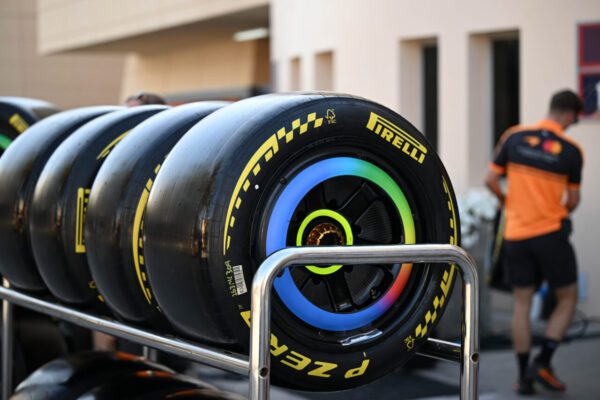
| Wheels and Tyres | Exposed elements create significant turbulence | None | High |
Driver seating position and aerodynamic efficiency
Formula 1 drivers adopt a highly reclined, almost lying-down position within the cockpit. Their backs are typically tilted roughly 30 to 40 degrees, with their feet positioned up near the front wheels.
This extreme seating posture is driven by aerodynamic considerations, safety, and vehicle dynamics. A lower seating position significantly reduces the car’s frontal area, which directly minimises aerodynamic drag.
Reducing the frontal area allows the car to slice through the air more efficiently, contributing to higher acceleration and top speed. Furthermore, this reclined position helps to lower the car’s overall centre of gravity.
A lower centre of gravity reduces body roll and weight transfer during aggressive directional changes, enhancing stability and cornering performance. The precise seating position is also critical for a driver’s ability to feel the car’s movements and maintain control at extreme speeds.
Aerodynamics, mechanical resistance, and top speed
Achieving high top speeds in Formula 1 is a complex interplay of engine performance, weight distribution, and aerodynamic efficiency. Aerodynamic drag is the dominant resistive force acting on an F1 car at speeds above approximately 200 km/h.
The power required to overcome aerodynamic drag scales with the cube of velocity. This means that doubling a car’s speed makes drag four times greater and requires eight times more power to push through the air.
While downforce does not incur a direct power cost as it acts perpendicular to the direction of motion, it is inextricably linked to drag. Every aerodynamic component designed to generate downforce also contributes to drag.
Teams must find the optimal balance between downforce for cornering grip and minimal drag for straight-line speed, tailoring their aerodynamic packages to the specific demands of each circuit. Tracks with long straights, like Monza, demand lower drag setups, while twisty circuits such as Monaco require high downforce.
Mechanical resistance, encompassing factors like tyre rolling resistance and internal drivetrain friction, also plays a role, but aerodynamic drag becomes the overwhelming factor limiting top speed at the velocities F1 cars achieve.
The 2026 Formula 1 active aerodynamic regulations
The 2026 Formula 1 season introduced a major overhaul of technical regulations, including significant changes to aerodynamics. The previous Drag Reduction System (DRS), used from 2011 to 2025, has been replaced by new active aerodynamic systems.
The 2026 cars feature active aerodynamics on both the front and rear wings, allowing them to move while the car is in motion. These systems operate in two primary modes: ‘X-mode’ and ‘Z-mode’.
‘X-mode’ is a low-drag configuration used on straights, where the wings open up to minimise air resistance, enhancing straight-line speed. ‘Z-mode’ is the default high-downforce setting, providing maximum grip for braking and cornering.
To further encourage overtaking, the 2026 regulations also include an ‘Overtake Mode’, activated by a button on the steering wheel. This mode provides a temporary surge of electrical power, similar to a boost, and can be used in specific sections of the track when a driver is within one second of the car ahead.
These changes aim to create lighter, more agile cars with a greater emphasis on electrical systems and sustainable fuels. The minimum weight for 2026 cars has been reduced to 768kg, down from 800kg.