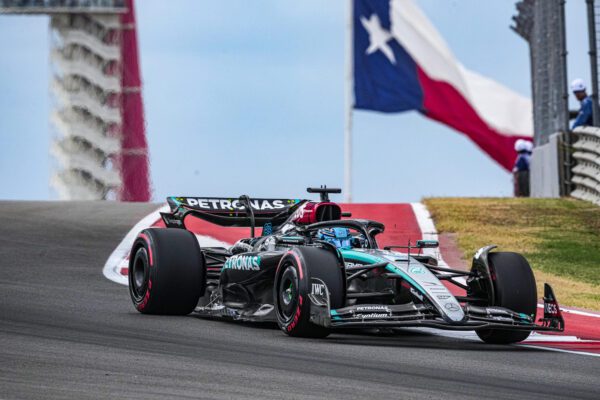





The Circuit of the Americas, commonly known as COTA, is built upon a challenging geological foundation in Austin, Texas. This area is characterized by expansive clay soil, specifically montmorillonite or smectite clay, which exhibits significant volume changes.
This soil expands considerably when it absorbs moisture during periods of rain and then shrinks dramatically as it dries out during droughts.
This constant cycle of expansion and contraction causes the ground beneath the track to move and settle unevenly, a phenomenon known as subsidence. Such geological instability directly contributes to the formation of the notorious bumps and undulations across the circuit’s surface.
The geological instability beneath cota
The underlying geology of the Circuit of the Americas features highly plastic clay soils. These soils are prevalent in the eastern part of Austin, where the circuit is situated.
When these clay soils become saturated with water, they can expand significantly, sometimes gaining or losing up to 75 percent of their original volume. This dramatic change in volume exerts immense pressure, capable of lifting structures built upon them.
Conversely, during dry spells and droughts, the clay soil loses moisture and contracts, leading to ground shrinkage. This continuous shrink-swell cycle creates an unstable base for the racetrack, causing the asphalt surface to heave and settle.
Heavy rainfall events, such as those experienced in 2015, have also exacerbated the problem by damaging drainage pipes beneath the circuit. This damage allowed water to flow around the pipes, creating voids that further contributed to track surface sinking.
Compromising setup: ride height and downforce
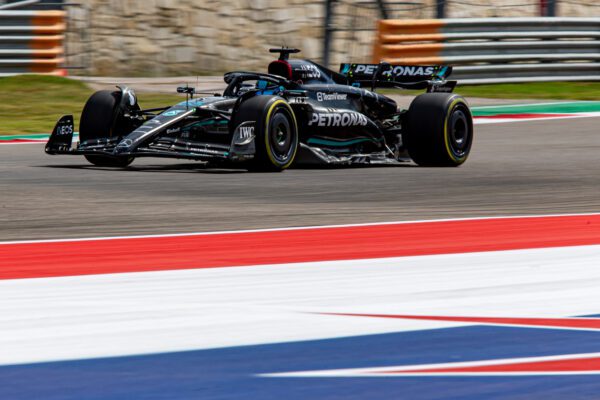
Formula 1 cars are meticulously engineered to generate aerodynamic downforce, with a significant portion produced by the car’s underbody. The efficiency of this ground effect aerodynamics is extremely sensitive to the car’s ride height, which is the distance between the car’s floor and the track surface.


Teams generally aim to run their cars as low as possible to maximize downforce and improve grip, enhancing cornering speeds and braking response. However, on bumpy tracks like COTA, this aggressive low ride height setup becomes problematic.
Violent impacts with the track’s undulations can cause the car to “bottom out,” where the floor makes contact with the ground. To mitigate this, teams are often forced to raise the car’s ride height, particularly at the front.
This increased ride height, while protecting the car from damage, inevitably reduces the aerodynamic downforce generated by the underfloor. Engineers must find a delicate balance between maximizing downforce and ensuring sufficient suspension travel to cope with the bumps.
The threat of floor damage and disqualification
A critical component of a Formula 1 car’s underbody is the floor plank, also known as a skid block, made from a wood-composite material called Jabroc. This plank is mandated by regulations to ensure cars maintain a legal minimum ride height.
The FIA strictly measures the plank’s thickness before and after each race. If any part of the plank shows wear exceeding a tolerance of 1mm, the car is subject to immediate disqualification.
On bumpy circuits like COTA, the risk of excessive plank wear is significantly higher due to repeated and violent impacts with the track surface. This was notably demonstrated at the 2023 United States Grand Prix, where both Lewis Hamilton and Charles Leclerc were disqualified for this very reason.
To protect the mandatory Jabroc plank, teams often embed metal skid blocks, typically made of titanium, into the floor. These metal inserts are designed to scrape the track first, creating sparks and reducing wear on the plank itself.
An ongoing battle: cota’s resurfacing efforts
The Circuit of the Americas has undertaken numerous resurfacing projects since its inception to combat the persistent issue of bumps. This is an annual challenge for the circuit management due to the unstable underlying soil.
Significant resurfacing work was carried out in 2019, targeting specific problematic sections such as the back straight, pit out, parts of Turn 1, a hump before Turn 9, and Turns 18-19. Approximately 40% of the circuit was affected by these repairs.
Further major resurfacing initiatives took place ahead of the 2022 season, responding to widespread criticism from both Formula 1 and MotoGP riders. This work focused on sections from Turn 2 to Turn 10, and from Turns 12 to 15.
In addition to asphalt resurfacing, some areas, like Turns 2 and 10, received full foundation restructuring with concrete reinforcement to address the root cause of the movement. Despite these efforts, the bumps continued to be a concern for drivers in subsequent years.
Another substantial resurfacing project was completed in late August 2024, primarily addressing the front stretch, which had become particularly problematic. Over 18,000 tons of asphalt were used in this latest endeavor.
Physical toll on Formula 1 drivers
The severe bumps at COTA impose considerable physical punishment on Formula 1 drivers. The constant jarring and violent impacts transmit significant forces through the car’s stiff suspension directly to the driver’s body.
Drivers frequently report experiencing spinal stress and intense discomfort, which can be exacerbated by the rigid nature of modern F1 cars designed for optimal aerodynamic performance. Lando Norris, for example, reported needing medication to cope with the pain during the 2022 United States Grand Prix weekend.
The extreme vibrations and impacts also pose a risk of drivers losing focus, especially when navigating high-speed sections of the track. Maintaining precision and concentration becomes increasingly difficult under such physically demanding conditions.
Max Verstappen has humorously remarked on the need for a “new spine” after racing at COTA, highlighting the severity of the physical challenge. The circuit’s unique characteristics make it one of the most physically demanding on the Formula 1 calendar.