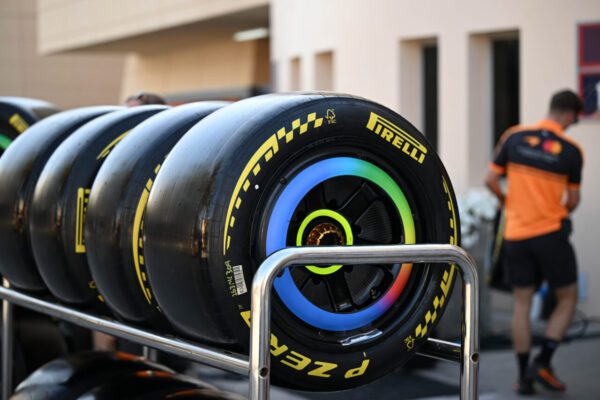




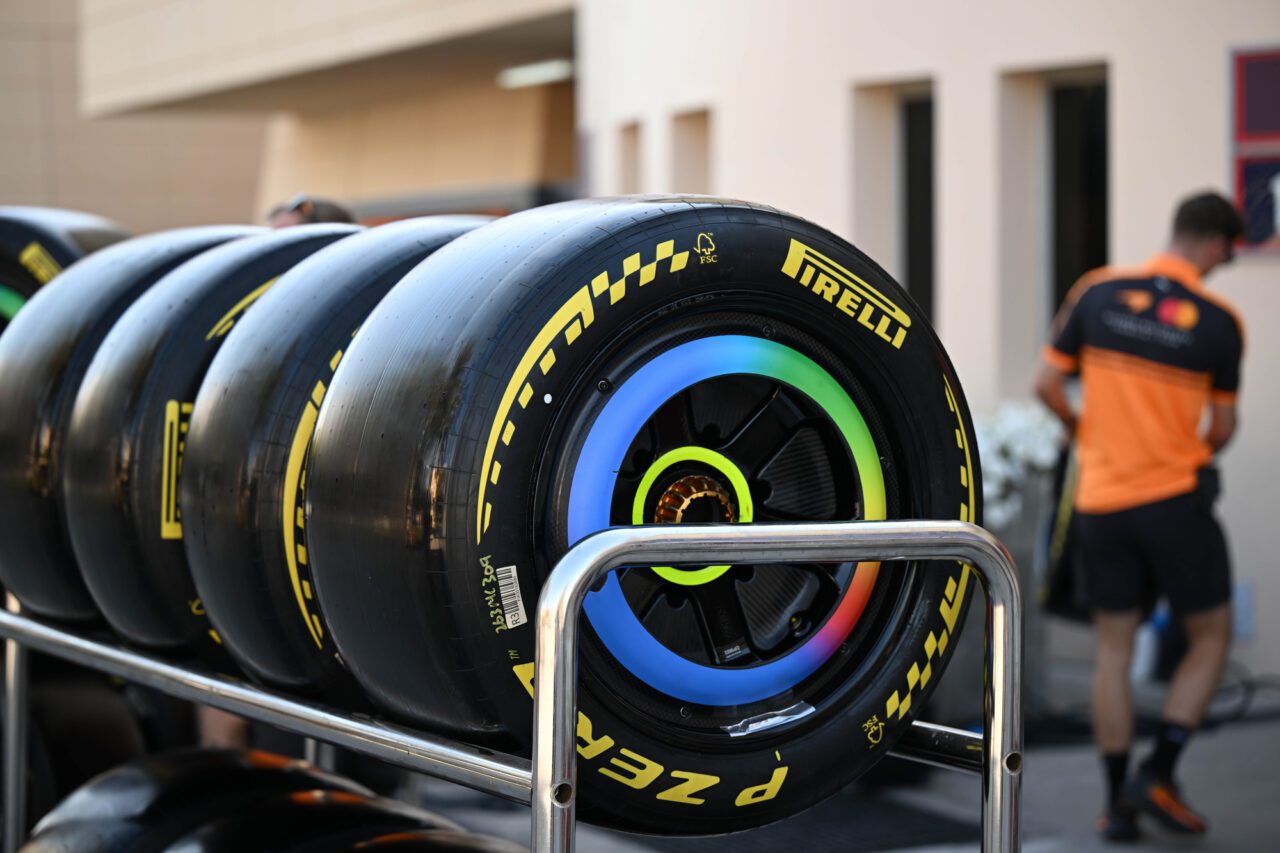
Formula 1 tires are highly specialized components designed to deliver maximum grip and performance under extreme conditions. Their effectiveness is intrinsically linked to achieving and maintaining specific operating temperatures.
Without proper temperature management, the tires cannot provide the necessary traction for competitive racing.
Cold tires offer minimal grip, making a car difficult and dangerous to control at high speeds. Conversely, tires that become too hot will degrade rapidly, leading to blistering and a significant loss of performance.
Teams employ various strategies and technologies to ensure tires remain within their optimal temperature window.
The purpose of Formula 1 tire warmers
Tire warmers are essential equipment in Formula 1, designed to pre-heat the tires before they are fitted to the car. This pre-heating process is critical for both performance and safety.
It ensures that the rubber compound is pliable and ready to generate maximum grip from the moment a car leaves the pit lane.
Without tire warmers, a cold slick tire would be hard and slippery, making the initial laps treacherous for drivers. Pushing a car on cold tires can lead to rapid surface wear, known as graining, which further reduces grip and performance.
Warmers allow drivers to immediately push the car to its limits, which is particularly important during qualifying sessions and after pit stops.


How Formula 1 tire blankets operate
Formula 1 tire blankets are electrically heated fabric wraps that encase the tires in the garage. These blankets warm both the tread and the inner carcass of the tire to a controlled temperature.
This brings the tire compound close to its ideal working temperature before it ever touches the track surface.
Under current regulations, Pirelli specifies blanket temperatures for each event, and the FIA monitors these through sensor-checked warming units in the pit lane. Front and rear tires often have different setpoints, and the duration for which blankets can be applied before fitting is capped.
For instance, rear tires are typically heated to around 70 degrees Celsius (158 degrees Fahrenheit) for a couple of hours before a race starts.
The FIA has discussed banning tire blankets entirely on grounds of cost, sustainability, and racing quality, but these proposals have been repeatedly postponed. For the 2026 season, tire blankets remain legal, though the FIA has tightened rules regarding tire cooling tricks.
Understanding Formula 1 slick tires and compounds
Formula 1 slick tires are specifically designed for dry weather conditions and feature no tread grooves on their surface. This design maximizes the contact patch between the rubber and the road, thereby providing the highest possible level of grip.
Pirelli has been the exclusive tire supplier for Formula 1 since 2011.
Pirelli offers a range of five dry compounds, designated C0 to C5, with C0 being the hardest and C5 the softest. A C6 compound is also available for selection at specific events to encourage varied pit stop strategies.
For each Grand Prix, Pirelli nominates three of these compounds, which are then visually identified by colored sidewall bands: white for hard, yellow for medium, and red for soft.
The choice of compounds for a particular event depends on track characteristics and expected climate, with harder compounds selected for high-stress circuits. Under current regulations, each driver receives a fixed number of slick sets across the weekend.
Drivers are also required to use at least two different dry compounds during a dry race, unless the race is red-flagged.
For the 2026 season, Pirelli’s tires will undergo significant changes to align with new car regulations. While the wheel rim diameter will remain 18 inches, the tread width will be 25mm less at the front and 30mm less at the rear.
The total diameter will also decrease by 15mm at the front and 10mm at the rear.
Optimal operating temperatures for Formula 1 tires
Every Formula 1 tire compound has a specific operating window, which is a narrow temperature range where it performs optimally. If a tire is below this window, it is too hard and cannot generate sufficient grip, leading to understeer or oversteer.
Conversely, if the tire exceeds its optimal temperature, it begins to degrade rapidly, losing grip and potentially blistering.
During a race, F1 tires can reach temperatures up to 149 degrees Celsius (300 degrees Fahrenheit) due to the intense friction with the track surface. However, their optimal performance is achieved at considerably lower temperatures, which vary by compound.
Softer compounds generally require less heat to become effective, while harder compounds need higher temperatures to reach their peak performance.
| Pirelli Compound | Optimal Temperature Range (°C) | Optimal Temperature Range (°F) |
|---|---|---|
| C0 (Hardest) | 110-140 | 230-284 |
| C2 | 110-135 | 230-275 |
| C3 | 85-95 (example) / 105-135 | 185-203 (example) / 221-275 |
| Soft Compound (General) | 90-110 | 194-230 |
| Hard Compound (General) | 100-120 | 212-248 |
Drivers actively manage tire temperatures on track by weaving during out-laps and safety car periods. This zigzagging motion helps to generate friction and bring the tires into their ideal operating window.
Maintaining these temperatures is a continuous challenge throughout a race.
Formula 1 tire regulations in 2026
For the 2026 Formula 1 season, tire blankets remain a permitted device for pre-heating tires. However, the FIA has introduced stricter technical regulations concerning tire temperature management.
These amendments aim to close potential loopholes that teams might exploit for cooling or heating tires beyond the intended scope of the rules.
Article 10.8.3 of the 2026 technical regulations explicitly forbids any device, system, or procedure, other than driving, that aims to heat, cool, or regulate the temperature of the complete wheels, hubs, or brakes. Additionally, a new clause will seal suspension fairings to block internal airflow, preventing their use for tire cooling exploits.
These regulatory changes reflect an ongoing effort by the FIA to ensure fair competition and potentially pave the way for future developments in tire technology. The goal is to encourage tire compounds that work effectively over a wider temperature range, which could enhance racing under varying weather conditions.