
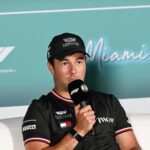


Sergio Perez has stated that the current Formula 1 cost cap regulations are “unfair” to smaller teams. His comments precede a crucial F1 Commission vote scheduled for next month, which will consider a proposed rule adjustment for the 2027 season. Perez, currently driving for Cadillac, drew on his experience with both front-running and newer outfits.
Perez highlighted the disparity in upgrade development, noting that during his time at Red Bull, the team consistently introduced new components. He observed that discussions around the cost cap were absent, with the focus solely on performance and development.
Conversely, Perez stated that smaller teams, such as Cadillac, face significant challenges under the current flat-rate spending limit. He explained that less efficient processes within these teams lead to increased expenditure, effectively hindering their ability to compete.
“I think the cost cap these days is a lot more unfair for smaller teams because when I was at Red Bull, for example, we used to bring upgrades pretty much every weekend. You never heard anything about the cost cap. It was all about performance, bringing, and throwing everything you could.”
Williams Team Principal James Vowles has proposed a sliding-scale cost cap mechanism for introduction in 2027. This proposal aims to grant lower-placed teams greater financial flexibility, allowing them more resources to invest in infrastructure and development.
Vowles requires six votes from the eleven F1 teams, including his own, for the proposal to pass before the F1 Commission. The objective is to address what Vowles terms a “cost cap trap” that disproportionately affects smaller teams.
The current voting landscape indicates that Alpine, Aston Martin, Audi, and Cadillac support the change. However, McLaren, Red Bull, Ferrari, and Mercedes are understood to oppose it. Haas and Racing Bulls have also signalled their opposition, leaving Vowles short of the necessary majority.
Mercedes Team Principal Toto Wolff has voiced opposition to a sliding-scale mechanism, describing the concept of adjusting resources based on championship positions as “red mist.” Wolff argues that existing FIA regulations, such as aerodynamic testing time adjustments, already manage performance gaps.


Wolff also noted that the current rules have shifted capital expenditure (CapEx) into operational costs (OpEx). This means teams with significant historical CapEx, like Mercedes, must depreciate those costs within the cap, potentially limiting their current spending capacity compared to teams with less historical investment.
The F1 cost cap was initially introduced in 2021 at $145 million, subsequently decreasing to $140 million in 2022 and $135 million from 2023. For the 2026 season, the cap increased to $215 million to account for rising costs and new regulations.
The cap’s primary purpose was to curb excessive spending and foster a more competitive environment by bringing teams closer in terms of financial and developmental parity. Driver salaries and the wages of top personnel remain outside the scope of the cost cap.
Cadillac, a new entry to Formula 1 in 2026, currently sits last in the Constructors’ Championship with zero points. Despite bringing 41 upgrades to its MAC-26 car this season, the team has yet to score.
Perez and Valtteri Bottas are the drivers for the General Motors-backed team, which utilises a Ferrari power unit. Cadillac’s best result this season was a 13th-place finish at the Chinese Grand Prix.
In a related development, the FIA’s World Motor Sport Council recently approved new regulations for 2027 to prevent non-F1 staff from working on Formula 1 projects. This measure aims to close a loophole that allowed some teams to bypass the budget cap by leveraging personnel and facilities allocated to other activities.