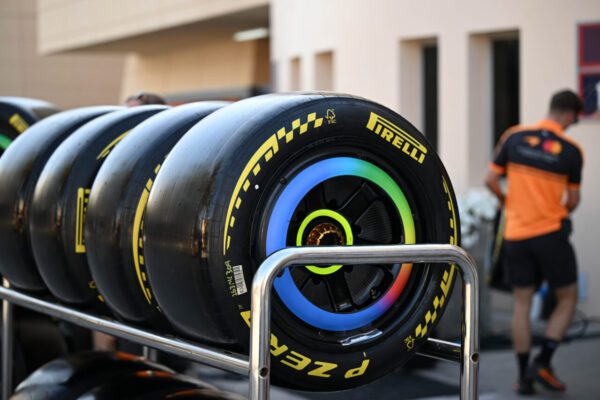



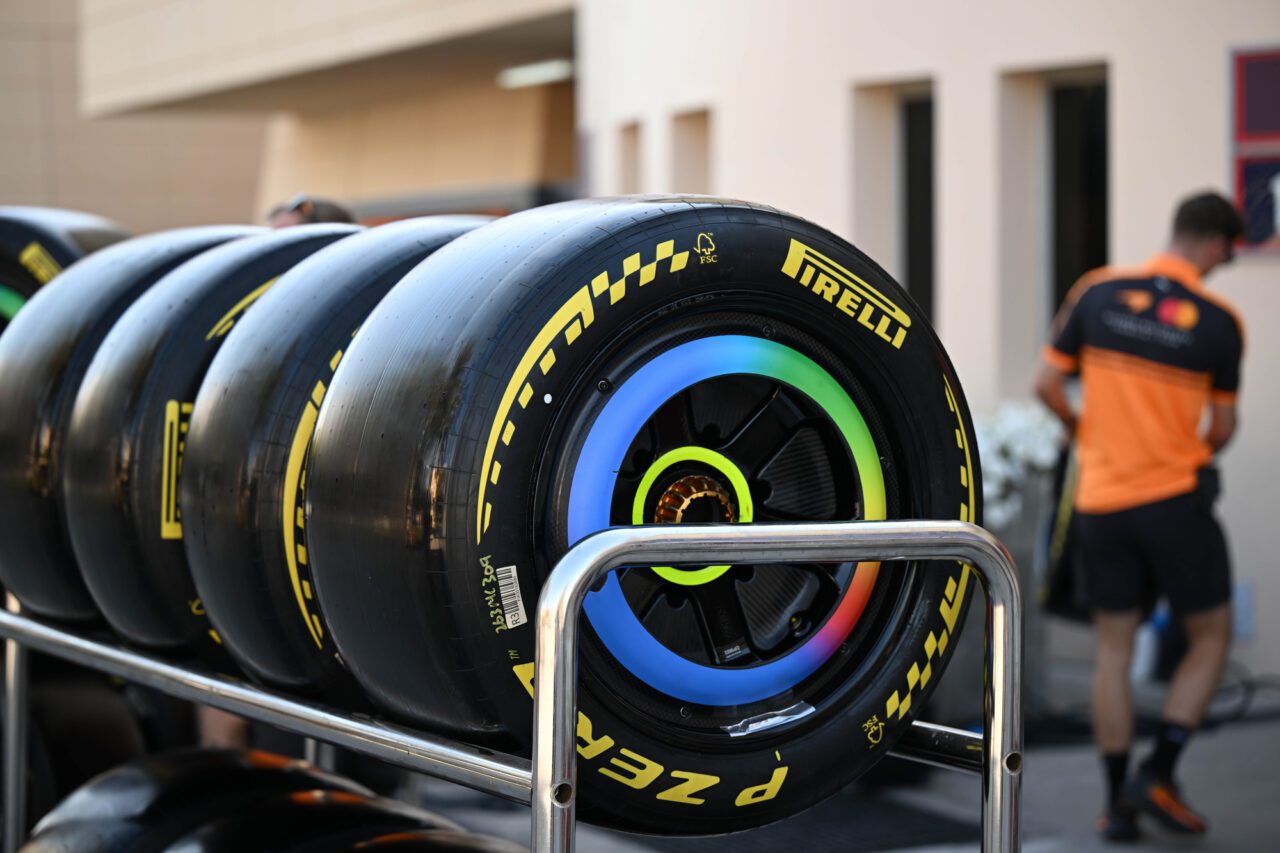
Formula 1 tires are the sole point of contact between the car and the track surface, making them a critical component in performance and strategy. Pirelli, the exclusive tire supplier since 2011, provides a range of specialized tires for dry and wet conditions.
The 2026 season features five dry-weather slick compounds, designated C1 to C5, along with intermediate and full wet tires.
The C1 compound is the hardest and most durable, while the C5 is the softest and offers maximum grip. For each Grand Prix, Pirelli nominates three of these slick compounds, which are then color-coded white for hard, yellow for medium, and red for soft.
The hard white compound in Formula 1
The hard compound, identified by its white sidewall, represents the most durable option available at a given Grand Prix. This tire is designed for longevity and is typically chosen for circuits with abrasive surfaces, high temperatures, or sections that place significant loads on the tires.
While offering less outright grip compared to softer compounds, the hard tire allows for longer stints during a race, which can be a strategic advantage. It is slower to warm up and provides less immediate performance, but its extended lifespan can reduce the number of pit stops required.
For the 2026 United States Grand Prix in Austin, Pirelli nominated the C2 as the hard compound, the C3 as the medium, and the C4 as the soft. This selection marked a change from 2025, where the C1 was the hard tire but saw little use in the race.
The C2 compound is expected to support longer stints and potentially favor a one-stop race strategy, although rising temperatures could increase degradation. The circuit’s demanding nature, with fast corners and acceleration zones, places considerable stress on both front and rear tires.
Formula 1 tire regulations and allocation
Pirelli, in consultation with the FIA and Formula 1, selects three dry compounds for each race weekend based on track characteristics, layout, and expected temperatures. This ensures a combination of compounds that offers various race strategies.


For a standard Grand Prix weekend, each driver receives a specific allocation of tires. This typically includes two sets of hard tires, three sets of medium tires, and eight sets of soft tires.
An additional set of soft tires is reserved for drivers who reach Q3 in qualifying. All drivers must use at least two different dry compounds during a dry race, necessitating at least one pit stop.
In wet conditions, this mandatory two-compound rule does not apply, and teams can use intermediate (green sidewall) or full wet (blue sidewall) tires. Intermediate tires are suitable for damp tracks with light standing water, while full wets are for heavy rain.
The 2026 regulations introduced narrower tires, with front tires reduced by 25mm and rear tires by 30mm, while retaining 18-inch wheels. This change aims to reduce drag and weight, making cars more agile and reliant on mechanical grip.
Managing tire performance and degradation
Tire degradation refers to the gradual decline in performance and grip as tires wear out or overheat. Successfully managing this is a critical skill in modern Formula 1, influencing pace, strategy, and race outcomes.
There are three main types of degradation: thermal degradation from overheating, wear degradation from physical rubber loss, and graining, where small rubber balls form on the surface. Thermal degradation is the most common in modern F1.
Teams and drivers employ various strategies to mitigate degradation, including car setup adjustments, optimal tire pressure management, and aerodynamic balance. Strategic pit stop timing is also crucial, as is the driver’s style.
Aggressive driving, such as abrupt braking and rapid acceleration, can accelerate wear, while a smoother approach helps prolong tire life. Drivers also manage temperatures by adjusting their racing line and avoiding excessive sliding.
The 2026 cars, being lighter and generating less downforce, rely more on mechanical grip, making tire management even more sensitive. Tires may overheat more easily, and sliding will punish drivers faster.
2026 Formula 1 tire specifications and future outlook
The 2026 Formula 1 season sees Pirelli continue as the sole tire supplier, with their contract extended until at least 2028. The tire range for dry weather consists of five slick compounds, from C1 (hardest) to C5 (softest).
The C6 compound, which was part of the 2025 range, was dropped for 2026 after it failed to offer a meaningful performance step over the C5. This decision ensures a cleaner, more defined compound ladder.
The physical dimensions of the tires have also changed for 2026. Front tires are now 280mm wide, a 25mm decrease, and rear tires are 375mm wide, a 30mm reduction.
The overall outer diameter of the tires has also decreased from 720mm to between 705mm and 710mm. These narrower tires are part of a broader regulatory push to make cars lighter and more agile.
| Tire Type | Compound Range (2026 Slicks) | Sidewall Color (Race Weekend) | Characteristics |
|---|---|---|---|
| Hard | C1, C2, C3 (relative) | White | Most durable, least grip, longest stints, slower warm-up. |
| Medium | C2, C3, C4 (relative) | Yellow | Balanced grip and durability, versatile for strategies. |
| Soft | C3, C4, C5 (relative) | Red | Maximum grip, fastest warm-up, quicker wear, ideal for qualifying/short stints. |
| Intermediate | N/A | Green | For damp tracks with light standing water. |
| Full Wet | N/A | Blue | For heavy rain and significant standing water. |
The narrower profile of the 2026 tires means heat flows differently, and the contact patch behaves uniquely. This requires a refined construction to manage transitions without overheating, especially with the introduction of active aerodynamics.
Tire control will be an even greater factor in determining race outcomes and championship battles in the new era of Formula 1. Drivers will need to manage temperatures more carefully and adjust their cornering techniques.