


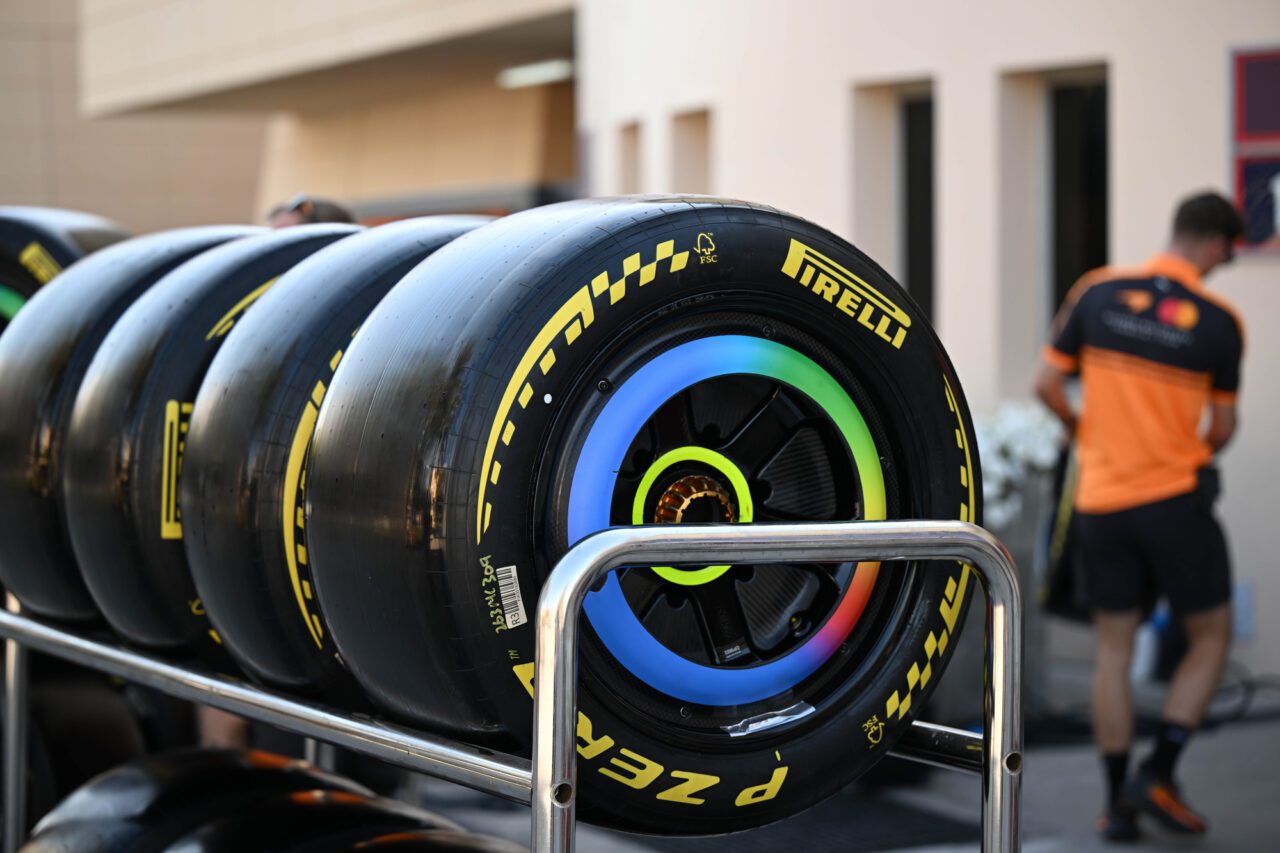
Pirelli anticipates that tyre wear and high track temperatures will significantly influence race strategies at the upcoming United States Grand Prix. The event takes place this weekend at the Circuit of the Americas (COTA) in Austin, Texas. The Italian tyre supplier has nominated the C2, C3, and C4 compounds for the race.
This selection marks a return to a conventional tyre allocation. Pirelli used an experimental compound choice in 2025, which featured a gap between the hard and medium tyres.
Last year’s allocation included the C1 as the hardest compound. However, teams largely avoided using the C1 during the race. They instead favoured one-stop strategies built around the C3 and C4 tyres.
Pirelli believes the reintroduction of the C2 compound will offer teams a more effective option for longer stints. The C2 is softer than the C1 used previously.
The 5.513-kilometre Circuit of the Americas presents distinct challenges for tyres. Its layout combines high-speed corners and rapid direction changes with slower sections demanding strong traction.
The opening sector, with its fast corners, places considerable stress on the front tyres. Conversely, the third sector’s repeated acceleration zones out of slow corners generate thermal degradation primarily in the rear tyres.
The circuit’s asphalt is not particularly abrasive, but Pirelli identified tyre wear as a decisive factor. This is due to the ageing surface across much of the track.
A section between Turns 9 and 11 was resurfaced earlier this year. Additionally, bumps approaching Turns 12 and 19 have been smoothed.

Pirelli reported that several tyres reached very high wear levels during last year’s race. This suggests wear could be a greater concern than graining this weekend.
The weather forecast for Austin indicates warm and dry conditions for Friday and Saturday. Track temperatures could exceed 55°C.
Sunday’s race day forecast is less settled, with a 20% chance of rain. Temperatures are expected to range from 19°C to 28°C.
This year’s United States Grand Prix will follow the traditional weekend format. It features three free practice sessions instead of a Sprint event.
The additional practice time allows teams to evaluate tyre behaviour over longer runs. They can also refine car set-ups before qualifying and Sunday’s race.
Williams F1 Team’s Chief Trackside Engineer Paul Williams noted COTA’s challenges under 2026 regulations. These include energy deployment and active aerodynamics.
The principal strategic question revolves around exploiting the durability of the C2 hard tyre for a single pit stop. Pirelli considers this the most likely approach.
However, high ambient and track temperatures could accelerate degradation. This might make additional stops a competitive alternative.
Teams will use Friday’s practice sessions to assess tyre wear. They will also establish if the conventional compound selection delivers the anticipated longer stints.
The United States Grand Prix is the first event in a Formula 1 triple-header across the Americas. Races in Mexico City and São Paulo will follow Austin.
It is also the second of three races in the United States this season. The Las Vegas Grand Prix will take place later in the year.