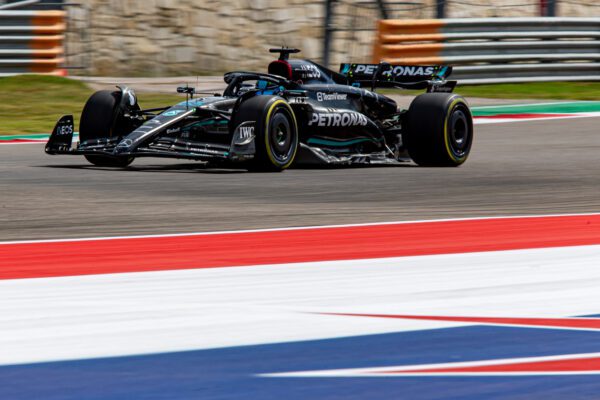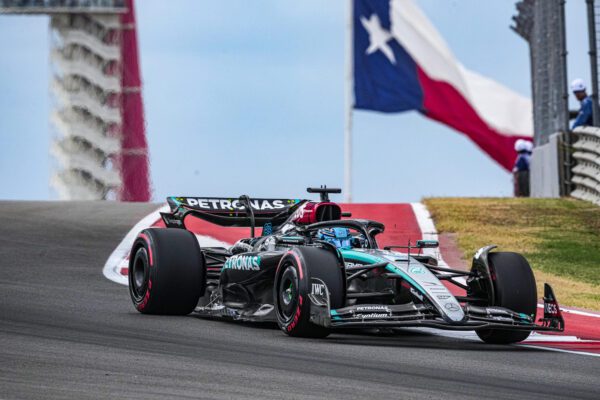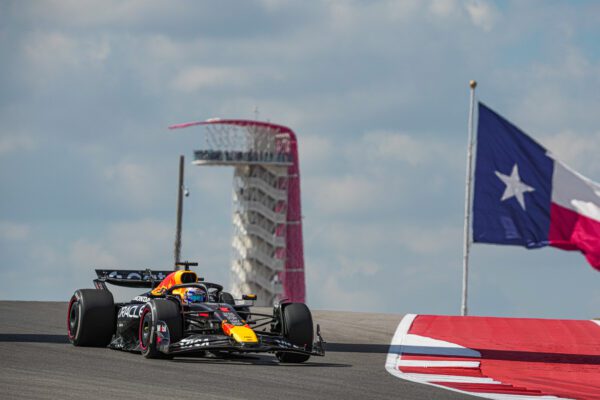




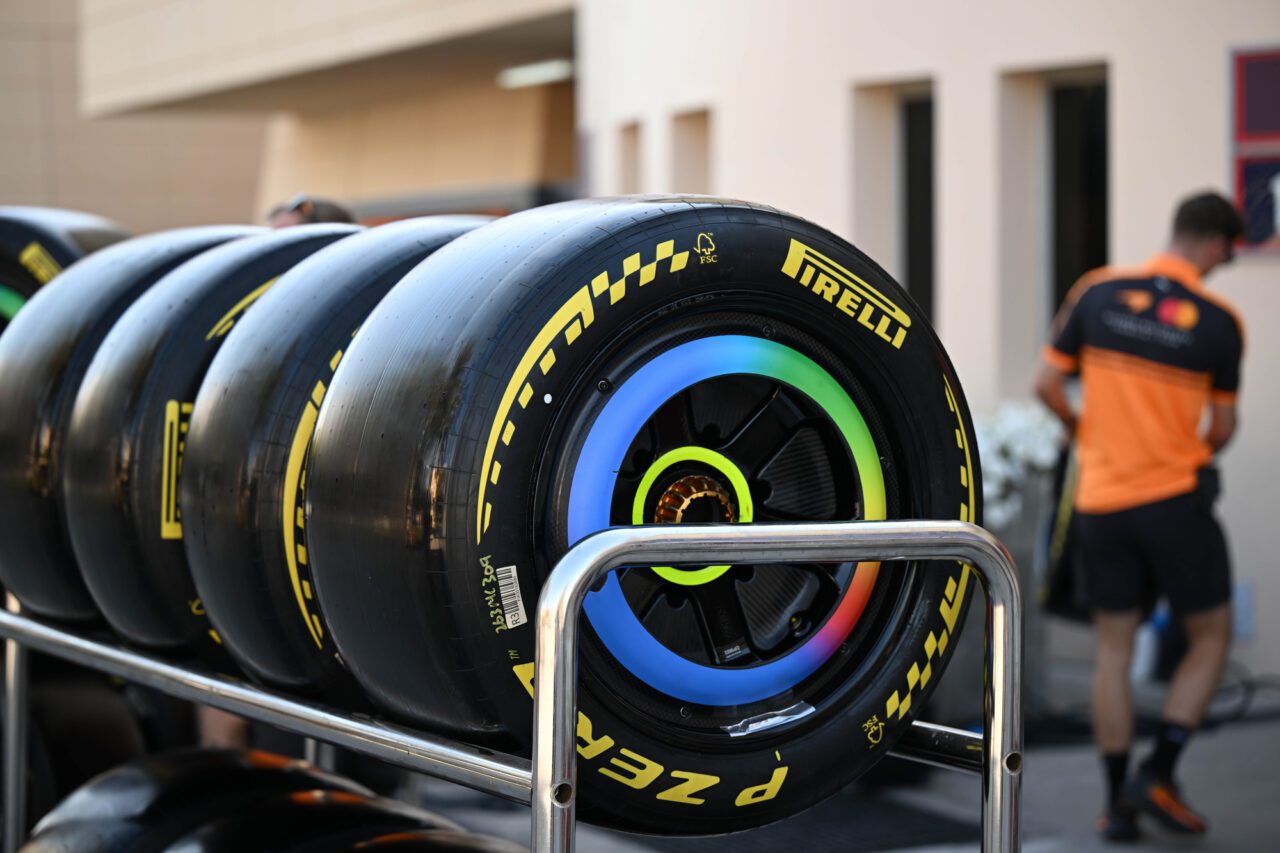
The Circuit of the Americas in Austin, Texas, presents a unique challenge for Formula 1 teams due to its demanding layout and often high ambient temperatures. Tyre management is a critical factor in determining race outcomes at this venue.
The track’s design, combined with its abrasive asphalt, significantly influences degradation rates and strategic decisions.
High lateral loads and tyre energy in cota’s esses
Sector 1 of the Circuit of the Americas is renowned for its high-speed esses, a sequence of left-right-left-right corners inspired by Silverstone’s Maggotts and Becketts. This section, spanning Turns 3 to 6, demands exceptional commitment and precision from drivers.
It places the front tyres under prolonged periods of intense lateral load.
These sustained lateral forces generate extreme energy and heat within the rubber compounds. Maintaining rhythm through this sequence is paramount, as losing it early can compound errors through subsequent corners.
The esses highlight the importance of a well-balanced car setup over sheer engine power at COTA.
Thermal degradation versus wear degradation
Tyre degradation in Formula 1 encompasses two primary forms: thermal degradation and wear degradation. Thermal degradation occurs when tyres overheat, causing the rubber compound to become less effective and lose grip, often resulting in a greasy surface.
Wear degradation, conversely, is the physical loss of rubber from the tread, leading to reduced grip and increased braking distances.
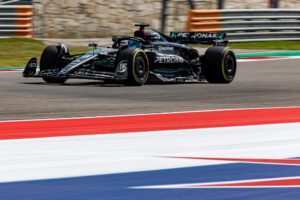
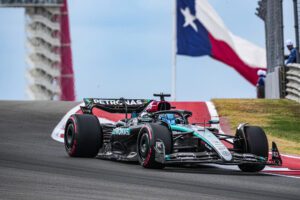
COTA’s high track temperatures, which can frequently exceed 30°C and sometimes reach 40°C, significantly accelerate thermal degradation. Heavy acceleration out of the circuit’s numerous corners, particularly in traction zones, directs substantial energy into the rear tyres, exacerbating overheating.
The abrasive nature of the Texas asphalt also contributes to physical wear degradation.
Graining, where small balls of rubber form on the tyre surface due to sliding, is another common issue that temporarily reduces grip. Blistering, a localized separation of rubber layers caused by uneven heating, can also occur under extreme conditions.
Drivers must employ careful tyre conservation techniques and adjust their driving style to mitigate these effects throughout a race stint.
The strategic power of the undercut at cota
The undercut is a potent pit-stop strategy in Formula 1, where a chasing driver pits earlier than their rival to exploit the pace advantage of fresh tyres. This tactic is particularly effective at the Circuit of the Americas due to its relatively low pit lane loss time, which is approximately 20 seconds.
The pit entry on the inside of the final corner contributes to this efficiency.
High tyre degradation at COTA means that new rubber can offer a significant pace advantage, often one to two seconds per lap, over older compounds. This allows the pitting driver to complete fast out-laps in clean air.
Data from the 2025 season indicates that the undercut worked 44.4% of the time across 81 attempts.
Pitting two laps earlier than a rival proved successful in 69% of attempts, while a one-lap earlier stop worked 34% of the time. Successful undercuts rely on conditions such as high tyre degradation, minimal pit-lane time loss, rapid tyre warm-up, and rejoining into clear air.
Teams frequently integrate undercut opportunities into their multi-stint race strategies.
One-stop versus two-stop strategies and external factors
Race strategy at COTA often oscillates between one-stop and two-stop approaches, heavily influenced by track temperatures and Safety Car periods. While a one-stop strategy is frequently the initial target, higher-than-anticipated degradation levels often push teams towards a two-stop race.
A common one-stop involves a medium compound for 20 to 26 laps, followed by a long stint on the hard compound to the finish.
Two-stop strategies typically see drivers complete an initial stint of 10 to 18 laps on the medium tyre, followed by two stints on the hard compound. Alternative two-stop options might include combinations of soft, medium, and hard compounds.
High track temperatures, sometimes exceeding 40°C, increase degradation and generally favor a two-stop approach.
Safety Car periods can dramatically alter strategic calculations by offering a “free” pit stop with minimal time loss. COTA has a historical average of one Safety Car deployment per race, making it a factor teams must plan for but cannot entirely rely upon.
External elements like strong wind gusts and surface irregularities can also increase the risk of lock-ups and raise tyre temperatures, further complicating thermal management.
| Strategy Type | Typical Stint 1 (Laps) | Typical Stint 2 (Laps) | Typical Stint 3 (Laps) | Primary Compounds |
|---|---|---|---|---|
| One-Stop | 20-26 | 30-36 | N/A | Medium, Hard |
| Two-Stop (Option 1) | 10-18 | 19-24 | 19-24 | Medium, Hard, Hard |
| Two-Stop (Option 2) | 12-18 | 19-22 | 16-20 | Soft, Medium, Medium/Soft |
Track evolution over the weekend
Track evolution refers to the gradual increase in grip that occurs as rubber is deposited onto the racing line throughout a Grand Prix weekend. COTA’s abrasive Texas asphalt plays a significant role in this process, with the surface steadily gaining grip from Friday practice through to Sunday’s race.
This rubbering-in effect improves lap times as the weekend progresses.
However, a newly resurfaced track, such as COTA experienced in 2024, can initially generate heightened levels of graining. This is caused by high initial grip leading to small tears in the rubber under high cornering loads.
Graining typically diminishes as the track surface wears in and evolves over the course of the event.
Environmental factors like rain or strong winds can disrupt this evolution by washing away deposited rubber. This leaves a “green” or “dirty” track with reduced grip, forcing teams to recalibrate their understanding of tyre performance.
The dynamic nature of COTA’s surface demands continuous adaptation in car setup and driving style.