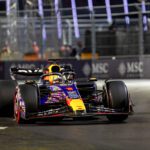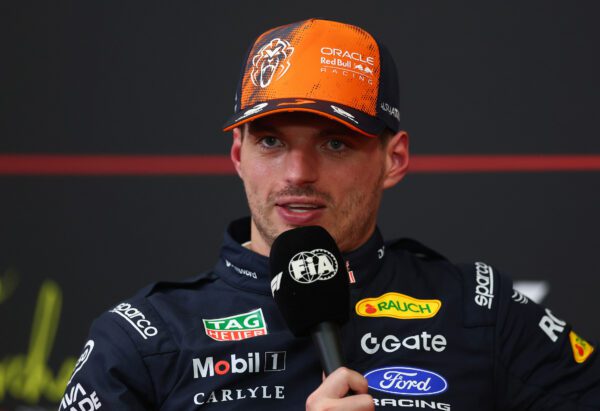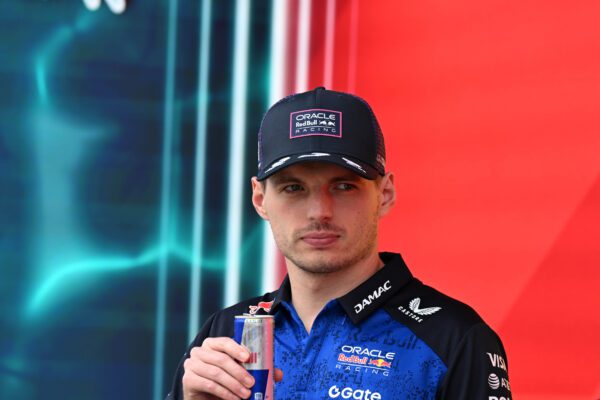
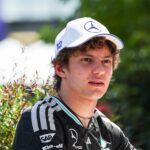
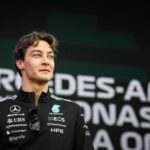


Max Verstappen secured victory at the Las Vegas Grand Prix, but his strategic approach with Red Bull Racing during the race has drawn scrutiny. The Dutchman and teammate Isack Hadjar spent a significant period at the front in the opening stages, yet they made minimal use of slipstream opportunities to assist each other.
Analysts Joost Nederpelt and Ho-Pin Tung acknowledged that this lack of cooperation was somewhat understandable. While working together might have been beneficial, it offered no guarantee that Red Bull would effectively pull away from their rivals.
Verstappen started the race from pole position and was quickly challenged by George Russell. The lead constantly changed hands in the early laps as drivers exploited the slipstream on the long straights.
Hadjar also joined the battle, managing to overtake Russell, which briefly put Red Bull in a one-two position. However, the impression of two Red Bull drivers actively collaborating to keep the chasing pack at bay did not materialise.
Nederpelt questioned whether Verstappen consciously believed he did not need his teammate. The analyst suggested that Verstappen perhaps could have done more in the initial phase to utilise Hadjar.
“I think Verstappen thought he didn’t need Hadjar. Maybe he could have done a bit more at the start, but driving head-to-head with your teammate? I don’t know,” Nederpelt stated on De Boordradio -podcast.
Tung speculated that the possibility of team cooperation might have been discussed within Red Bull. He explained that such a strategy would typically be employed to escape the rest of the field.
However, Tung pointed out that qualifying had demonstrated how the slipstream effect works, allowing the third-placed driver to also close the gap. This meant that cooperation between the two Red Bull drivers would not automatically yield the desired outcome.
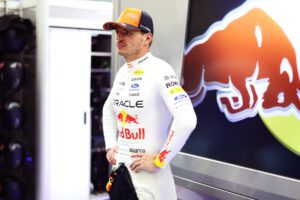
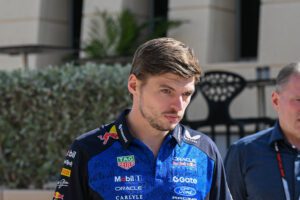
The analyst therefore understood why Verstappen did not immediately opt for a cooperative approach. Actively defending each other’s positions carries inherent risks, potentially compromising their own speed and, consequently, their lead.
“It’s a utopia to think that even if you cooperate, you can drive away from the driver in third place. I think that might have played a role for Verstappen,” Tung explained.
He admitted that he himself had moments during the race where he questioned the chosen strategy. Tung wondered if a different approach might have been more effective.
“I myself also had something like: could he not have done that better?” Tung revealed.
Nederpelt offered another explanation for Verstappen’s race management. He believed the Dutchman quickly established a pattern that allowed him to fend off attacks from his competitors.
This meant Verstappen did not constantly need to factor in Hadjar’s position. “At some point, as a driver, you get into a kind of system. If I do this in a lap, I always stay ahead and never fall back. Then I can always defend,” Nederpelt analysed.
Ultimately, Nederpelt felt it made little difference who was behind Verstappen. The Dutchman had found a method to manage the attacks and was confident he could regain his position if challenged.
“I had the idea that Verstappen found that mode very quickly. If they out-brake me for turn fourteen, I’ll just drive past them afterwards anyway,” Nederpelt concluded.
Tung concurred with this assessment, suggesting Verstappen preferred to accept the risk of being a “sitting duck” on the straight rather than fully tailoring his race to cooperate with Hadjar.
“I can also well imagine that Verstappen thought: ‘You know what, I’m fine with it. I just want to drive nicely at the front in clean air. That I’m then a sitting duck on the straight, I’ll accept that,'” Tung concluded.