



Formula 1 drivers face immense physical and mental challenges during a Grand Prix, with the Circuit of the Americas (COTA) in Austin presenting a unique combination of demands. The track’s layout, featuring high-speed corners, a counter-clockwise direction, and a notoriously bumpy surface, pushes athletes to their absolute limits.
Sustaining peak performance requires extraordinary strength, endurance, and unwavering mental focus throughout the race.
The extreme conditions at COTA, often exacerbated by the Texas autumn climate, contribute significantly to driver fatigue and fluid loss. These factors collectively test every aspect of a driver’s conditioning, from their neck muscles to their cognitive processing abilities.
Extreme g-forces in austin’s sector 1
The Circuit of the Americas is renowned for its challenging Sector 1, particularly the iconic Esses (Turns 2-6), which demand exceptional driver skill and physical resilience. Cars navigate this high-speed sequence at speeds often exceeding 250 km/h, subjecting drivers to relentless lateral G-forces.
Drivers typically experience lateral loads ranging from 4.0 to 6.5 G through these fast corners, meaning their bodies temporarily feel four to six and a half times their normal weight. This sustained force places immense strain on the driver’s neck and core muscles, which must work continuously to keep their head upright and maintain a clear line of sight.
A driver’s head and helmet, which together weigh approximately 6.5 to 7 kilograms, can effectively feel like 32.5 to 40 kilograms pushing sideways during these high-G maneuvers. This constant battle against centrifugal force is a primary reason for the highly developed neck musculature seen in Formula 1 athletes.
| force type | typical g-force range | example scenario |
|---|---|---|
| lateral (cornering) | 4.0 – 6.5 g | high-speed esses like cota sector 1, silverstone’s copse |
| longitudinal (braking) | 5.0 – 6.5 g | heavy braking zones from 300+ km/h |
| longitudinal (acceleration) | 1.5 – 2.0 g | out of slow corners |
The unique challenge of a counter-clockwise circuit
The Circuit of the Americas stands out on the Formula 1 calendar as one of the few counter-clockwise circuits, a characteristic it shares with tracks such as Interlagos and Yas Marina. This orientation presents a distinct physical challenge for drivers, as the majority of circuits globally run in a clockwise direction.
Consequently, Formula 1 drivers’ neck and body muscles are predominantly conditioned for the forces encountered during right-hand turns. The prevalence of left-hand corners at COTA therefore places an asymmetrical strain on muscles that are typically less developed or conditioned for such prolonged loads.
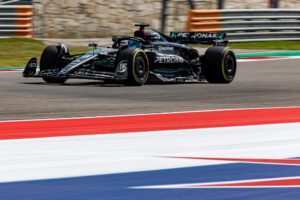
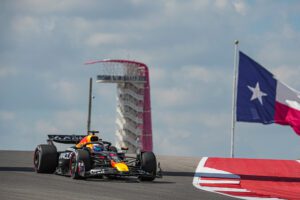
This unique demand can lead to increased fatigue, particularly on the left side of the driver’s neck and torso, as these muscles are pushed to their limits in an unfamiliar pattern. The counter-clockwise nature of the track adds another layer of physical exertion to an already gruelling race.
Impact of track vibrations and bumps on driver physiology
COTA has gained a reputation for its notoriously bumpy asphalt, a characteristic that continues to challenge drivers despite various resurfacing efforts over the years. The stiffness and low ride height of modern Formula 1 cars amplify the impact of these imperfections, transmitting continuous shocks directly through the chassis to the driver’s spine and head.
Max Verstappen famously quipped that he might need to “order a new spine” after racing at COTA, highlighting the severity of the track’s “incredibly bumpy” nature. These constant vibrations can significantly affect a driver’s vision, causing blurring and making it harder to maintain the precision required at high speeds.
The relentless jarring also increases the cognitive load on drivers, as they must constantly make tiny corrections to the steering and car attitude. This continuous physical punishment contributes substantially to overall fatigue, impacting both physical comfort and mental acuity throughout the race distance.
Managing dehydration and fluid loss in the texas heat
The United States Grand Prix in Austin often takes place under the blistering Texas autumn sun, where ambient temperatures can be high, leading to extreme cockpit temperatures that regularly exceed 50°C (122°F). Drivers, encased in fireproof overalls, balaclavas, and helmets, experience significant fluid loss through sweating.
During a single race, a Formula 1 driver can lose between 2 to 4 kilograms of body weight, equivalent to up to 9 pounds, primarily due to sweat. This level of dehydration has severe consequences, including a reduction in reaction time by as much as 20% after just 30 minutes, narrowed vision, muscle cramps, and impaired decision-making abilities.
Sergio Perez experienced the debilitating effects of severe dehydration during the 2021 US Grand Prix when his in-car drink system failed, reporting a loss of strength in his hands and feet, alongside uncomfortable vision. To combat this, F1 cars are equipped with hydration systems, often activated by a “DRINK” button on the steering wheel, which typically deliver around 1.5 litres of liquid to the driver during the race.
Sustaining mental focus through gruelling race distances
Formula 1 races typically span between 1.5 to 2 hours, demanding an unwavering level of focus and concentration from start to finish. The physical exertion is so intense that drivers’ heart rates average between 160 and 170 beats per minute, comparable to that of marathon runners, and can peak well over 190 bpm.
As physical fatigue sets in, maintaining the razor-sharp mental acuity required for precise decision-making at speeds exceeding 300 km/h becomes increasingly challenging. Drivers must constantly multitask, processing a deluge of information from their steering wheel displays, managing complex car systems, and engaging in strategic communication with their pit wall, all while battling competitors on track.
Mental training and exceptional resilience are therefore crucial for drivers to avoid errors and sustain peak performance, especially during the gruelling final stages of a race. Even minor lapses in concentration can have significant consequences, underscoring the profound mental demands of Formula 1 racing.