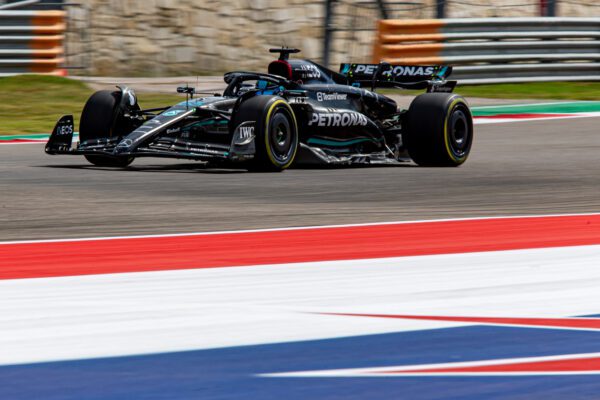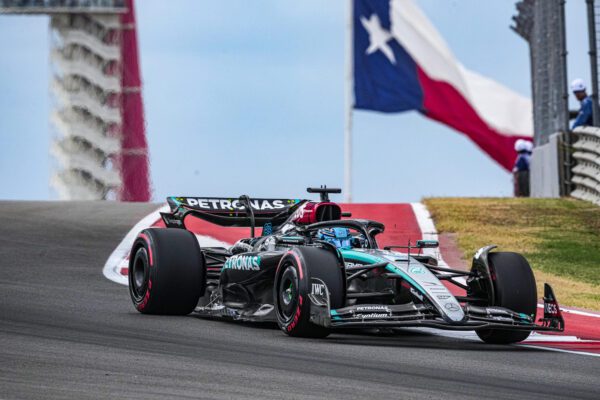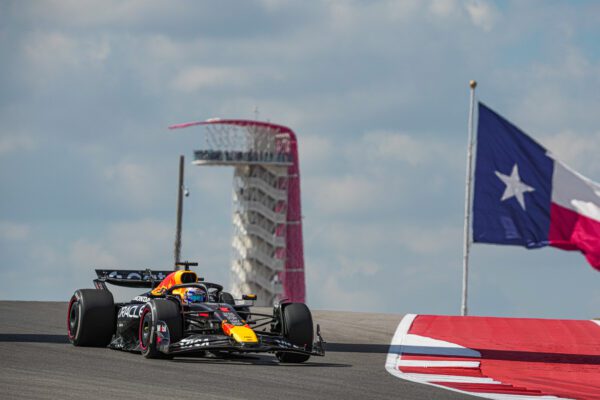




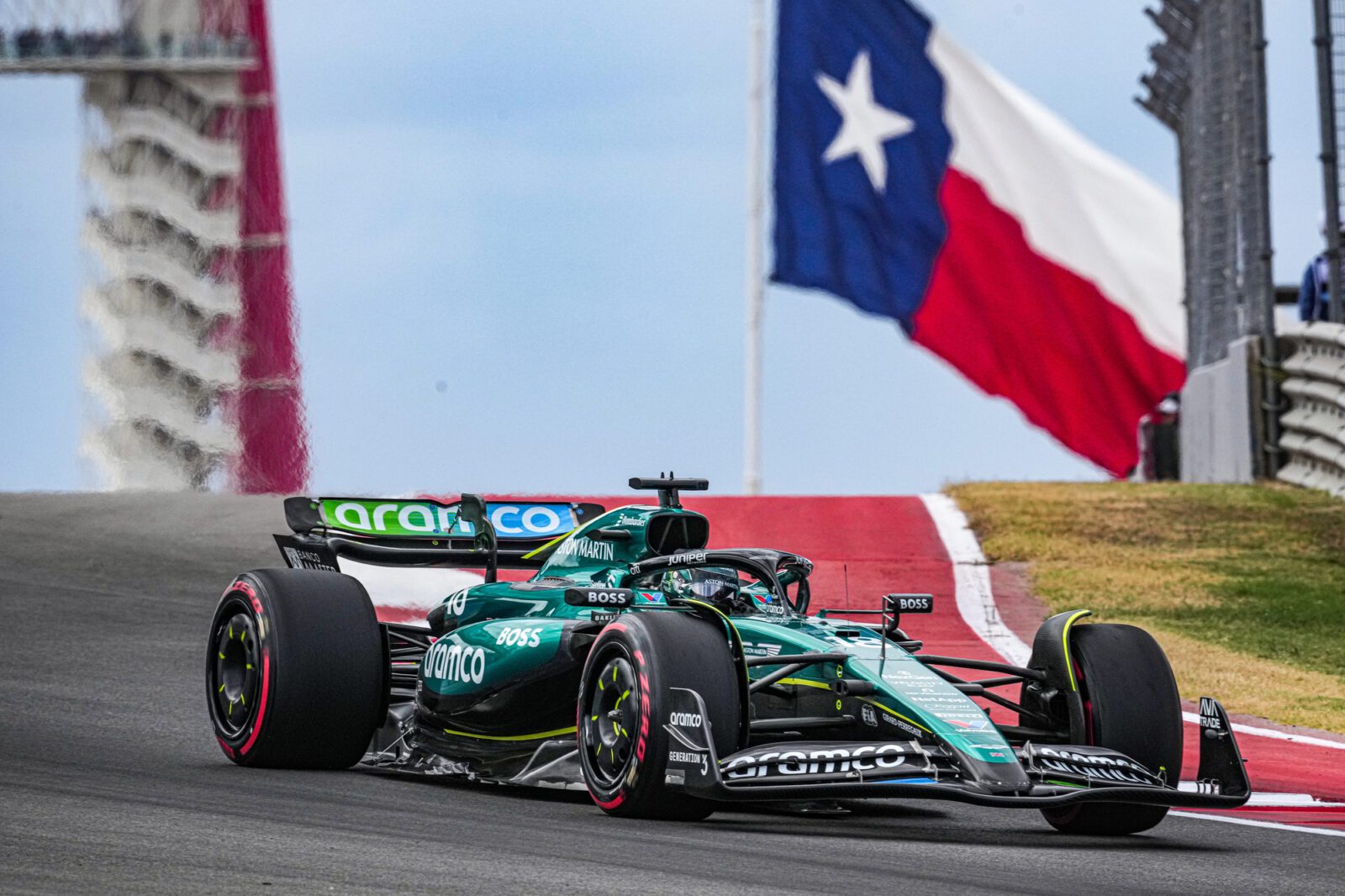
The Circuit of the Americas, known as COTA, was purpose-built in 2012 to bring Formula 1 racing back to the United States. Designed by Hermann Tilke, the 5.513-kilometre track features 20 corners and significant elevation changes, creating numerous opportunities for wheel-to-wheel battles.
COTA is one of only two FIA Grade 1 circuits in the United States capable of hosting a Formula 1 race. Its layout combines long straights, fast corners, and heavy braking zones, demanding a balance between top speed and stability.
Turn 1: the iconic uphill challenge
The run from the starting grid to Turn 1 at COTA is one of Formula 1’s most distinctive features, rising steeply by approximately 41 metres (133 feet) into a blind, tightening left-hander. This dramatic uphill sprint makes the apex almost blind on approach, demanding precise braking around the 100-meter board.
Drivers often shift down to first or second gear for this corner, aiming for an early apex and cutting in late.
The wide crest of Turn 1, also known as “Big Red,” allows for multiple racing lines, enabling attacking drivers to attempt late-braking moves from various angles. This characteristic makes it a classic overtaking spot, frequently witnessing significant drama and collisions, particularly on the opening lap.
Spectators in the Turn 1 grandstand have an unparalleled view of the entire circuit from this highest point.
Turn 12: heavy braking after the long straight
Turn 12 at the Circuit of the Americas is a prime overtaking location, situated at the end of the circuit’s longest straight. This kilometre-long (0.63-mile) back straight allows Formula 1 cars to reach speeds exceeding 200 mph, often up to 214 mph, before drivers must heavily brake for the sharp left-handed corner.
The straight is designated as a Straight Mode Zone, assisting drivers with DRS to gain a significant slipstream advantage.
The heavy braking zone for Turn 12 is a critical point for race-defining moves, testing a driver’s bravery and commitment. Drivers typically brake around the 100-meter marker, dropping to second gear to navigate the corner.
This left-hander offers an open apex, providing multiple lines for an attacking driver to exploit.
The stadium section: turns 13 to 15 technicality
Following the heavy braking for Turn 12, drivers enter the technical “stadium section,” which comprises Turns 13 to 15. This sequence of tight, twisting, and slower corners is designed to create further overtaking opportunities.
The section is reminiscent of the stadium section at Hockenheim, demanding precision and balance from the cars.
Drivers can force mistakes from their opponents through this intricate series of corners, maintaining wheel-to-wheel possibilities all the way to the braking zone for Turn 16. The stadium section rewards consistency and confidence, as misplacing an apex can compromise the entire sequence.
This area is a fan favorite, with grandstands offering excellent views of the close-quarters racing.
Turn 20: final lunge onto the main straight
Turn 20, often referred to as “The Andretti,” represents the final corner of the Circuit of the Americas lap. This pivotal turn is important for launching a final overtaking attempt onto the main straight towards the finish line.
Drivers aim to carry maximum speed through Turn 20 to optimize their exit onto the pit straight.
A strong exit from Turn 20 is essential for setting up a potential slipstream opportunity into Turn 1 on the subsequent lap. While less common than Turn 1 or Turn 12, some drivers have attempted late lunges into this slow final corner.
Mastering Turn 20 requires precise throttle application to avoid traction loss and ensure a powerful run to the start/finish line.
The switchback maneuver and its dangers
The switchback is a sophisticated overtaking maneuver where an attacking driver intentionally allows the defending car to take a tight, compromised line into a corner. The attacking driver then turns later, aiming for a cleaner, wider exit to accelerate past the defender as they leave the corner.
This technique relies on the defender sacrificing corner exit speed for an early apex.
The risks of a switchback are significant; an attacking driver can run wide on entry or exit, immediately getting countered by the defending car. If the attacking car fails to secure a clean exit, the defender can regain the advantage or even re-pass them on the subsequent straight.
Successful execution demands incredible anticipation, timing, and absolute control under braking.
| Corner Number | Overtaking Characteristic | Key Features |
|---|---|---|
| Turn 1 | Classic late-braking opportunity | Uphill, blind apex, wide crest, multiple lines |
| Turn 12 | Heavy braking zone after long straight | DRS zone, high speed approach, sharp left-hander |
| Turns 13-15 | Technical, slower section | Stadium section, tight twisting corners, force mistakes |
| Turn 20 | Final lunge onto main straight | Crucial for exit speed, sets up next lap’s Turn 1 |