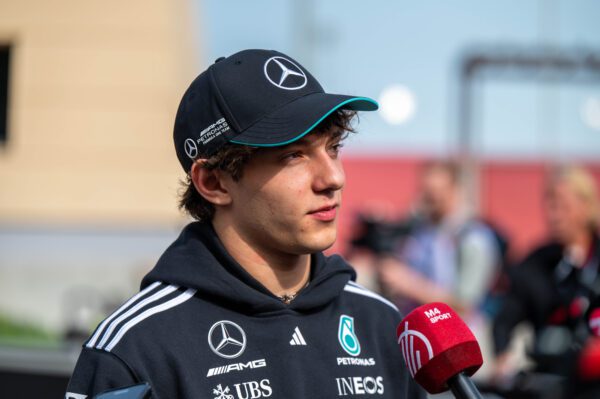


Kimi Antonelli faces a critical Mexico City Grand Prix today, where he can secure the 2026 Formula 1 World Championship. The Mercedes driver starts from fourth position on the grid, needing only a ninth-place finish or higher to clinch his maiden title. This would make him the youngest World Champion in F1 history, surpassing Sebastian Vettel’s record from 2010.
Antonelli currently holds a 123-point lead over teammate George Russell and a 124-point advantage over Ferrari’s Lewis Hamilton. Only these two drivers remain mathematically capable of preventing Antonelli from securing the championship in Mexico.
Despite his dominant season, which includes nine Grand Prix victories, Antonelli has experienced a challenging weekend at the Autódromo Hermanos Rodríguez. He has consistently trailed Russell in most sessions, a departure from his usual performance this year.
Antonelli admitted to feeling ‘more tense than usual’ during qualifying, a factor compounded by his ongoing recovery from a viral illness that caused him to miss Thursday’s media day.
However, telemetry data indicates that psychological pressure is not the sole reason for his struggles. The unique characteristics of the Mexico City circuit play a significant role. The track sits at approximately 2,240 to 2,285 metres above sea level, making it the highest on the Formula 1 calendar.
This high altitude results in air density that is roughly 20-25% lower than at sea level. Consequently, cars generate significantly less aerodynamic downforce, leading to exceptionally low grip levels.
Teams run maximum downforce configurations, yet the actual downforce achieved is comparable to that of low-downforce circuits. The thinner air also reduces drag, contributing to high top speeds on the straights.
Cooling is another major challenge due to the less dense air, necessitating larger bodywork gills and increased brake duct openings. The 2026 regulations, with the removal of the MGU-H, place a heavier burden on the turbocharger at high altitude, making reliability a key concern.

The Autódromo Hermanos Rodríguez features long straights and predominantly slow-speed corners, with few high-speed sweeps. Engineers must prioritize low-speed mechanical grip and traction in their setups.
Former F1 driver Jolyon Palmer noted that the car feels ‘low on grip and on the edge’ and ‘clumsy at such a low speed’ in Mexico City. Tyre slip and graining are also significant factors due to the reduced aerodynamic load.
Antonelli’s driving style, characterized by aggressive turn-in and rapid steering inputs to shorten corner radii, is generally well-suited to the 2026 cars, particularly in tight corners. His smooth inputs and focus on energy harvesting under braking are typically advantageous.
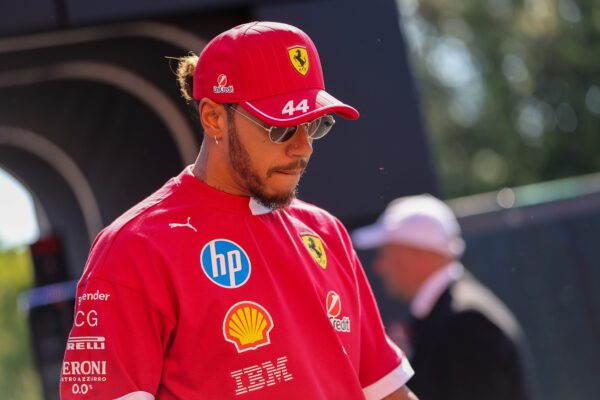
However, the extreme low-grip environment in Mexico City does not fully complement this style. During Saturday’s qualifying, a smoother driving approach proved superior, as demonstrated by Lewis Hamilton’s pole position and Russell’s second place.
Telemetry from Antonelli’s qualifying lap revealed specific errors. He clipped the apex wide at Turn 7, compromising his line through Turn 8. He then braked later than Hamilton into Turn 12 in an attempt to recover time, but ran wide, losing further time in a slow-speed section. These two errors were also evident when comparing his lap to Russell’s.
Despite these qualifying difficulties, Antonelli showed encouraging long-run pace during FP2 on the medium compound, matching Charles Leclerc’s times. His only minor issue was an overly aggressive start to the stint, which forced him to manage his tyres later.
Mercedes has acknowledged that while their upgraded W17 car has performance, consistently accessing its ‘sweet spot’ has been challenging, particularly for Russell. The team’s low-speed corner performance remains a weak point, and power unit reliability has been a concern throughout the season.
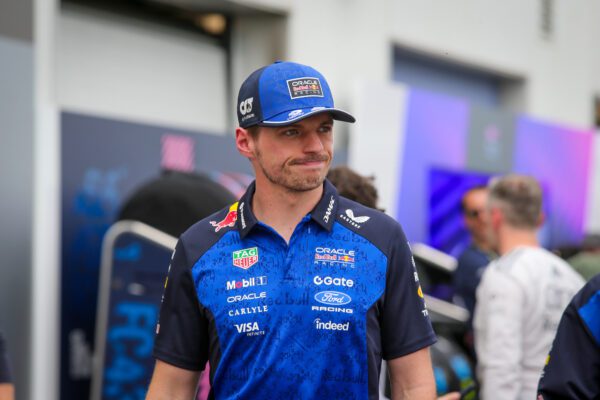
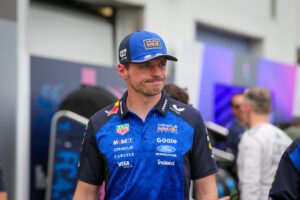
Antonelli will start the race from fourth position, benefiting from a one-place grid penalty issued to Max Verstappen. Verstappen received the penalty for a collision with Liam Lawson during Friday’s second practice session.
The stewards deemed the incident, which occurred on the approach to Turn 12 and through Turns 13-14, as ‘unacceptable,’ citing a prior warning given to team managers regarding similar practice incidents. Both drivers admitted their actions were ‘unnecessary’ and ‘clumsy.’
With the championship on the line, Antonelli’s ability to manage the unique track conditions and potential first-lap hazards will be crucial. His long-run pace suggests he has the underlying speed to contend for victory if he can navigate the opening stages cleanly.