

The Formula 1 World Championship, established in 1950, represents the pinnacle of global motorsport, crowning both a World Drivers’ Champion and a World Constructors’ Champion each season. Over its rich history, 35 different drivers have achieved the coveted title, with the championship often decided in thrilling fashion.
The Constructors’ Championship, introduced in 1958, recognizes the most successful team, highlighting engineering prowess and strategic excellence. These titles are awarded by the Fédération Internationale de l’Automobile (FIA) based on a comprehensive points system accumulated throughout the Formula 1 season.
Drivers’ world champions: a historical overview
The inaugural Formula 1 World Drivers’ Champion was Giuseppe Farina, who secured the title in 1950 driving for Alfa Romeo. Since then, a diverse array of talent has graced the sport, etching their names into the annals of history.
The championship has seen periods of dominant individual performances and intense rivalries, contributing to its enduring appeal. As of the 2025 season, Lando Norris is recognized as the most recent World Drivers’ Champion.
| Year | Driver | Team |
|---|---|---|
| 1950 | Giuseppe Farina | Alfa Romeo |
| 1951 | Juan Manuel Fangio | Alfa Romeo |
| 1952 | Alberto Ascari | Ferrari |
| 1953 | Alberto Ascari | Ferrari |
| 1954 | Juan Manuel Fangio | Maserati / Mercedes |
| 1955 | Juan Manuel Fangio | Mercedes |
| 1956 | Juan Manuel Fangio | Ferrari |
| 1957 | Juan Manuel Fangio | Maserati |
| 1958 | Mike Hawthorn | Ferrari |
| 1959 | Jack Brabham | Cooper |
| 1960 | Jack Brabham | Cooper |
| 1961 | Phil Hill | Ferrari |
| 1962 | Graham Hill | BRM |
| 1963 | Jim Clark | Lotus |
| 1964 | John Surtees | Ferrari |
| 1965 | Jim Clark | Lotus |
| 1966 | Jack Brabham | Brabham |
| 1967 | Denny Hulme | Brabham |
| 1968 | Graham Hill | Lotus |
| 1969 | Jackie Stewart | Matra |
| 1970 | Jochen Rindt | Lotus |
| 1971 | Jackie Stewart | Tyrrell |
| 1972 | Emerson Fittipaldi | Lotus |
| 1973 | Jackie Stewart | Tyrrell |
| 1974 | Emerson Fittipaldi | McLaren |
| 1975 | Niki Lauda | Ferrari |
| 1976 | James Hunt | McLaren |
| 1977 | Niki Lauda | Ferrari |
| 1978 | Mario Andretti | Lotus |
| 1979 | Jody Scheckter | Ferrari |
| 1980 | Alan Jones | Williams |
| 1981 | Nelson Piquet | Brabham |
| 1982 | Keke Rosberg | Williams |
| 1983 | Nelson Piquet | Brabham |
| 1984 | Niki Lauda | McLaren |
| 1985 | Alain Prost | McLaren |
| 1986 | Alain Prost | McLaren |
| 1987 | Nelson Piquet | Williams |
| 1988 | Ayrton Senna | McLaren |
| 1989 | Alain Prost | McLaren |
| 1990 | Ayrton Senna | McLaren |
| 1991 | Ayrton Senna | McLaren |
| 1992 | Nigel Mansell | Williams |
| 1993 | Alain Prost | Williams |
| 1994 | Michael Schumacher | Benetton |
| 1995 | Michael Schumacher | Benetton |
| 1996 | Damon Hill | Williams |
| 1997 | Jacques Villeneuve | Williams |
| 1998 | Mika Häkkinen | McLaren |
| 1999 | Mika Häkkinen | McLaren |
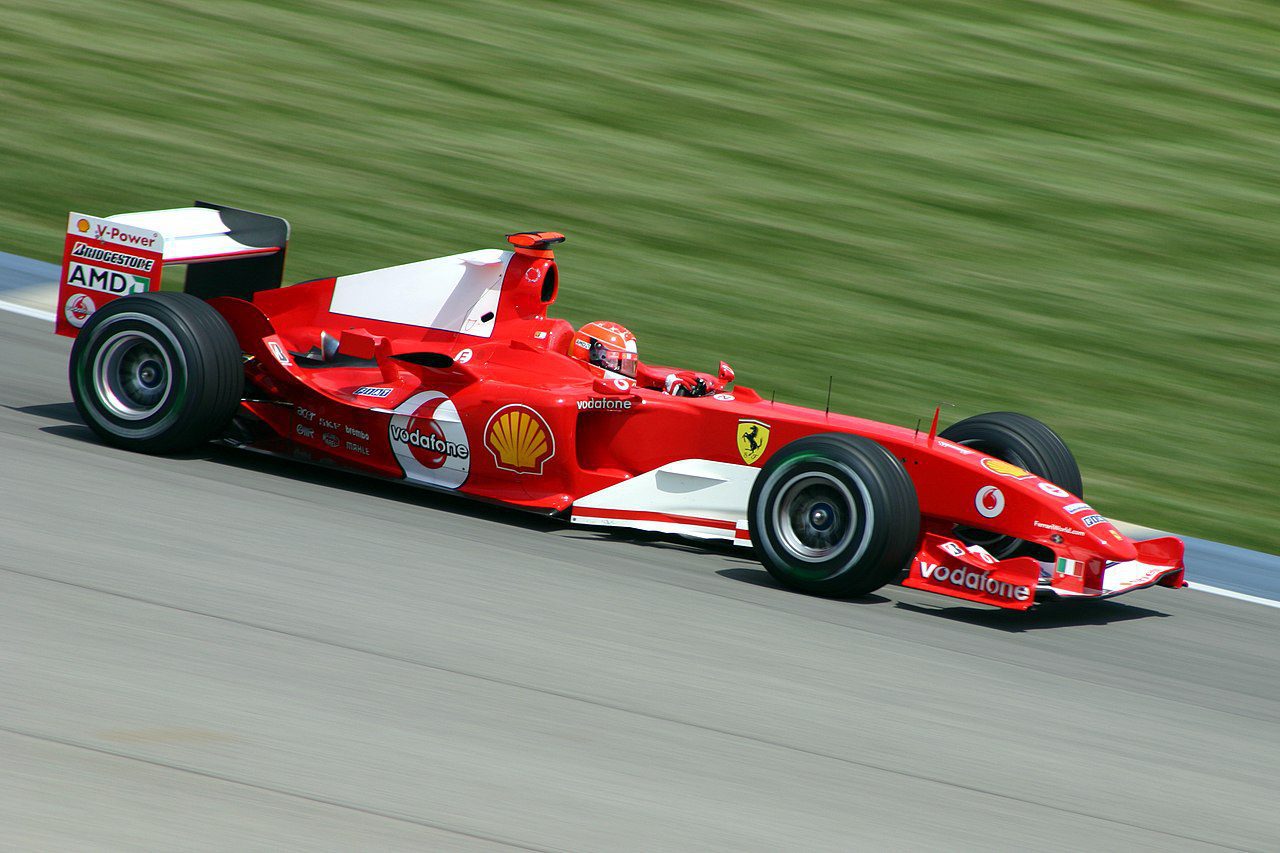
| 2000 | Michael Schumacher | Ferrari |
| 2001 | Michael Schumacher | Ferrari |
| 2002 | Michael Schumacher | Ferrari |
| 2003 | Michael Schumacher | Ferrari |
| 2004 | Michael Schumacher | Ferrari |
| 2005 | Fernando Alonso | Renault |
| 2006 | Fernando Alonso | Renault |
| 2007 | Kimi Räikkönen | Ferrari |
| 2008 | Lewis Hamilton | McLaren |
| 2009 | Jenson Button | Brawn GP |
| 2010 | Sebastian Vettel | Red Bull |
| 2011 | Sebastian Vettel | Red Bull |
| 2012 | Sebastian Vettel | Red Bull |
| 2013 | Sebastian Vettel | Red Bull |
| 2014 | Lewis Hamilton | Mercedes |
| 2015 | Lewis Hamilton | Mercedes |
| 2016 | Nico Rosberg | Mercedes |
| 2017 | Lewis Hamilton | Mercedes |
| 2018 | Lewis Hamilton | Mercedes |
| 2019 | Lewis Hamilton | Mercedes |
| 2020 | Lewis Hamilton | Mercedes |
| 2021 | Max Verstappen | Red Bull |
| 2022 | Max Verstappen | Red Bull |
| 2023 | Max Verstappen | Red Bull |
| 2024 | Max Verstappen | Red Bull |
| 2025 | Lando Norris | McLaren |
The most successful drivers in Formula 1 history
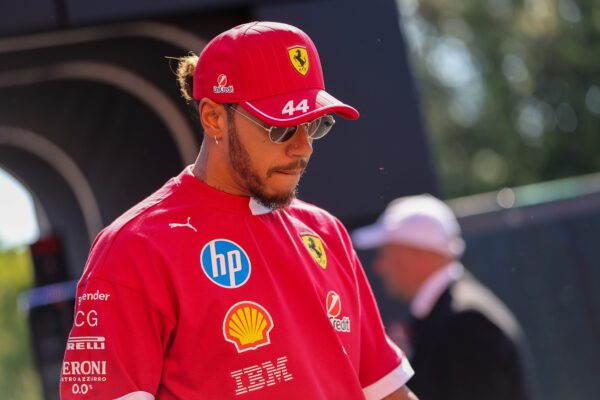
Two names stand above all others in the pantheon of Formula 1 drivers’ champions: Michael Schumacher and Lewis Hamilton. Both legendary figures have secured a remarkable seven World Drivers’ Championship titles during their illustrious careers.
Schumacher achieved his seven titles with Benetton and Ferrari, including an unprecedented five consecutive championships from 2000 to 2004. Hamilton’s seven championships were won with McLaren and Mercedes, showcasing his sustained dominance across different eras of the sport.
Following closely behind these two titans is Juan Manuel Fangio, an Argentine maestro who claimed five World Drivers’ Championships in the 1950s. His era was marked by incredible versatility, winning titles with four different constructors.
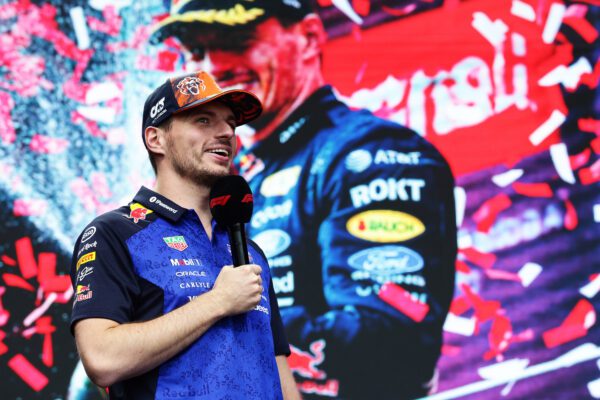
Sebastian Vettel and Alain Prost each hold four World Drivers’ Championship titles. Vettel achieved his four consecutive championships with Red Bull Racing from 2010 to 2013, while Prost’s titles were won with McLaren and Williams.
Constructors’ world champions: dominance and dynasties
The Constructors’ Championship recognizes the collective effort of a team, encompassing car design, engine development, and strategic execution. Ferrari stands as the most successful constructor in Formula 1 history, boasting an impressive 16 titles.
McLaren holds the second-highest number of Constructors’ Championships with 10 titles, demonstrating their consistent competitiveness over decades. Williams follows with nine championships, solidifying their place among the sport’s most successful teams.
Mercedes has also established a formidable legacy, securing eight Constructors’ Championships, including a record-breaking eight consecutive titles from 2014 to 2021. The first Constructors’ Championship was awarded to Vanwall in 1958.
| Team | Number of Titles | Years |
|---|---|---|
| Ferrari | 16 | 1961, 1964, 1975, 1976, 1977, 1979, 1982, 1983, 1999, 2000, 2001, 2002, 2003, 2004, 2007, 2008 |
| McLaren | 10 | 1974, 1984, 1985, 1988, 1989, 1990, 1991, 1998, 2021, 2025 |
| Williams | 9 | 1980, 1981, 1986, 1987, 1992, 1993, 1994, 1996, 1997 |
| Mercedes | 8 | 2014, 2015, 2016, 2017, 2018, 2019, 2020, 2021 |
| Lotus | 7 | 1963, 1965, 1968, 1970, 1972, 1973, 1978 |
| Red Bull | 6 | 2010, 2011, 2012, 2013, 2022, 2023, 2024 |
| Brabham | 2 | 1966, 1967 |
| Cooper | 2 | 1959, 1960 |
| Renault | 2 | 2005, 2006 |
| Tyrrell | 1 | 1971 |
| BRM | 1 | 1962 |
| Matra | 1 | 1969 |
| Vanwall | 1 | 1958 |
| Brawn GP | 1 | 2009 |
Key records and milestones
Beyond the sheer number of titles, Formula 1 history is rich with various records and milestones. Sebastian Vettel holds the distinction of being the youngest World Drivers’ Champion, achieving the feat at 23 years and 134 days old in 2010.
Conversely, Juan Manuel Fangio remains the oldest champion, winning his final title in 1957 at the age of 46 years and 41 days. The United Kingdom has produced the most World Drivers’ Champions, with 11 different drivers accumulating a total of 21 titles.
Michael Schumacher’s five consecutive titles from 2000 to 2004 represent the longest streak of drivers’ championships. Mercedes’ eight consecutive Constructors’ Championships from 2014 to 2021 is also a remarkable display of sustained team dominance.
The evolution of the championship
The Formula 1 World Championship is awarded at the FIA Prize Giving Ceremony following the conclusion of each season. The points system, which determines both the Drivers’ and Constructors’ Champions, has evolved over the years to ensure fair and competitive outcomes.
Championships can be mathematically clinched before the final race of the season, but the official recognition occurs at the post-season ceremony. The intensity of the competition is often highlighted by championships decided in the final race, which has occurred 31 times in the 76 seasons the title has been awarded.