Formula 1 has consistently delivered moments of unparalleled drama, skill, and raw emotion throughout its storied history. These events, often characterized by fierce rivalries, nail-biting championship deciders, or extraordinary displays of driving in challenging conditions, have cemented their place in motorsport folklore.
From the earliest days of the world championship to the modern era, certain races stand out as truly iconic, captivating audiences and shaping the narrative of the sport for generations. These are the contests where legends were forged and the limits of human and mechanical performance were pushed to their absolute maximum.
Legendary championship deciders
The 1976 Japanese Grand Prix at Fuji Speedway remains one of Formula 1’s most dramatic title deciders, pitting James Hunt against Niki Lauda. Torrential rain made the circuit treacherous, leading Lauda to famously retire after two laps, stating his life was worth more than a title.
Hunt, despite a late pit stop, finished third to clinch the championship by a single point, a season immortalized by their intense rivalry.
Another multi-driver showdown occurred at the 1986 Australian Grand Prix in Adelaide, where Alain Prost, Nigel Mansell, and Nelson Piquet battled for the title. Mansell, needing only third place, suffered a spectacular rear tyre blowout, ending his hopes.
Prost ultimately secured the championship by two points after a tense race.
The 1994 Australian Grand Prix saw a controversial collision between Michael Schumacher and Damon Hill, deciding the championship. Schumacher, leading by one point, crashed into a wall and then collided with Hill as the Briton attempted to overtake.
Both drivers retired, handing Schumacher his first world title in a dramatic and much-debated incident.
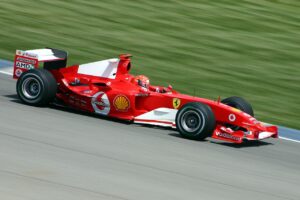
Three years later, the 1997 European Grand Prix at Jerez featured another title-deciding clash involving Michael Schumacher, this time with Jacques Villeneuve. Schumacher attempted to block Villeneuve, resulting in contact that forced the German to retire.
Villeneuve continued, albeit with damage, to finish third and secure his sole world championship.
The 2008 Brazilian Grand Prix provided a thrilling conclusion to the championship battle between Lewis Hamilton and Felipe Massa. Hamilton snatched the title on the very last corner of the final lap, overtaking Timo Glock to secure the necessary fifth position.
Massa, who had won the race and briefly believed he was champion, was denied by Hamilton’s late heroics.
Sebastian Vettel became Formula 1’s youngest champion at the 2010 Abu Dhabi Grand Prix, overcoming Fernando Alonso and Mark Webber. Ferrari’s strategic error saw Alonso pit early to cover Webber, leaving both drivers stuck behind Vitaly Petrov.
Vettel, starting from pole, drove a flawless race to victory and clinched the title.
The 2012 Brazilian Grand Prix was another nail-biting decider between Sebastian Vettel and Fernando Alonso. Vettel spun early in the race after contact with Bruno Senna, but mounted an epic recovery drive in mixed conditions.
Despite Alonso finishing second, Vettel’s sixth-place finish was enough to secure his third consecutive world championship by three points.
One of the most intense modern title deciders was the 2021 Abu Dhabi Grand Prix, where Lewis Hamilton and Max Verstappen arrived level on points. A late safety car period, triggered by Nicholas Latifi’s crash, allowed Verstappen to pit for fresh soft tyres.
On the final lap restart, Verstappen overtook Hamilton to win the race and his maiden world championship.
Fierce driver rivalries and on-track battles
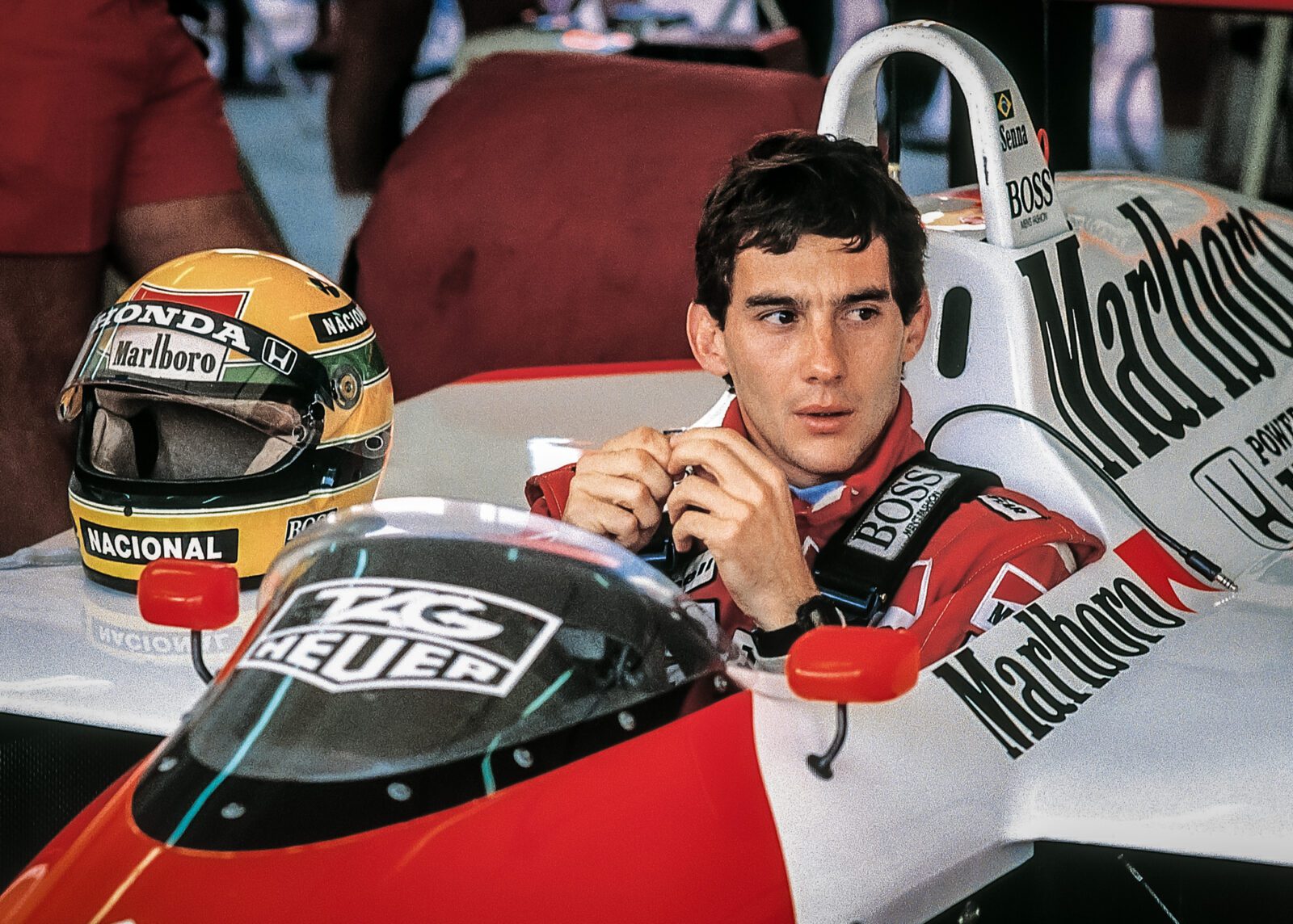
The rivalry between Ayrton Senna and Alain Prost is arguably the most iconic in Formula 1 history, marked by intense competition and controversial incidents. Their battles, particularly during their time as McLaren teammates, captivated the motorsport world.
The 1989 Japanese Grand Prix saw Prost take the title after a collision with Senna, who was later disqualified. The following year, at the 1990 Japanese Grand Prix, Senna retaliated by colliding with Prost at the first corner, securing his own championship.
These moments defined an era of fierce competition and mutual obsession.
Gilles Villeneuve and René Arnoux delivered one of the most spectacular wheel-to-wheel duels at the 1979 French Grand Prix at Dijon-Prenois. For the final two laps, the two drivers exchanged positions multiple times, banging wheels and pushing their cars to the absolute limit.
Villeneuve ultimately emerged victorious in a battle that showcased incredible bravery and car control.
The rivalry between Michael Schumacher and Mika Häkkinen in the late 1990s and early 2000s produced many memorable on-track encounters. Their duel at the 2000 Belgian Grand Prix, where Häkkinen famously overtook Schumacher while lapping Ricardo Zonta, is often cited as one of the greatest overtakes.
This demonstrated the precision and daring of both champions.
Lewis Hamilton and Nico Rosberg’s rivalry, as Mercedes teammates, brought a new level of intensity to the turbo-hybrid era. Their championship battles from 2014 to 2016 were characterized by close racing and occasional flashpoints.
The 2016 season, in particular, saw them push each other to the limit, culminating in Rosberg’s championship victory.
In recent years, the burgeoning rivalry between Max Verstappen and Charles Leclerc has delivered several thrilling battles. Their wheel-to-wheel racing at circuits like the 2022 Saudi Arabian Grand Prix and the 2022 Austrian Grand Prix showcased their aggressive yet fair driving styles.
These encounters promise to be a defining feature of future Formula 1 seasons.
Masterful wet weather performances
Wet weather races often separate the good drivers from the truly exceptional, and Formula 1 history is replete with such masterclasses. The 1984 Monaco Grand Prix, shortened due to torrential rain, saw Ayrton Senna announce his arrival on the world stage.
Driving a Toleman, he rapidly climbed through the field, challenging Alain Prost for the lead before the race was red-flagged.
Senna’s first Formula 1 victory came in similarly challenging conditions at the 1985 Portuguese Grand Prix. He dominated the race in his Lotus, demonstrating incredible car control and precision in the pouring rain.
This performance cemented his reputation as a wet-weather specialist.
The 1993 European Grand Prix at Donington Park is widely regarded as one of Ayrton Senna’s greatest drives, often dubbed the “lap of the gods.” Starting fourth on a soaking wet track, Senna dropped to fifth but then overtook four cars on the opening lap to take the lead. He went on to win the race by a significant margin in a car considered inferior to his rivals.
Michael Schumacher’s victory at the 1996 Spanish Grand Prix in his Ferrari was a sign of his wet-weather prowess. Despite an uncompetitive car, Schumacher delivered a dominant performance in the rain, pulling away from the field with ease.
This race is often cited as one of his most impressive drives.
Lewis Hamilton delivered a commanding performance at the 2008 British Grand Prix, winning by over a minute in treacherous conditions. His ability to find grip where others struggled was exceptional.
This victory was a crucial step towards his first world championship.
The 2011 Canadian Grand Prix holds the record as the longest Formula 1 race due to multiple red flags and safety car periods caused by heavy rain. Jenson Button, after multiple incidents and a drive-through penalty, charged from last place to win on the final lap.
He famously overtook Sebastian Vettel on the very last lap after the Red Bull driver made a mistake.
Max Verstappen showcased his extraordinary talent in the wet at the 2016 Brazilian Grand Prix. He made a series of audacious overtakes in the pouring rain, climbing from 16th to third in the closing stages of the race.
His car control and daring moves in the spray were truly remarkable.
The 2021 Belgian Grand Prix at Spa-Francorchamps was the shortest F1 race in history, with only a few laps completed behind the safety car due to persistent heavy rain. While not a race of overtakes, it highlighted the extreme conditions that can sometimes halt even Formula 1.
The 2024 São Paulo Grand Prix also featured Max Verstappen demonstrating superlative skill in the worst conditions, further cementing his reputation.
Iconic Formula 1 races
| Year | Grand Prix | Winner | Key Highlight |
|---|---|---|---|
| 1976 | Japanese Grand Prix | James Hunt | Championship decider in torrential rain, Lauda’s retirement. |
| 1979 | French Grand Prix | Jean-Pierre Jabouille | Villeneuve vs. Arnoux wheel-to-wheel battle for second. |
| 1984 | Monaco Grand Prix | Alain Prost | Senna’s emergence in the wet, race red-flagged. |
| 1985 | Portuguese Grand Prix | Ayrton Senna | Senna’s dominant first F1 victory in heavy rain. |
| 1986 | Australian Grand Prix | Alain Prost | Three-way title decider, Mansell’s tyre blowout. |
| 1990 | Japanese Grand Prix | Nelson Piquet | Senna vs. Prost first corner collision for the title. |
| 1993 | European Grand Prix | Ayrton Senna | Senna’s “lap of the gods” in the wet at Donington. |
| 1996 | Spanish Grand Prix | Michael Schumacher | Schumacher’s dominant wet-weather victory in an inferior car. |
| 2008 | Brazilian Grand Prix | Felipe Massa | Hamilton’s last-corner championship win. |
| 2011 | Canadian Grand Prix | Jenson Button | Charge from last to first in the longest F1 race. |
| 2021 | Abu Dhabi Grand Prix | Max Verstappen | Controversial last-lap championship decider. |
Enduring legacy of Formula 1’s greatest moments
These iconic races, legendary battles, and masterful wet weather performances are more than just statistics; they are the very fabric of Formula 1’s appeal. They represent the pinnacle of human endeavor, technological innovation, and sporting drama.
Each event contributes to the rich tapestry of the sport, inspiring new generations of fans and drivers alike.
The memories of these extraordinary moments continue to resonate, reminding us why Formula 1 remains the ultimate test of speed, skill, and courage. They are a sign of the unpredictable nature of motorsport and the enduring pursuit of victory against all odds.