


Formula 1 cars undergo significant modifications to maintain performance and safety when racing in wet conditions. These adaptations address the fundamental reduction in grip caused by water on the track surface.
Engineers focus on optimising tyre performance, chassis setup, aerodynamics, braking, and engine mapping for rainy races.
Wet weather tyres: the foundation of grip
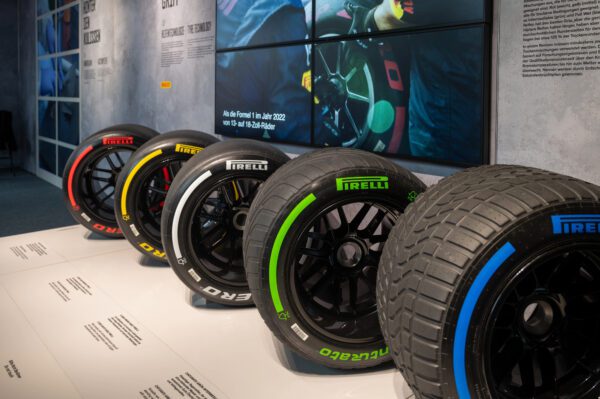
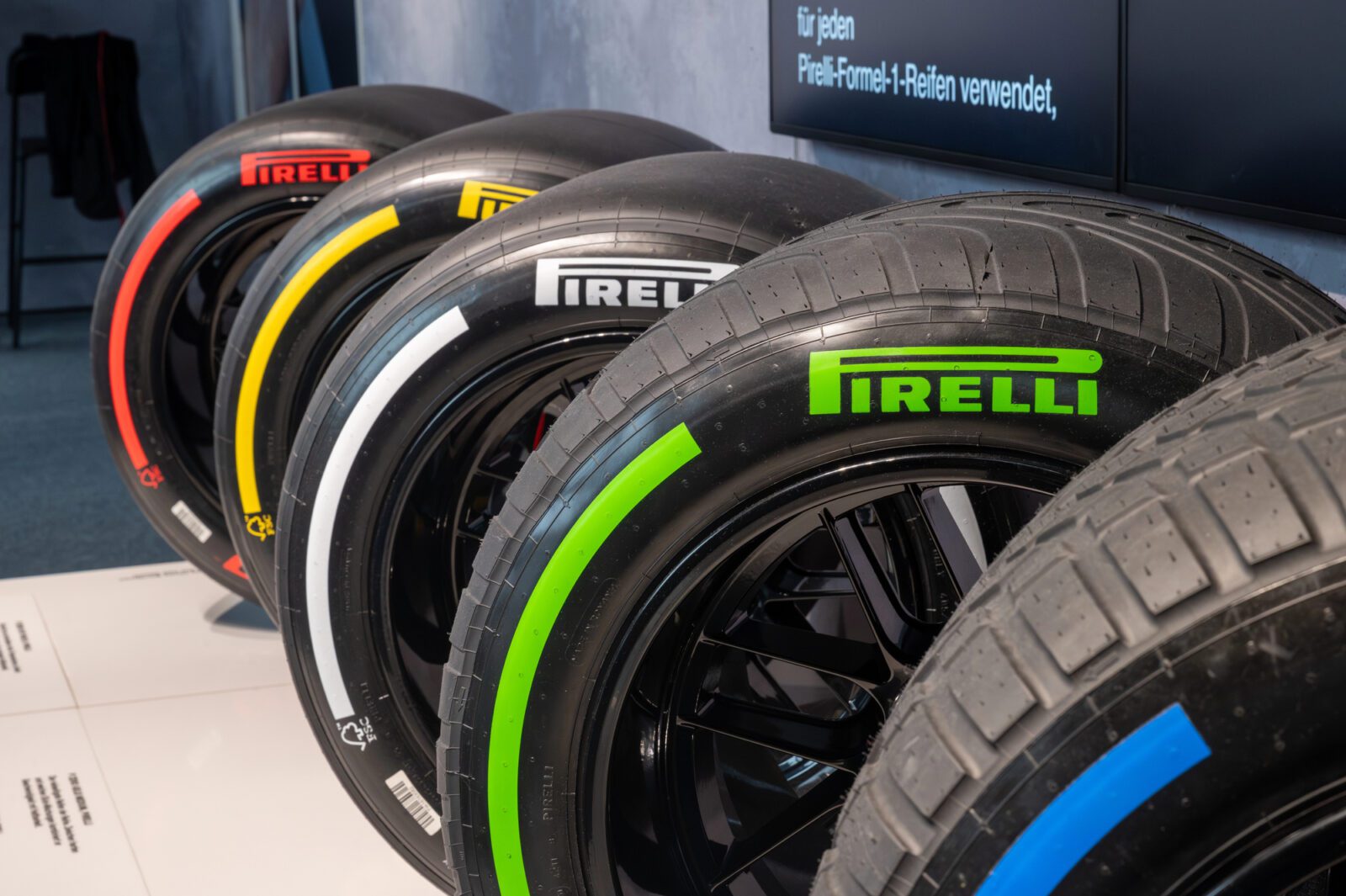
Pirelli, as the sole tyre supplier for Formula 1, provides two specific wet-weather tyre compounds: intermediates and full wets. These grooved tyres are designed to displace water from the track, allowing the rubber to maintain contact with the asphalt.
The intermediate tyre, identified by a green sidewall, is suitable for damp or drying tracks and light rain conditions.
Full wet tyres, marked with a blue sidewall, are engineered for heavy rain and significant standing water. These tyres feature deeper grooves to clear a larger volume of water per second, effectively combating aquaplaning.
The ability to displace water is important for maintaining traction at high speeds.
| Tyre Type | Sidewall Colour | Conditions | Water Displacement (litres/second at 300 km/h) |
|---|---|---|---|
| Intermediate | Green | Damp or drying track, light rain | Up to 30 |
| Full Wet | Blue | Heavy rain, standing water | Up to 85 |
The coefficient of friction is greatly reduced in wet weather, meaning tyres generate less grip compared to dry conditions. Drivers often adjust their racing line in the wet, moving off the rubbered-in dry line to find more grip on the less polished asphalt.
This strategy helps to avoid the slippery rubber build-up that becomes a disadvantage when wet.

Chassis adjustments: ride height and suspension
A critical adaptation for wet Formula 1 races involves increasing the car’s ride height. This adjustment helps prevent the car’s underbody from aquaplaning on standing water and reduces the risk of bottoming out, which can lead to a catastrophic loss of grip.
In dry conditions, cars run as low as possible to maximise underbody aerodynamics and lower the centre of gravity.
Suspension settings are also significantly softened for wet conditions. This includes reducing spring rates and softening the shock absorbers (dampers) in both compression and rebound.
A softer suspension allows for more gradual weight transfer, giving the driver more time to react to a loss of traction before a spin becomes unrecoverable. Anti-roll bars are also softened, or sometimes even disconnected, to improve mechanical grip in low-traction environments.
Camber angle, the inclination of the wheels, may also be adjusted. Reducing negative camber can help the tyres evacuate more water in a straight line, which improves traction.
These mechanical changes are made proportionally at both the front and rear of the car to maintain overall balance.
Aerodynamic configuration for rain
Aerodynamic adjustments are essential to compensate for the reduced grip in wet conditions. Teams dramatically increase downforce by steepening the angle of the front and rear wings.
This sacrifices top speed on the straights but presses the car harder into the track, providing crucial stability through corners.
The lower speeds experienced in wet races mean that the aerodynamic load generated by the underbody and diffuser is significantly reduced. Engineers must compensate for this by relying more heavily on the wings to generate downforce.
For the 2026 season, smaller diffusers are expected, which the FIA hopes may mitigate some of the spray effect generated by the underfloor aerodynamics.
The 2026 regulations also introduce adjustable front and rear wings, providing both high and low downforce arrangements. This system, replacing the previous Drag Reduction System (DRS), allows drivers to select higher downforce for increased grip in corners, which is particularly beneficial in wet conditions.
The overall design changes for 2026 aim to reduce drag by 40% and downforce by 15-30% compared to previous generations, making aerodynamic setup even more critical.
Braking and engine management in wet conditions
Brake balance, or brake bias, is a critical adjustment drivers make, especially in the rain. In dry conditions, drivers typically favour more front braking pressure, often around a 55-60% front bias, to stabilise the car under heavy braking.
However, in wet conditions, the front brakes are more prone to locking up due to reduced grip.
To counteract this, drivers shift the brake bias further rearwards, sometimes closer to a 50/50 split, to prevent the front wheels from locking. This adjustment helps maintain stability and control during braking, reducing the likelihood of the car spinning.
Drivers can adjust this setting via a dial on their steering wheel during a lap.
Engine mapping is also modified for wet races to deliver power more smoothly. The engine is retuned to provide less harsh torque to the drivetrain, which significantly reduces the risk of wheel spin on the slippery surface.
While this may result in slightly less peak power, the smoother delivery is important for maintaining traction and drivability. Modern engine electronic control units facilitate these changes easily.
Visibility and safety protocols
Visibility is the primary safety concern in wet Formula 1 races, often leading to race delays or suspensions. F1 cars generate an enormous amount of spray, particularly from their underfloor aerodynamics and diffusers, which creates a dense cloud that can effectively blind following drivers.
Drivers have reported being unable to see cars just fifty metres ahead in heavy spray.
The FIA has explored solutions like spray guards fitted to the wheels, with Mercedes testing designs in 2023 and Ferrari trying larger guards in 2024. However, these tests have not yet offered an overwhelming difference in spray reduction and sometimes introduced issues like tyre overheating.
The 2026 regulations hope that smaller diffusers may help mitigate some of this effect.
Safety measures include deploying the safety car to neutralise the race and allow teams to switch to wet tyres, or even red-flagging a race if conditions are too dangerous. For 2026, new hazard lights are being introduced to complement the traditional red rain light, acknowledging the heightened concern for visibility.
The ‘Rain Hazard’ rule, introduced for 2026, allows teams to modify car setups between qualifying and race day if there is a greater than 40% chance of rain, providing flexibility to adapt to changing weather without parc fermé restrictions.