




Formula 1 drivers routinely lose between two and three kilograms of body weight during a single Grand Prix event. This substantial reduction is primarily due to excessive sweating, a direct consequence of the extreme conditions experienced within the cockpit.
The intense physical exertion combined with high temperatures inside the car contributes significantly to this fluid loss.
In particularly hot and humid races, such as those held in Singapore or Qatar, drivers can lose even more, with figures reaching up to three or four kilograms, equating to approximately four litres of fluid. This level of dehydration highlights the immense physical challenge of competing in Formula 1.
The Extreme Physical Demands of Formula 1 Racing
The cockpit of a Formula 1 car becomes an incredibly hot environment during a race, with temperatures frequently soaring to between 50 and 60 degrees Celsius. This intense heat originates from various sources, including the engine, electronics, and hydraulic lines, compounded by ambient air temperatures and direct sunlight.
Drivers are further subjected to heat stress by their mandatory fireproof race suits, balaclavas, gloves, and helmets, which effectively trap body heat. These multiple layers of protective gear prevent the body from cooling itself efficiently through the skin.
Beyond the heat, drivers endure immense physical exertion, including sustained G-forces that can exceed 5G in corners and under braking. This constant force, coupled with the need for intense concentration and precise muscular effort for up to two hours, significantly elevates their core body temperature and sweat rate.
The design of Formula 1 cars offers limited airflow into the cockpit for driver cooling, as extensive openings would compromise aerodynamic efficiency. This lack of effective ventilation further exacerbates the heat build-up around the driver.
Fluid Loss and Dehydration During a Grand Prix
The weight lost by Formula 1 drivers during a race is almost entirely fluid, not fat, resulting from profuse sweating. This significant fluid depletion can lead to severe dehydration if not properly managed.
Beyond water, perspiration also causes the loss of essential nutrients and electrolytes from the body. This depletion can impact a driver’s physical and cognitive performance, potentially affecting reaction times and decision-making capabilities at high speeds.
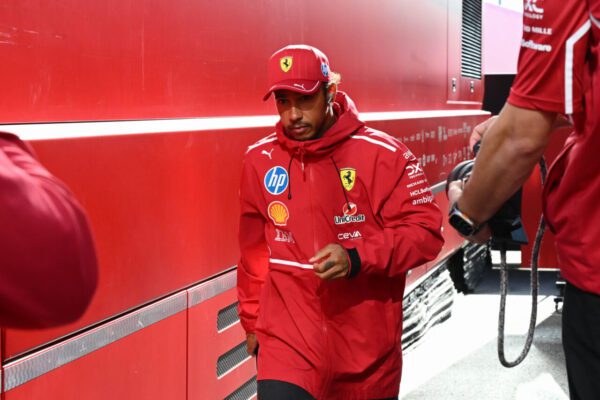
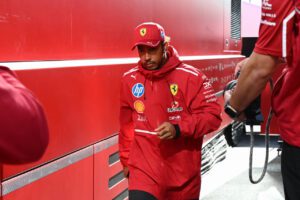
Notable examples of extreme fluid loss include Lewis Hamilton, who has reported losing up to 10 pounds (approximately 4.5 kilograms) during a race. George Russell also experienced a four-kilogram weight loss during the 2024 Singapore Grand Prix, underscoring the severity of these conditions.
FIA Regulations Mandate Post-Race Weigh-Ins
Formula 1 drivers are weighed immediately after a race for two primary reasons: to ensure compliance with technical regulations and for crucial medical monitoring. This procedure is a strict requirement enforced by the Fédération Internationale de l’Automobile (FIA).
From a technical standpoint, the driver’s weight is considered an integral part of the car’s overall minimum weight requirement. The post-race weigh-in confirms that the combined weight of the car and driver, including their helmet, race suit, and seat, still meets the regulatory minimum after fuel burn-off and fluid loss.
This regulation prevents teams from gaining an unfair competitive advantage by using an underweight driver or by illegally shedding ballast or fluids during the race. If a car and driver are found to be below the minimum weight, it can result in disqualification or other penalties.
Medically, the weigh-in provides vital data for doctors and physiotherapists to assess the extent of a driver’s fluid loss and dehydration. This information is critical for guiding post-race rehydration and recovery strategies, ensuring driver health and safety.
Evolution of Driver and Car Weight Regulations in Formula 1
Formula 1 regulations regarding driver and car weight have evolved to promote fairness and safety. Since 2019, a minimum driver weight of 80 kilograms has been enforced, which includes the driver’s body weight along with their helmet, race suit, shoes, and seat.
If a driver weighs less than 80 kilograms, additional ballast is strategically placed within the driver’s survival cell to meet this minimum. This measure ensures that lighter drivers do not inherently provide a performance advantage to their teams.
Significant changes are set for the 2026 season. The minimum driver weight will increase to 82 kilograms, and a new ‘Heat Hazard’ mass will permit an extra four kilograms for driver cooling systems in extreme conditions.
The minimum weight of the Formula 1 car itself, including the driver, has also seen adjustments. For the 2023 to 2025 seasons, this combined minimum weight was 798 kilograms.
For 2026, the target minimum car weight is set to be 768 kilograms, a reduction of 30 kilograms from previous levels, aiming for more agile cars. However, some teams anticipate challenges in meeting this new minimum, potentially resulting in cars being overweight.
| Regulation Aspect | 2023-2025 Season | 2026 Season |
|---|---|---|
| Minimum Driver Weight (including gear and seat) | 80 kg | 82 kg |
| Minimum Car Weight (including driver) | 798 kg | 768 kg |
| Additional ‘Heat Hazard’ Mass for Cooling | Not specified | Up to 4 kg |
| Typical Driver Weight Loss per Race | 2-3 kg (up to 4 kg in extreme heat) | 2-3 kg (up to 4 kg in extreme heat) |
Strategies for Driver Hydration and Recovery
To combat the severe fluid loss during a Grand Prix, Formula 1 drivers employ sophisticated hydration strategies. Each car is equipped with a dedicated onboard drinking system, typically holding around 1.5 litres of liquid.
These systems vary, with some teams utilizing a motorized pump activated by a ‘DRINK’ button on the steering wheel, while others opt for a simpler tube system where the driver sips manually. Drivers strategically drink on long straights or during Safety Car periods when it is safer to do so.
The fluids consumed often include specially formulated isotonic drinks containing glucose, electrolytes, vitamins, and minerals such as potassium, calcium, sodium, magnesium, and phosphorus. These components are crucial for replacing what is lost through heavy sweating.
Before a race, drivers focus on consuming easily digestible meals and ensuring they are fully hydrated with water and electrolyte drinks. Post-race, immediate rehydration is paramount, often involving large volumes of fluids and meals designed to replenish energy and aid recovery.
To prepare for the most demanding races, particularly those in hot and humid climates, drivers undergo specific heat training. This can involve exercising in extra layers of clothing, using heated climate chambers, or spending time in saunas to acclimatize their bodies to extreme conditions.