



Max Verstappen has issued a stark warning that Formula 1’s controversial energy-management racing style could remain largely unchanged until 2030. This comes despite technical modifications aimed at improving the balance between combustion power and electrical deployment in the sport.
The four-time world champion voiced his frustration following his victory at the Las Vegas Grand Prix. He highlighted how cars repeatedly exchanged positions due to the intricate interaction between slipstreaming, straight-line mode, and battery management.
Verstappen believes Formula 1 requires a much greater reduction in the electrical contribution of its power units. He argues that adjustments planned for the next two seasons will do little to eliminate the artificial characteristics of current racing.
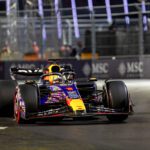
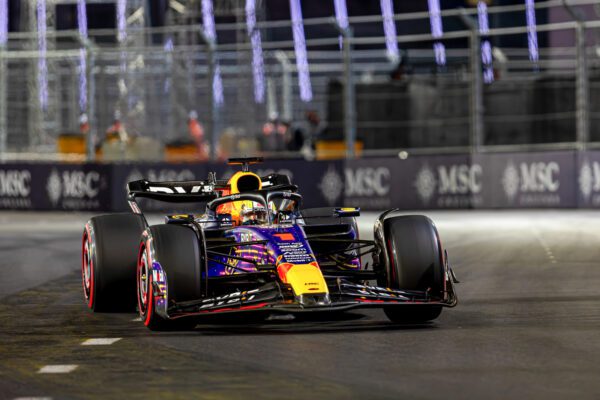
The Las Vegas event provided a striking demonstration of this problem, recording over 350 position changes during the race, including 35 changes of leadership. These unusually high figures reflected a circuit where long straights, low aerodynamic drag, and energy deployment allowed drivers to overtake before immediately becoming vulnerable to counterattacks.
While spectacular, the racing raised questions about whether the wheel-to-wheel action truly reflected conventional racing skill or merely the strategic exploitation of electrical energy. Under current regulations, F1 power units distribute output approximately equally between the internal combustion engine and electrical systems.
Changes slated for 2027 will increase the combustion contribution to 58%, with electrical power dropping to 42%. A further adjustment to approximately 60-40 is anticipated for 2028, but Verstappen does not consider these changes sufficient.
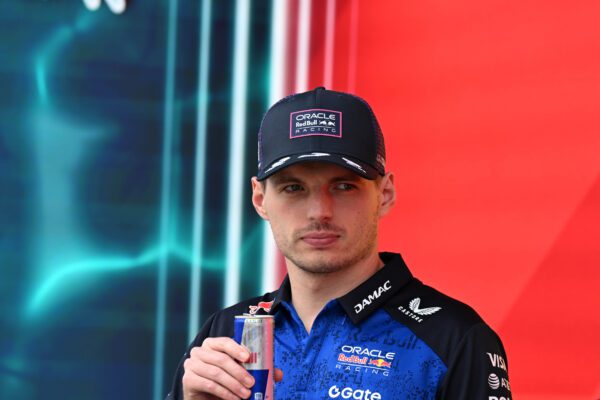
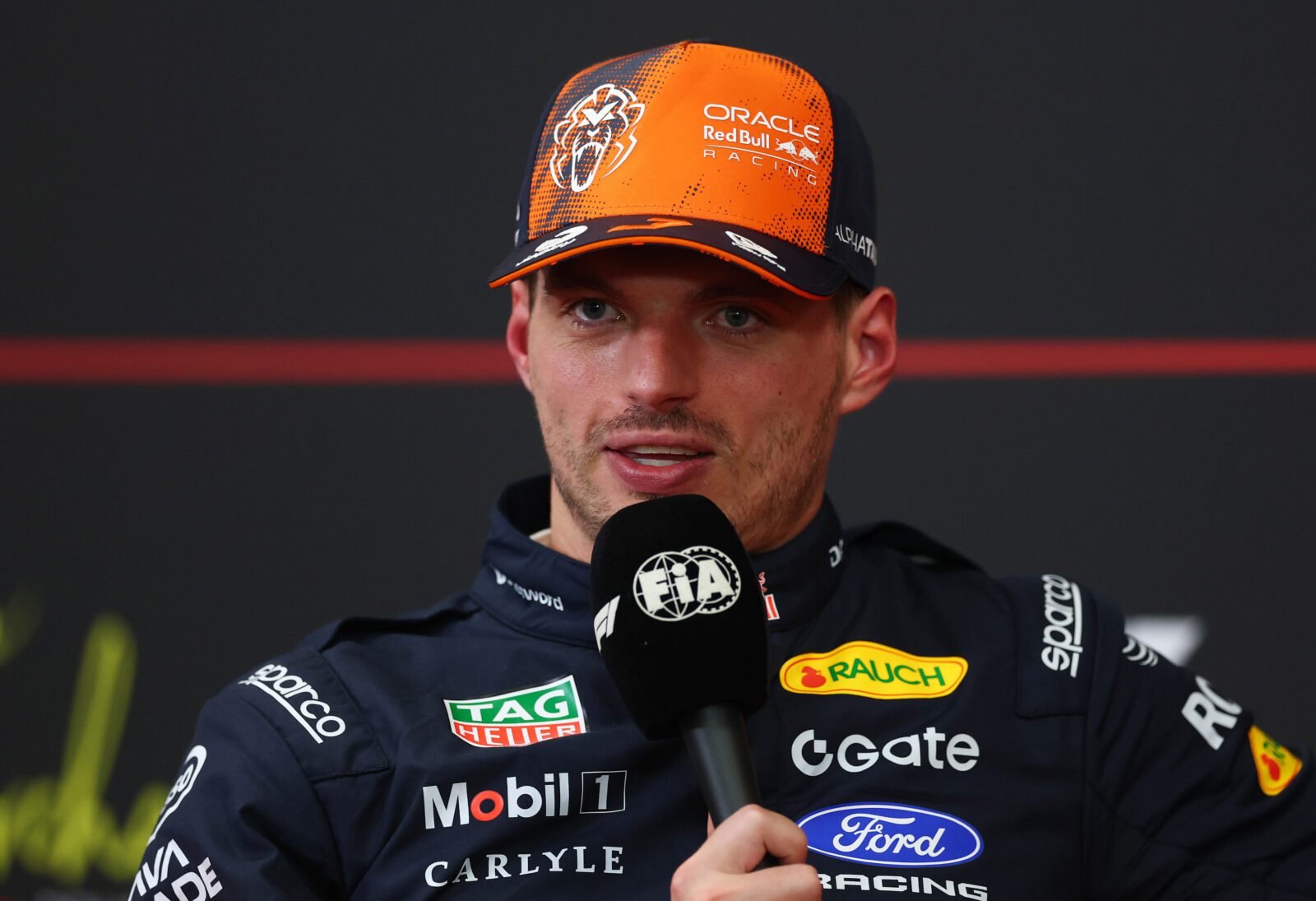
Speaking during the post-race press conference in Las Vegas, the Red Bull driver argued that a substantially larger combustion contribution is required. He described the proposed 60-40 split as only a marginal improvement.
“The more you increase the engine’s contribution and reduce the battery’s, the better. If we still want to keep a battery, it needs to be at least 80% to 20% for things to be more normal. But let’s just hope that 2030 solves everything, or at least most of the problems.”

Verstappen’s remarks align with his broader criticism of the 2026 regulations, which have made electrical energy deployment an unusually influential factor in overtaking and defensive driving. A driver consuming too much electrical power during an attack can become vulnerable on the following straight.
This allows an opponent to regain the position even without an obvious advantage in cornering speed. This dynamic was particularly visible in Verstappen’s Las Vegas victory, where leading drivers repeatedly exchanged positions before he established control.
Lando Norris, who finished second in Las Vegas, also believes the planned technical adjustments represent only part of the solution. The McLaren driver welcomed the gradual reduction in electrical power but noted that the circuit’s unusual racing was not caused exclusively by batteries.
The combination of slipstreaming and straight-line aerodynamic settings also played an important role. Norris suggested the sport could experience similarly unpredictable races in 2027, even with a revised engine-power distribution.
The Briton also raised concerns about the current method of throttle management. Applying the throttle earlier can sometimes result in a lower speed at the end of a straight, as additional energy consumption leaves less electrical power available later in the lap.
This creates a counterintuitive driving style for drivers accustomed to being rewarded for accelerating as early as possible. Norris believes the planned changes are progress towards a more natural relationship between driver inputs and performance, but not a complete solution.
The discussion is particularly relevant after McLaren secured second and third places in Las Vegas, a race where energy management and late position changes significantly shaped the outcome. Formula 1 is already preparing a significantly different engine architecture for the next regulatory cycle.
The FIA and power-unit manufacturers have reached an agreement in principle to introduce turbocharged V8 engines in 2030, replacing the current 1.6-litre V6 hybrid formula. This proposal centres on a 2.1-litre V8 engine, reduced electrical assistance, and the continued use of sustainable fuels.
The new framework aims to lower costs, simplify power-unit technology, and address some complaints raised by drivers and manufacturers. However, important technical details still require definitive regulatory approval.
As the FIA clarified in its latest announcement, manufacturers have reached unanimous agreement on the broad direction, but not every element of the 2030 regulations has been finalised. For Verstappen, the central question remains whether the new formula will make racing less dependent on complex battery-deployment strategies.
The Dutchman has repeatedly argued that drivers should be rewarded primarily for effective braking, cornering, and accelerating, rather than manipulating electrical energy to create temporary speed advantages. He believes the high electrical contribution creates artificial overtaking situations.
This allows drivers to exchange positions repeatedly due to differences in battery deployment rather than conventional car performance. The combustion engine’s share of power is planned to increase to approximately 58%, while the electrical contribution will fall to 42%.
Further adjustments are expected in 2028. The FIA and manufacturers have reached an agreement in principle on a new turbocharged V8 formula, though definitive technical regulations still require formal approval.