



The Formula 1 Las Vegas Grand Prix presents a distinctive challenge due to its late-evening sessions and the inherent climate of the Mojave Desert. These factors combine to create exceptionally low track temperatures, which profoundly influence tyre performance, mechanical grip, and overall race strategy.
Understanding these conditions is paramount for teams aiming for success on the iconic Las Vegas Strip Circuit.
The unique climate of the mojave desert
The Las Vegas Grand Prix takes place in late November, a period when the Mojave Desert experiences a significant drop in temperatures after sunset. Typical climate normals for the region around the race dates show daytime highs of approximately 18°C (64-65°F), but overnight lows can plummet to around 7-8°C (45-46°F).
This sharp decline is characteristic of desert environments, where the lack of natural insulation allows heat to escape directly into the atmosphere once the sun disappears.
This nocturnal cooling effect means that while the afternoons might feel mild, the track sessions, which run from late afternoon into the evening, are conducted in noticeably colder conditions. The exposed nature of the Las Vegas Strip Circuit can also make temperatures feel even cooler, especially if winds pick up.
Drivers and teams must contend with these rapidly changing ambient conditions throughout the race weekend.
Las vegas Grand Prix 2026 weather outlook
The 2026 Las Vegas Grand Prix is scheduled from November 20 to 22, with all significant track activity occurring during the cooler evening hours. Forecasts for the race weekend indicate consistently low temperatures across all sessions.
Free Practice 1 on Thursday afternoon is projected to see air temperatures around 15°C (59°F), dropping to approximately 14°C (57.4°F) for Free Practice 2 later that evening.

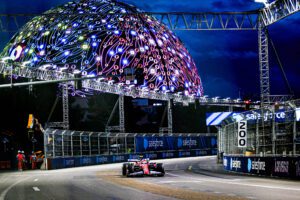
As the weekend progresses, temperatures are expected to remain in a similar range, with Free Practice 3 on Friday afternoon around 15°C (58.8°F). Qualifying on Friday night is anticipated to be one of the coldest sessions, with air temperatures potentially falling to 12°C (54.1°F).
The main race on Saturday evening is forecast for approximately 14°C (56.8°F).
While Las Vegas is typically dry in November, a low chance of rain, ranging from 4% to 19%, cannot be entirely ruled out for some sessions. Wind speeds are generally expected to be breezy, potentially ranging from 6 to 32 km/h (4 to 20 mph).
These conditions underscore the importance of managing tyre performance in a cold and potentially windy environment.
| session | day | local time (pst) | air temperature (°c) | air temperature (°f) | rain probability |
|---|---|---|---|---|---|
| free practice 1 | thursday, nov 19 | 04:30 pm | 15 | 59 | 19% |
| free practice 2 | thursday, nov 19 | 08:00 pm | 14 | 57.4 | 19% |
| free practice 3 | friday, nov 20 | 04:30 pm | 15 | 58.8 | 11% |
| qualifying | friday, nov 20 | 08:00 pm | 12 | 54.1 | 11% |
| race | saturday, nov 21 | 08:00 pm | 14 | 56.8 | 4% |
Pirelli tyre compounds and cold track performance
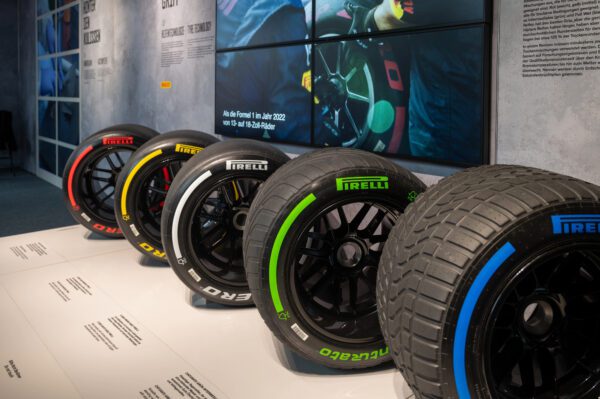
Pirelli consistently nominates its softest range of compounds for the Las Vegas Grand Prix: the C3 (hard), C4 (medium), and C5 (soft). This selection is specifically chosen to counteract the smooth, low-grip asphalt of the street circuit and to assist in generating heat in the tyres during the cool night sessions.
The C3 compound, designated as the hard tyre, has proven to be the most stable option for the cold race conditions, offering low wear and degradation over longer stints.
The C4 medium compound provides strong initial bite but can be unstable in the cold and is susceptible to graining if pushed too aggressively before reaching its optimal temperature window. The C5 soft compound is primarily considered a qualifying tyre due to its high grip and rapid warm-up, but it typically struggles with durability and graining under race fuel loads.
Each driver is usually allocated two sets of hard, three sets of medium, and eight sets of soft tyres for the weekend.
The biggest challenge for all compounds is achieving and maintaining their optimal operating temperature, which typically ranges between 90-110°C (194-230°F). Below 80°C, tyre grip diminishes significantly, leading to reduced performance and increased wear.
The long straights of the Las Vegas Strip Circuit exacerbate this issue, as the tyres cool down considerably, making it difficult to keep them within their ideal temperature window.
Managing grip and graining on the strip
The combination of cold track temperatures and a smooth, low-grip street surface makes tyre warm-up and graining critical factors in Las Vegas. Graining occurs when the tyre rubber peels unevenly, leading to a substantial loss of grip, particularly on the front axle.
This phenomenon is a major threat, especially in the early laps of a stint or when tyres are not adequately heated.
Drivers must employ specific techniques during out-laps and formation laps to bring their tyres into the optimal operating window. This involves aggressive weaving, hard braking, and sharp acceleration to generate friction and heat.
However, excessive sliding can also induce graining, creating a delicate balance for drivers to manage. Braking is often considered a more effective method for generating tyre heat than weaving alone.
The track surface itself undergoes significant evolution as rubber is laid down by the cars throughout the sessions. However, because the Las Vegas Strip is a temporary circuit that reopens to public traffic each night, this rubber layer is effectively reset before each new day of racing.
This means teams face a ‘green’ and low-grip track at the start of every session, further complicating tyre management and setup choices.
Strategic considerations for cold conditions and safety cars
Team strategists face complex decisions at the Las Vegas Grand Prix, heavily influenced by the cold conditions and the unique tyre behaviour. Managing cold-weather graining is a primary concern, as pushing too hard on cold tyres can trigger graining and lead to significant performance drops over several laps.
This often pushes teams towards a more conservative approach in the initial phases of a stint.
Out-lap warm-up phases are crucial, and a poorly executed out-lap can compromise an entire qualifying run or race stint. Drivers must carefully balance generating heat without overworking the tyres.
The long straights also mean that undercut strategies, where a driver pits early for fresh tyres, are less effective. The cold out-lap makes it difficult for new tyres to quickly reach temperature and gain an advantage over cars running longer on warmer, older compounds.
Safety Car restarts introduce another layer of complexity. When the Safety Car is deployed, cars circulate at significantly reduced speeds, causing tyre temperatures to plummet.
This makes the restart particularly challenging, as drivers must aggressively warm their tyres through weaving, braking, and accelerating to regain grip before racing resumes. Newer tyres tend to return to their operating window faster than older, more worn compounds.
Safety Car periods also offer a reduced time loss for pit stops, making them an attractive opportunity for tyre changes. However, strategists must weigh the benefit of fresh tyres against the risk of cold tyres on the restart and potential loss of track position.
The race leader’s control over the restart pace further adds to the strategic challenge, as they can dictate the timing and intensity of the acceleration phase.