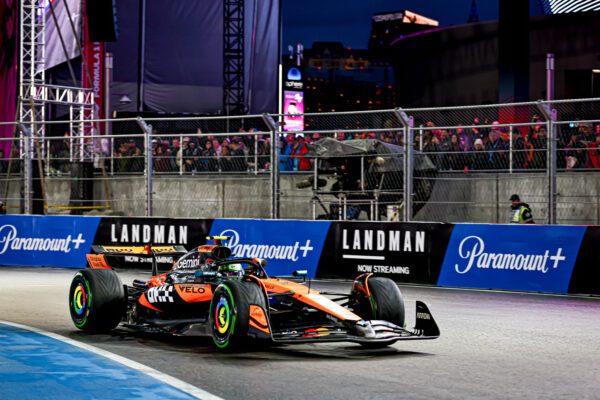




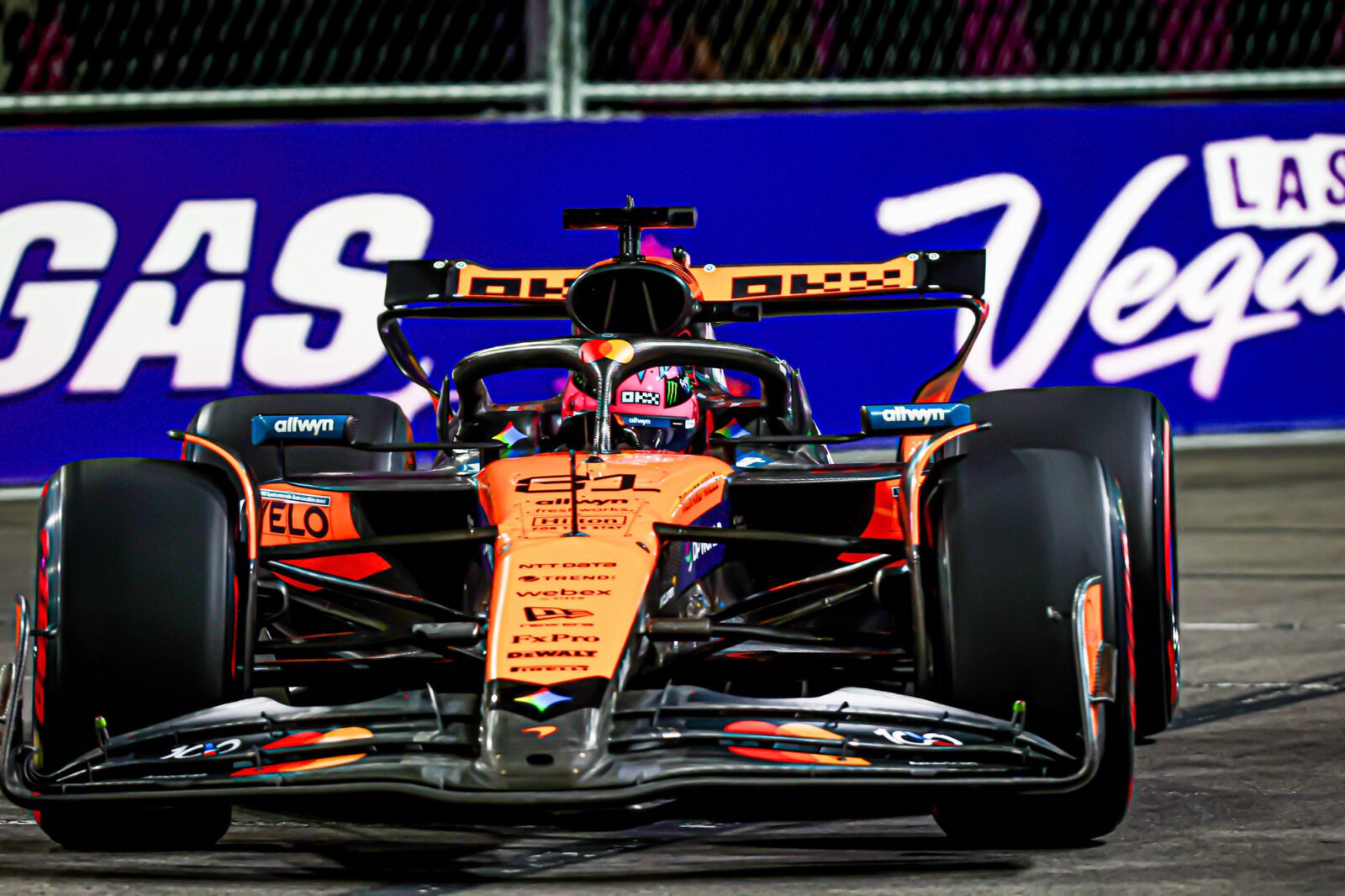
The Las Vegas Strip Circuit, a 6.201-kilometer (3.853-mile) temporary street circuit, presents a distinctive challenge on the Formula 1 calendar. Its anti-clockwise layout winds through the heart of Paradise, Nevada, past iconic landmarks under the dazzling night sky.
Inaugurated in 2023, the circuit combines ultra-long straights with tight, 90-degree corners, demanding a unique blend of aerodynamic efficiency and mechanical grip from the competing teams. The track’s design, led by Carsten Tilke, incorporates a permanent pit and paddock facility built on land acquired by Formula 1.
Circuit characteristics and layout
The Las Vegas Strip Circuit features 17 corners, comprising five low-speed, nine medium-speed, and three high-speed sections. Drivers navigate this counter-clockwise layout, which includes a significant 1.9-kilometer (1.2-mile) flat-out blast down the famous Las Vegas Strip.
The circuit’s unique demands are amplified by the cold November desert temperatures and a smooth, low-grip asphalt surface, making tyre warm-up a critical performance factor. Cars reach speeds exceeding 350 km/h (215 mph) along the main straight, akin to the speeds seen at Monza.
Overtaking opportunities and speed zones
Prime overtaking opportunities are concentrated at the end of the circuit’s extensive straight-line zones, particularly into the heavy braking areas. Turn 1, a tight left-hand hairpin, offers an early chance for drivers to make a move due to its wide entry and demanding braking.
Turn 5, a 90-degree right-hander following a DRS zone, also provides a credible passing opportunity. However, the most significant overtaking spot is Turn 14, located at the conclusion of the 1.9-kilometer Las Vegas Strip straight, where cars arrive at maximum speed before a hard braking event.
The 2024 Las Vegas Grand Prix saw an impressive 181 on-track overtakes, highlighting the circuit’s capacity for wheel-to-wheel action. Oscar Piastri alone executed 20 overtakes during the 2023 race, demonstrating the strategic importance of these braking zones.
Setup and aerodynamic considerations
Teams approach the Las Vegas Strip Circuit with a low-downforce setup, prioritizing maximum straight-line speed to capitalize on the long straights. This aerodynamic philosophy, however, necessitates a compromise in grip through the slower, more technical corners.

Maintaining braking stability is important, especially into Turn 14, where cold tyres after the long straight can increase the risk of lock-ups. Traction out of the 90-degree corners, such as Turn 9 and Turn 17, is also paramount for a strong exit and to prepare for subsequent acceleration zones.
Engineers must carefully balance differential settings, with a lower on-throttle differential aiding traction and a lower off-throttle differential promoting rotation on corner entry. The low ambient temperatures and smooth surface mean tyre management and achieving optimal operating temperature are defining challenges throughout the race weekend.
A legacy in sin city: caesars palace to the strip
Formula 1’s modern return to Las Vegas in 2023 marked a new chapter for motorsport in Sin City, following the infamous Caesars Palace Grands Prix of 1981 and 1982. The original Caesars Palace circuit was a temporary layout constructed in the hotel’s parking lot, measuring 3.650 kilometers (2.268 miles) with 14 turns.
Both the 1981 and 1982 races were anti-clockwise and served as season finales, deciding the World Championship titles for Nelson Piquet and Keke Rosberg, respectively. Despite their championship significance, these races were unpopular with drivers due to intense heat and the physically demanding layout, and they drew minimal crowds.
The contemporary Las Vegas Grand Prix, held at night amidst the city’s iconic illuminated landmarks, offers a stark contrast to its predecessor. It has quickly established itself as a unique spectacle, blending high-speed racing with the glitz and glamour of the Las Vegas Strip.
Key circuit statistics and records
| Statistic | Value |
|---|---|
| Circuit Length | 6.201 km (3.853 miles) |
| Race Distance | 50 laps (309.958 km / 192.599 miles) |
| Number of Corners | 17 |
| Driving Direction | Anti-clockwise |
| Official Race Lap Record | 1:33.365 (Max Verstappen, Red Bull, 2025) |
| Official Qualifying Track Record | 1:32.312 (George Russell, Mercedes, 2024) |
| Highest Recorded Top Speed | 368 km/h (229.28 mph) (Alex Albon, Williams, 2024) |
| DRS Zones | 2 |
| First Grand Prix | 2023 |
The Las Vegas Strip Circuit has quickly become one of the fastest street circuits on the Formula 1 calendar, with cars reaching exceptional top speeds along the main boulevard. The elevation change across the circuit is minimal, at just 5 meters (16 feet).
The average race speed recorded at the circuit is approximately 235 km/h (146 mph), with pit lane time loss estimated at 22.0 seconds. These statistics underscore the high-speed nature and strategic considerations inherent to racing on the Las Vegas Strip.