


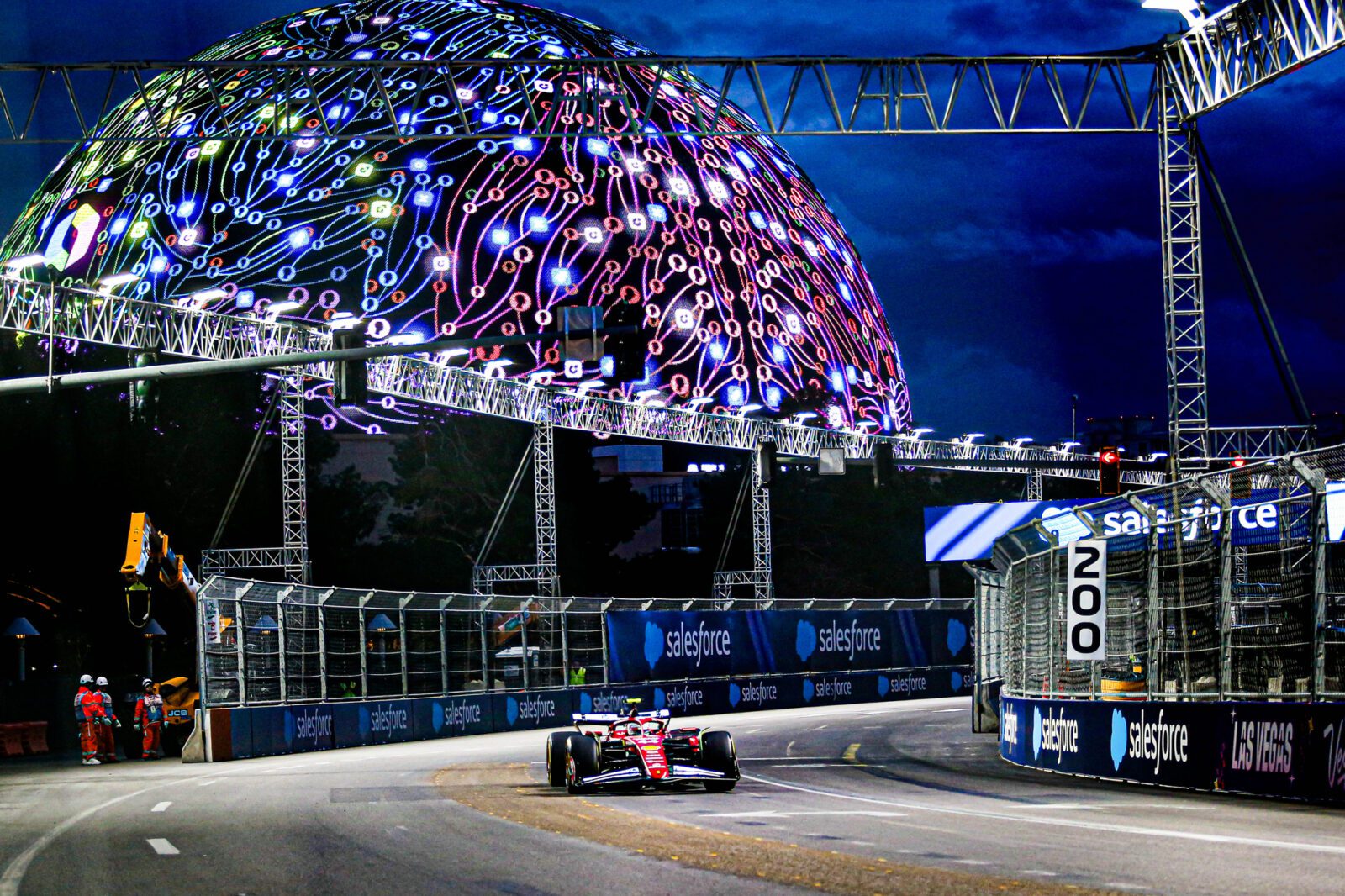
The Las Vegas Grand Prix presents a unique challenge for Formula 1 fans outside of Nevada due to its late-night local schedule, translating into early morning viewing for audiences in the UK and Europe. This in-depth guide provides fully factual and up-to-date information on how to catch every moment of the action, from practice sessions to the main race, ensuring a seamless viewing experience.
The 2026 Las Vegas Grand Prix is scheduled to take place from Thursday, November 19, through Saturday, November 21, with the main race held on Saturday night rather than Sunday. All session times are presented in local Las Vegas time (PST, UTC-8), requiring careful conversion for international viewers.
The las vegas Grand Prix schedule and time differences
The Las Vegas Grand Prix operates on Pacific Standard Time (PST), which is eight hours behind Coordinated Universal Time (UTC) and GMT. This significant time difference means that evening sessions in Las Vegas translate to early morning viewing hours for fans in the United Kingdom and Central Europe.
For UK audiences, the race itself is scheduled for 04:00 GMT on Sunday, November 22, while qualifying takes place at 04:00 GMT on Saturday, November 21. Practice sessions also occur in the early hours, with FP1 at 00:30 GMT on Friday and FP2 at 04:00 GMT on Friday.
Central European fans will experience similar early starts, with the race beginning at 05:00 CET on Sunday, November 22, and qualifying at 05:00 CET on Saturday, November 21. FP1 is at 01:30 CET and FP2 at 05:00 CET.
The table below outlines the key session times for the 2026 Las Vegas Grand Prix across different time zones, helping fans manage their viewing schedule effectively.
| Session | Las Vegas (PST) | UK (GMT) | Central Europe (CET) |
|---|---|---|---|
| Free Practice 1 | Thursday, Nov 19, 4:30 PM | Friday, Nov 20, 00:30 AM | Friday, Nov 20, 01:30 AM |
| Free Practice 2 | Thursday, Nov 19, 8:00 PM | Friday, Nov 20, 04:00 AM | Friday, Nov 20, 05:00 AM |
| Free Practice 3 | Friday, Nov 20, 4:30 PM | Saturday, Nov 21, 00:30 AM | Saturday, Nov 21, 01:30 AM |
| Qualifying | Friday, Nov 20, 8:00 PM | Saturday, Nov 21, 04:00 AM | Saturday, Nov 21, 05:00 AM |
| Race | Saturday, Nov 21, 8:00 PM | Sunday, Nov 22, 04:00 AM | Sunday, Nov 22, 05:00 AM |
Live broadcast options: sky sports F1 and F1 tv pro
For fans in the UK and Ireland, Sky Sports F1 remains the exclusive home for live coverage of every practice, qualifying session, and race through to 2029. Sky Sports F1 offers an immersive viewing experience with a comprehensive on-screen line-up of experts and cutting-edge broadcast innovations.
The 2026 Sky Sports F1 team includes lead commentator David Croft, supported by Harry Benjamin, and a host of analysts such as Martin Brundle, Jenson Button, Nico Rosberg, and Jacques Villeneuve. Presenters like Simon Lazenby, Natalie Pinkham, and Ted Kravitz provide pre-race insights, paddock reports, and post-session analysis.


New for 2026, Sky Sports F1 has introduced an immersive sidebar for TV viewing during race weekends, available to Sky Glass, Sky Stream, and Sky Q customers. This feature includes Race Control, Recap, in-race standings, and dedicated driver and team pages with onboard cameras and enhanced data.
Viewers can select live onboard streams for any of the 20 drivers, complete with team radio messages, across all sessions.
F1 TV Pro, Formula 1’s official streaming service, offers live and on-demand content, including every F1 race, onboard cameras, live team radios, and expert commentary. The F1 TV Pro commentary team for 2026 is led by Alex Jacques and Jolyon Palmer, with support from David Coulthard, Davide Valsecchi, and Alex Brundle.
Technical analysis is provided by Sam Collins, with Laura Winter and James Hinchcliffe among the presenters.
F1 TV Pro is available in many countries, but its availability and features can vary due to exclusive broadcast deals in certain regions, such as the UK where Sky’s exclusivity may restrict live streams.
Alternative legal streaming services via vpn
For fans seeking alternative legal ways to watch Formula 1, several international free-to-air broadcasters offer live coverage, particularly within Europe. These streams are typically geo-restricted, meaning access from outside their respective countries requires a reliable Virtual Private Network (VPN).
In Austria, ServusTV and ORF share the free-to-air rights for Formula 1, with ServusTV extending its partnership until 2029. Both channels provide comprehensive live coverage of practice, qualifying, and races.
Belgium’s RTBF Auvio also offers free live streams of every F1 race, requiring a free account for viewers within Belgium.
Using a VPN allows viewers to connect to a server in a country where these free-to-air broadcasts are available, effectively bypassing geo-restrictions. Reputable VPN providers such as NordVPN, ExpressVPN, and Surfshark are recommended for their reliable streaming performance, fast speeds, and extensive server networks.
When using a VPN, it is important to select a server in the country of the desired broadcaster (e.g., Austria for ServusTV/ORF or Belgium for RTBF Auvio). Clearing browser cookies and cache, or restarting the VPN application, can help resolve any access issues.
Synchronizing audio commentary for an enhanced experience
For many Formula 1 enthusiasts, synchronizing live audio commentary with the television feed enhances the viewing experience, especially when seeking alternative perspectives or avoiding commercial breaks. BBC Radio 5 Live provides dedicated live audio commentary for every Formula 1 session in the UK.
This service is accessible via traditional radio, the BBC Sounds app, or the BBC Sport website.
To achieve optimal synchronization, fans often use a slight delay on their TV picture or the radio feed. Many modern smart TVs and streaming devices offer audio delay settings that can be adjusted to match the radio commentary precisely.
Alternatively, some third-party applications or browser extensions can introduce a customizable delay to the radio stream.
The goal is to align the visual action on screen with the spoken commentary, creating a cohesive and immersive broadcast. This method is particularly popular for those watching international streams with non-English commentary, allowing them to enjoy the race with familiar voices.
Catching up: highlights and post-race analysis
Even for those unable to watch live, comprehensive highlights and in-depth post-race analysis are readily available. In the UK, Channel 4 serves as Sky Sports’ free-to-air partner, offering extensive highlights of every qualifying session, sprint, and Grand Prix.
Channel 4’s highlights shows typically air later in the evening on the same day as the qualifying session or Grand Prix. These broadcasts feature the full Channel 4 F1 team, including presenters Steve Jones and Lee McKenzie, and pundits like David Coulthard and Jolyon Palmer.
The British Grand Prix is the only live race shown on Channel 4 under the current agreement, which runs until the end of 2026.
Beyond traditional television, official Formula 1 platforms and team channels often provide highlights and analysis. The official Formula 1 YouTube channel uploads race highlights, driver interviews, and behind-the-scenes content shortly after each session.
Additionally, Sky Sports F1 produces various analysis shows, such as Ted Kravitz’s ‘The Notebook’ and ‘The F1 Show’, which offer deep-dive analysis and paddock insights. These programs are often available on demand via Sky Go or NOW, and selected segments may be shared on Sky Sports’ digital and social platforms.