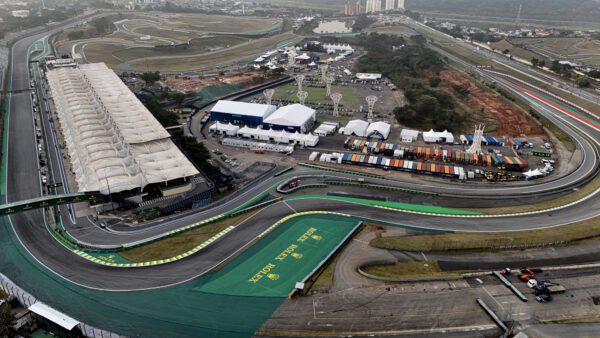





The Autódromo José Carlos Pace, widely known as Interlagos, is set to host the São Paulo Grand Prix from November 6 to 8, 2026. This iconic circuit is renowned for its unpredictable weather, which frequently introduces significant strategic challenges for Formula 1 teams.
The 2026 event is anticipated to be no exception, with forecasts indicating a weekend of fluctuating conditions.
São paulo Grand Prix weekend weather outlook
The weather forecast for the 2026 São Paulo Grand Prix weekend at Interlagos suggests a mix of conditions, with potential for rain and significant temperature shifts. Friday, November 6, is expected to be mostly cloudy and dry for the initial practice sessions.
Air temperatures are projected to reach a high of 25.5°C and a low of 18°C, with gentle winds averaging 9 km/h and gusts up to 30 km/h. There is a 30% chance of precipitation in the early morning and at night, with track temperatures potentially reaching around 45°C under ample sunshine.
Other forecasts indicate air temperatures around 24°C with a 10% chance of rain during the afternoon.
Saturday, November 7, for FP3 and qualifying, is forecast to be warm and partly cloudy, with temperatures ranging from 15°C to 27.5°C. Light to moderate winds could peak at 25 km/h, with non-thunderstorm gusts potentially reaching 50 km/h.
A 50% chance of significant rain is predicted, particularly after 14:00 local time, which could lead to localized urban flooding and standing water on the track.
Track temperatures may peak near 40°C, but could rise higher with less cloud cover. Some forecasts suggest a 60% chance of rainfall during FP3 and a 30% chance for qualifying, accompanied by stronger winds between 20-30 mph.

Other reports indicate temperatures climbing to approximately 29°C with a 60-70% chance of thunderstorms around the 3pm local time qualifying session.
Race day on Sunday, November 8, is expected to be cooler and potentially unsettled. Temperatures are forecast to range from 13°C to 19°C, with a 40% to 60% chance of heavy rain and thunderstorms.
Winds will be moderate, averaging 15 km/h with gusts up to 40 km/h, and track temperatures should peak near 30°C due to extensive cloud cover. The cooler, post-frontal air mass is expected to prevent heat hazard concerns.
The race is scheduled for 14:00 local time.
Interlagos’ unique microclimate and rapid changes
Interlagos is famously known for its distinct microclimate, which causes track conditions and atmospheric changes to shift with remarkable speed. The circuit’s location in São Paulo, at approximately 785 meters above sea level, contributes significantly to this volatility.
This altitude results in thinner air, reducing aerodynamic downforce and making engine cooling less efficient, although turbocharged power units compensate well for reduced oxygen.
The circuit’s dramatic elevation changes, particularly the steep drop from the iconic Senna S to Descida do Lago and the climb back up through Junção, are central to how weather impacts racing. Water flows rapidly downhill and collects in lower sections, creating unevenly wet and dry areas on the track.
São Paulo’s tropical climate places the race squarely in its thunderstorm season, meaning intense tropical thunderstorms can arrive with startling speed, sometimes turning a clear sky into a torrential downpour within 30 minutes.
These storms are often violent but brief, clearing as quickly as they arrived. The surrounding buildings and hills can also make sudden storms very difficult to detect on radar, adding to the unpredictability.
This combination of altitude, elevation, and tropical climate makes Interlagos one of the most weather-sensitive circuits on the entire Formula 1 calendar.
Track temperature, grip levels, and tyre degradation
Varying cloud cover and precipitation significantly impact track temperature and grip levels at Interlagos, directly influencing tyre degradation. The circuit has historically been one of the roughest on the calendar, which inherently stresses tyres.
Partial resurfacing work has been carried out between Turns 3 and 5, and between Turns 8 and 9 for the 2026 event.
This new asphalt could alter grip levels, track evolution, and tyre behaviour, especially over longer runs. In dry conditions, higher track temperatures due to ample sunshine generally lead to increased tyre degradation.
Conversely, cooler temperatures and cloud cover, as expected on Sunday, can reduce heat build-up in the tyres, potentially altering warm-up characteristics and the balance between compounds.
Wet conditions drastically reduce grip, making the undulating asphalt even more challenging. The circuit features water drainage grooves in some parts, similar to Spa-Francorchamps, to help clear water and provide more grip during wet sessions.
However, standing water and limited visibility from spray can still make tyre selection and driving extremely difficult, demanding exceptional driver skill and strategic foresight.
Pirelli tyre compound allocation for 2026
Pirelli has nominated the C3, C4, and C5 compounds for the 2026 São Paulo Grand Prix, designating them as the hard, medium, and soft tyres, respectively. This selection is one step softer than the allocation used in 2025, which featured the C2, C3, and C4 compounds during a Sprint weekend.
Teams will receive two sets of the hard (white-marked), three sets of the medium (yellow-marked), and eight sets of the soft (red-marked) slick tyres. Additionally, the green intermediate and blue full wet tyres will be available if wet conditions necessitate their use.
An extra set of soft tyres is reserved for drivers who reach Q3 in qualifying.
In a dry race, all drivers are mandated to use at least two different slick compounds. Pirelli notes that Interlagos generates broadly average lateral forces, with loads distributed fairly evenly between the front and rear axles.
Despite this, tyre degradation remains a key factor in race performance, and the softer compounds, coupled with the new asphalt sections, will require careful management. Pirelli has also prescribed high minimum tyre pressures, which are expected to further contribute to degradation.
The return to a traditional three-practice-session format, unlike last year’s Sprint event, provides teams with more track time to assess tyre performance and track evolution on the resurfaced areas. This extended running is important for understanding how the new surface influences degradation and wear across the different compounds.
| Compound | Designation | Quantity (Slick) |
|---|---|---|
| C3 | Hard | 2 sets |
| C4 | Medium | 3 sets |
| C5 | Soft | 8 sets |
| Intermediate | Green | Available |
| Full Wet | Blue | Available |
Strategic weather implications for teams
Team strategists face a complex challenge at Interlagos due to the highly changeable weather and track conditions. The potential for sudden rain showers, especially during qualifying and the race, means teams must be prepared for rapid adjustments to their strategies.
The timing of rain, its intensity, and how it affects different parts of the circuit unevenly are critical considerations for optimal tyre choices.
Shifting track temperatures, whether due to cloud cover or precipitation, directly influence tyre warm-up and degradation rates. Strategists must balance single-lap pace with tyre management over longer stints, especially with the softer compound allocation and newly resurfaced sections.
The high probability of Safety Car or Virtual Safety Car periods, historically common at Interlagos, further complicates strategy, offering opportunities for ‘cheap’ pit stops. The Safety Car probability is 80%, and the Virtual Safety Car probability is 40%.
Teams will use the three practice sessions to gather crucial data on how the new asphalt sections affect grip and tyre behaviour, particularly on long runs. This data will inform their understanding of degradation and wear across the different compounds, which is essential for formulating a robust race plan. The ability to adapt quickly to changing forecasts and track conditions, making timely decisions on tyre changes, will be paramount for success at the São Paulo Grand Prix. A two-stop strategy is typically the fastest approach at Interlagos.