




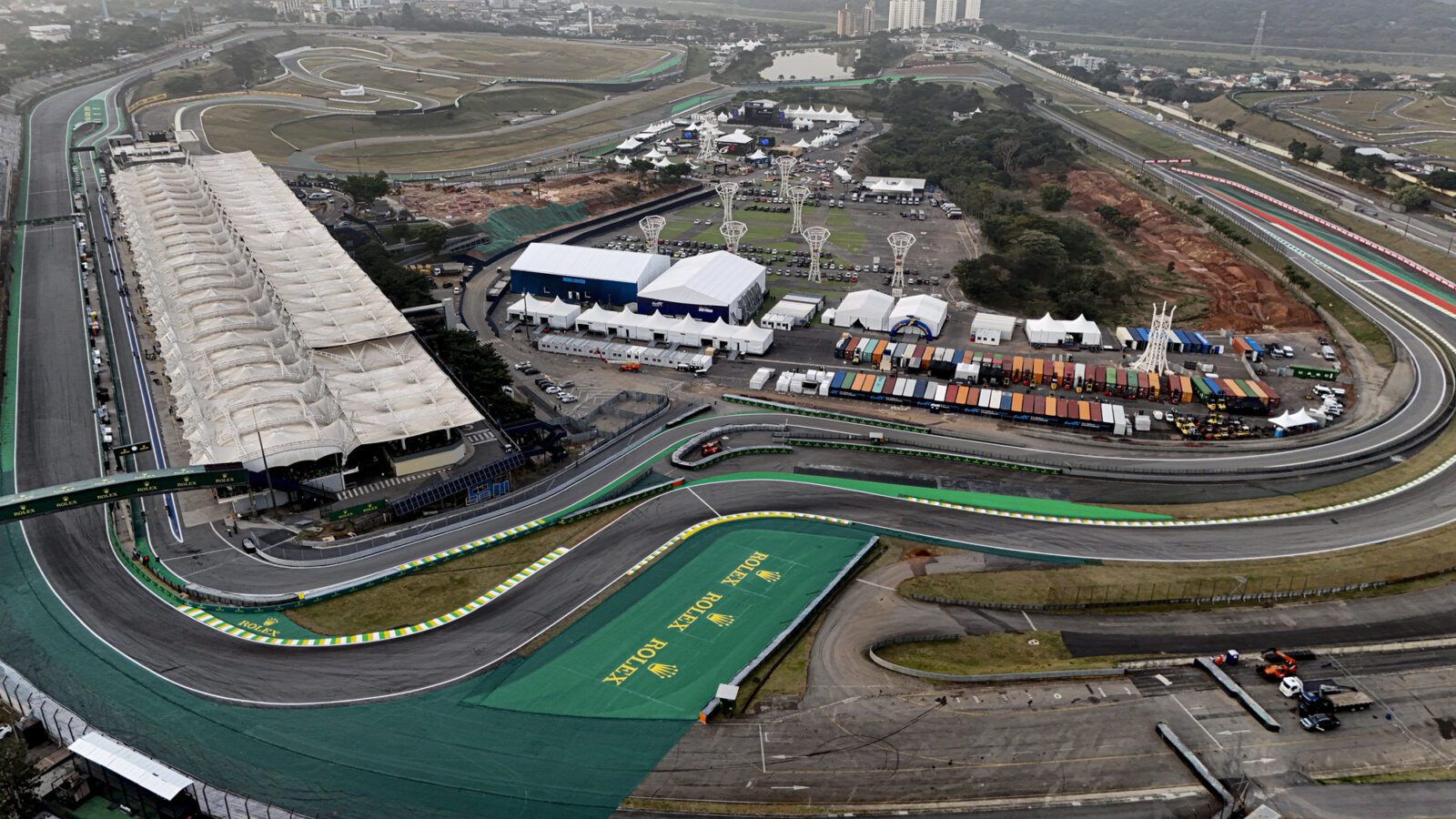
The Autódromo José Carlos Pace, universally known as Interlagos, stands as one of Formula 1’s most revered and demanding circuits. Nestled within São Paulo, Brazil, its anti-clockwise layout and significant elevation changes present a unique test for both car and driver.
The circuit’s rich history is intertwined with some of the sport’s most dramatic moments and championship deciders.
Originally inaugurated in 1940, the track was renamed in 1985 to honor Brazilian driver José Carlos Pace, who secured his sole Formula 1 victory at his home circuit in 1975. Interlagos has consistently delivered thrilling races, making it a fan and driver favorite on the Formula 1 calendar.
Circuit characteristics and driver demands
Interlagos is a compact 4.309-kilometer (2.677-mile) circuit featuring 15 corners, renowned for its anti-clockwise direction. This orientation places unusual physical demands on drivers, particularly on their neck muscles.
The track boasts significant elevation changes, with approximately 40 to 43 meters (140 to 141 vertical feet) between its highest and lowest points. This makes it the third-most undulating circuit in modern Formula 1, impacting braking, acceleration, and overall car balance.
The circuit sits at an altitude of approximately 800 meters above sea level, which results in thinner air. This reduced air density affects engine performance and aerodynamic efficiency, requiring teams to adapt their setups.
Historically, Interlagos has been known for its bumpy surface, which adds another layer of challenge for suspension tuning. While sections of the track, specifically the exits of Turns 3-5 and Turns 8 & 9, underwent partial resurfacing for the 2026 season, the circuit retains its demanding character.
Prime overtaking opportunities
Interlagos is widely regarded as one of the best circuits for overtaking, offering multiple prime passing opportunities throughout the lap. The most prominent spot is the Senna S, the opening sequence of Turns 1 and 2.


Drivers arrive at the Senna S after the uphill start-finish straight, braking heavily for the downhill left-right complex. This heavy braking zone and the varying attack angles make it a prime location for late-braking maneuvers.
Another significant overtaking zone is at Turn 4, Descida do Lago, following the long Reta Oposta back straight. The Reta Oposta itself, with its DRS zone, provides a strong slipstream effect, setting up passes into Turn 4.
The final corner, Junção (Turn 12), is strategically important for setting up overtakes on the subsequent uphill run to the finish line. A strong exit from Junção is important for carrying speed onto the main straight, which can lead to passing attempts into the Senna S on the next lap.
Setup and aerodynamic balance challenges
Achieving the optimal car setup at Interlagos requires a delicate balance between straight-line speed and mechanical grip. The circuit’s layout, with its long straights and technical infield section, demands a compromise in aerodynamic configuration.
Sector 1, encompassing the main straight and the Senna S, prioritizes low drag for maximum top speed. Conversely, the twisty middle sector, featuring corners like Ferradura, Laranjinha, Pinheirinho, Bico de Pato, and Mergulho, requires high mechanical grip and downforce for cornering stability.
The final sector, particularly the steep uphill run from Junção through Turns 13, 14, and 15 to the start-finish line, places a premium on traction and power deployment. Drivers must manage their energy carefully, especially under the 2026 regulations with increased electrical contributions.
Brake performance is heavily tested due to the circuit’s elevation changes and numerous hard braking zones. Front locking is a constant risk at corners such as Turn 1, Turn 8, Turn 9, Turn 10, and Turn 12.
Tyre management is also critical, as Pirelli often allocates softer compounds (C3, C4, C5) for the São Paulo Grand Prix. High minimum pressures contribute to rear bulk overheating and wear, making Interlagos a high-wear track where a two-stop strategy is typically expected.
The unpredictable São Paulo weather, with its frequent sudden rain showers, can further complicate setup choices. A dry-weather setup can quickly be compromised by changing conditions, adding an element of strategic uncertainty to the race weekend.
Heritage and iconic brazilian Grand Prix moments
Interlagos has been the stage for numerous unforgettable moments in Formula 1 history, deeply rooted in Brazilian motorsport culture. The first World Championship Brazilian Grand Prix was held here in 1973, won by local hero Emerson Fittipaldi.
Ayrton Senna’s emotional first home victory in 1991 remains one of the sport’s most iconic races. He famously battled a failing gearbox, driving his McLaren to the finish line stuck in sixth gear, an almost superhuman effort that left him physically exhausted.
The circuit has a storied history of hosting dramatic title deciders. Fernando Alonso secured his first world championship in 2005, followed by Kimi Räikkönen’s improbable title win in 2007.
In 2008, Lewis Hamilton clinched his maiden championship on the very last lap, passing Timo Glock in a thrilling conclusion.
Sebastian Vettel also secured his third consecutive world title at Interlagos in 2012, overcoming a first-lap spin to fight his way back through the field. Other memorable races include Max Verstappen’s wet-weather masterclass in 2016 and his victory from 17th on the grid in 2024.
Brazilian drivers have a special connection with Interlagos, with Emerson Fittipaldi, Carlos Pace, Nelson Piquet, Ayrton Senna, and Felipe Massa all having won on home soil. Michael Schumacher holds the record for the most wins at Interlagos with four, while McLaren and Ferrari are tied for the most constructor victories.
Circuit statistics and lap records
The Autódromo José Carlos Pace is a 4.309-kilometer circuit that hosts the São Paulo Grand Prix over 71 laps. The total race distance covered is 305.879 kilometers.
The official fastest race lap record for the current layout stands at 1:10.540, set by Valtteri Bottas in a Mercedes W09 in 2018. The fastest pole position lap record is 1:07.281, achieved by Lewis Hamilton in a Mercedes W09, also in 2018.
| Statistic | Value |
|---|---|
| Circuit Length | 4.309 km (2.677 miles) |
| Number of Corners | 15 |
| Race Laps | 71 |
| Race Distance | 305.879 km (190.064 miles) |
| Official Lap Record (Race) | 1:10.540 (Valtteri Bottas, 2018) |
| Pole Position Record | 1:07.281 (Lewis Hamilton, 2018) |
| First World Championship GP | 1973 |
| Safety Car Probability | 80-86% |
| Virtual Safety Car Probability | 40-43% |
| Pit Stop Time Loss | ~20.0-20.8 seconds |
Interlagos has hosted 42 World Championship races, with a high probability of safety car interventions, occurring in 80-86% of races since 1993. This often leads to strategic variations and unpredictable race outcomes.