



Formula 1 circuits are renowned for their diverse characteristics, with track length being a fundamental aspect that significantly influences race strategy, car setup, and the spectacle of competition. The sport features a wide spectrum of circuit dimensions, from the tightest street courses to expansive, high-speed layouts.
These variations ensure that each Grand Prix presents a unique challenge to drivers and teams alike.
Understanding the shortest and longest tracks, both historically and on the current calendar, provides crucial insight into the evolution of Formula 1 circuit design and the demands placed upon its participants.
The shortest Formula 1 circuits
The Circuit de Monaco stands as the shortest track on the current Formula 1 calendar, measuring a mere 3.337 kilometers (2.074 miles) in length. This iconic street circuit, winding through the principality’s narrow streets and past its famous harbor, has been a staple of the F1 World Championship since 1950.
Its compact nature, coupled with numerous elevation changes and tight corners, makes it one of the most demanding circuits for drivers. The Monaco Grand Prix is also unique in that it does not adhere to the FIA’s standard 305-kilometer minimum race distance for Formula 1 events, instead covering approximately 260 kilometers over 78 laps.
The longest Formula 1 circuits
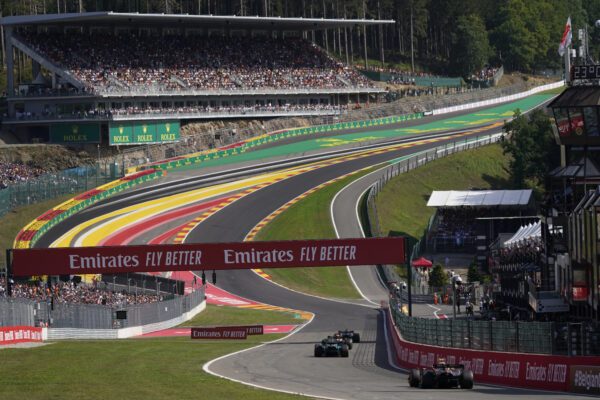
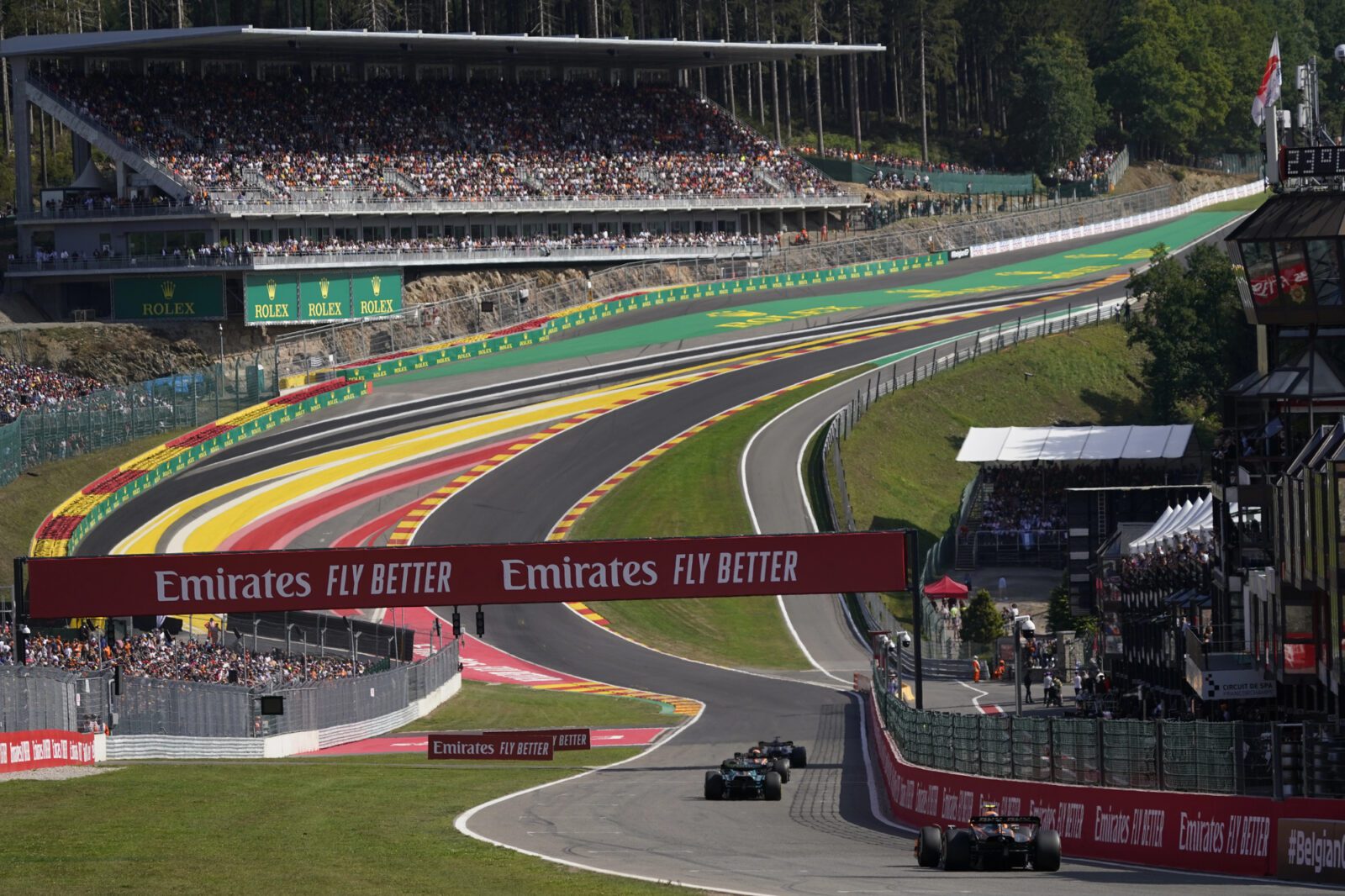
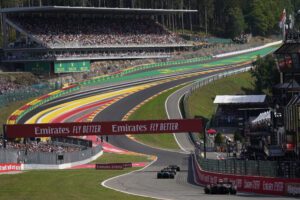
Conversely, the Circuit de Spa-Francorchamps in Belgium holds the distinction of being the longest track on the current Formula 1 calendar, stretching 7.004 kilometers (4.352 miles). Nestled in the Ardennes forest, Spa is celebrated for its flowing layout, significant elevation changes, and legendary corners such as Eau Rouge and Raidillon.
The circuit’s considerable length means that the Belgian Grand Prix requires the fewest laps of any race on the calendar, typically 44, to meet the mandated race distance. Its expansive nature demands a delicate balance in car setup, optimizing for both long straights and challenging, high-speed sections.
Historical extremes in circuit length
While Monaco and Spa define the extremes of the modern era, Formula 1’s history features even more dramatic variations in circuit length. The shortest circuit ever to host a Formula 1 World Championship race was an earlier incarnation of the Circuit de Monaco.

Between 1929 and 1979, its layout measured approximately 3.1 kilometers (1.9 miles).
On the other end of the spectrum, the Pescara Circuit in Italy holds the record for the longest track ever used in a Formula 1 World Championship event. This formidable road circuit, measuring an astonishing 25.8 kilometers (16 miles), hosted the 1957 Pescara Grand Prix.
Pescara was renowned for its narrow, bumpy public roads and was considered exceptionally dangerous, leading to its single appearance on the F1 calendar.
The impact of circuit length on racing
Circuit length profoundly influences various aspects of a Formula 1 Grand Prix. Shorter tracks, like Monaco, often lead to higher lap counts, increased traffic management challenges, and a greater emphasis on qualifying performance due to limited overtaking opportunities.
Conversely, longer circuits, such as Spa-Francorchamps, typically feature fewer laps but offer more opportunities for strategic variation and overtaking, particularly on extensive straights like the Kemmel Straight. The varying lengths also dictate the total race distance, with the FIA mandating that a Grand Prix should cover the fewest complete laps exceeding 305 kilometers, with Monaco being the notable exception.
Current Formula 1 circuit lengths (2026 season)
The 2026 Formula 1 calendar showcases a diverse range of circuit lengths, each contributing to the unique character of its respective Grand Prix. These lengths are meticulously measured and play a critical role in race planning and strategy.
The table below highlights a selection of circuits from the current season, illustrating the spectrum of track dimensions in modern Formula 1.
| Circuit Name | Length (km) | Location | First Grand Prix | Turns |
|---|---|---|---|---|
| Circuit de Monaco | 3.337 | Monte Carlo, Monaco | 1950 | 19 |
| Autódromo José Carlos Pace (Interlagos) | 4.309 | São Paulo, Brazil | 1973 | 15 |
| Red Bull Ring | 4.318 | Spielberg, Austria | 1970 | 10 |
| Circuit Gilles-Villeneuve | 4.361 | Montreal, Canada | 1978 | 14 |
| Hungaroring | 4.381 | Mogyoród, Hungary | 1986 | 14 |
| Circuit de Barcelona-Catalunya | 4.657 | Montmeló, Spain | 1991 | 16 |
| Lusail International Circuit | 5.419 | Lusail, Qatar | 2021 | 16 |
| Autodromo Nazionale Monza | 5.793 | Monza, Italy | 1950 | 11 |
| Silverstone Circuit | 5.891 | Silverstone, United Kingdom | 1950 | 18 |
| Baku City Circuit | 6.003 | Baku, Azerbaijan | 2016 | 20 |
| Jeddah Corniche Circuit | 6.174 | Jeddah, Saudi Arabia | 2021 | 27 |
| Las Vegas Strip Circuit | 6.201 | Las Vegas, USA | 2023 | 17 |
| Circuit de Spa-Francorchamps | 7.004 | Stavelot, Belgium | 1950 | 19 |
The diversity in circuit lengths ensures that Formula 1 remains a multifaceted challenge, testing every facet of a team’s engineering prowess and a driver’s skill. From the precision required on the shortest tracks to the endurance demanded by the longest, each circuit contributes uniquely to the rich tapestry of the sport.