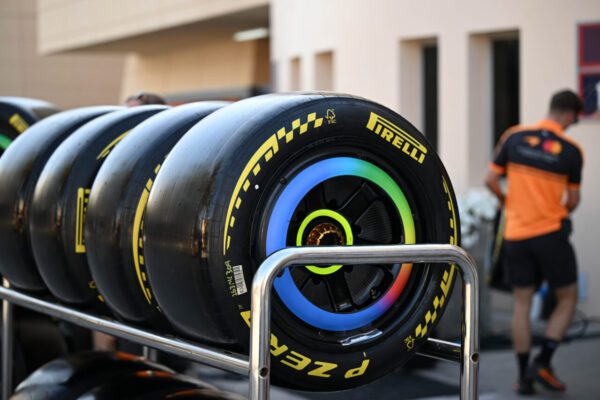
Formula 1 cars rely entirely on their tires to translate immense power into forward motion, braking, and cornering forces. These highly specialized components represent the sole connection between the vehicle and the track surface.
Pirelli, as the exclusive tire supplier, designs these tires to operate within extremely narrow performance windows, balancing maximum grip with inevitable degradation.
Understanding the intricate science behind F1 tires is fundamental to comprehending race performance and strategic decisions. The behavior of these tires, from their construction to their interaction with the asphalt, dictates much of the action on track.
The science of Formula 1 tire grip
Grip in Formula 1 is defined as the coefficient of friction between the tire’s contact patch and the road surface. This crucial interaction allows a car to accelerate, brake, and change direction effectively.
The rubber used in F1 tires is a viscoelastic material, meaning it deforms when stretched and returns to its original shape after a delay. This property, known as hysteresis, generates heat as the tire is worked, contributing significantly to grip.
Tires generate grip primarily through two mechanical interactions: indentation and molecular adhesion. Indentation occurs as the rough road surface excites the rubber, causing it to deform and resist sliding due to its viscoelastic nature.
Molecular adhesion involves the rubber molecules bonding with the road surface, creating resistance to shear forces as the tire rolls. These bonds continuously form and break, generating friction that opposes slippage.
Overall grip is a combination of mechanical grip, aerodynamic grip, and thermal grip. Mechanical grip stems from the tire compound, contact patch, and suspension setup, particularly vital at lower speeds.

Aerodynamic grip is generated by downforce, which presses the tires harder onto the track, increasing the available friction at higher speeds. Thermal grip refers to the enhanced adhesion when the tire compound is within its optimal temperature window.
Pirelli’s 2026 tire compounds and characteristics
For the 2026 Formula 1 season, Pirelli supplies a range of five slick tire compounds, designated C1 through C5, along with intermediate and full wet tires. The C1 compound is the hardest and most durable, while the C5 is the softest and offers the highest single-lap grip.
Pirelli made a significant change for 2026 by removing the C6 ultra-soft compound, which was part of the 2025 range. This decision was made because the performance gap between the C5 and C6 prototypes was deemed too small to justify carrying a sixth compound.
The reduction to five compounds aims to create a wider and more distinct performance difference between each adjacent compound. This wider spacing encourages more varied and meaningful strategic decisions during races.
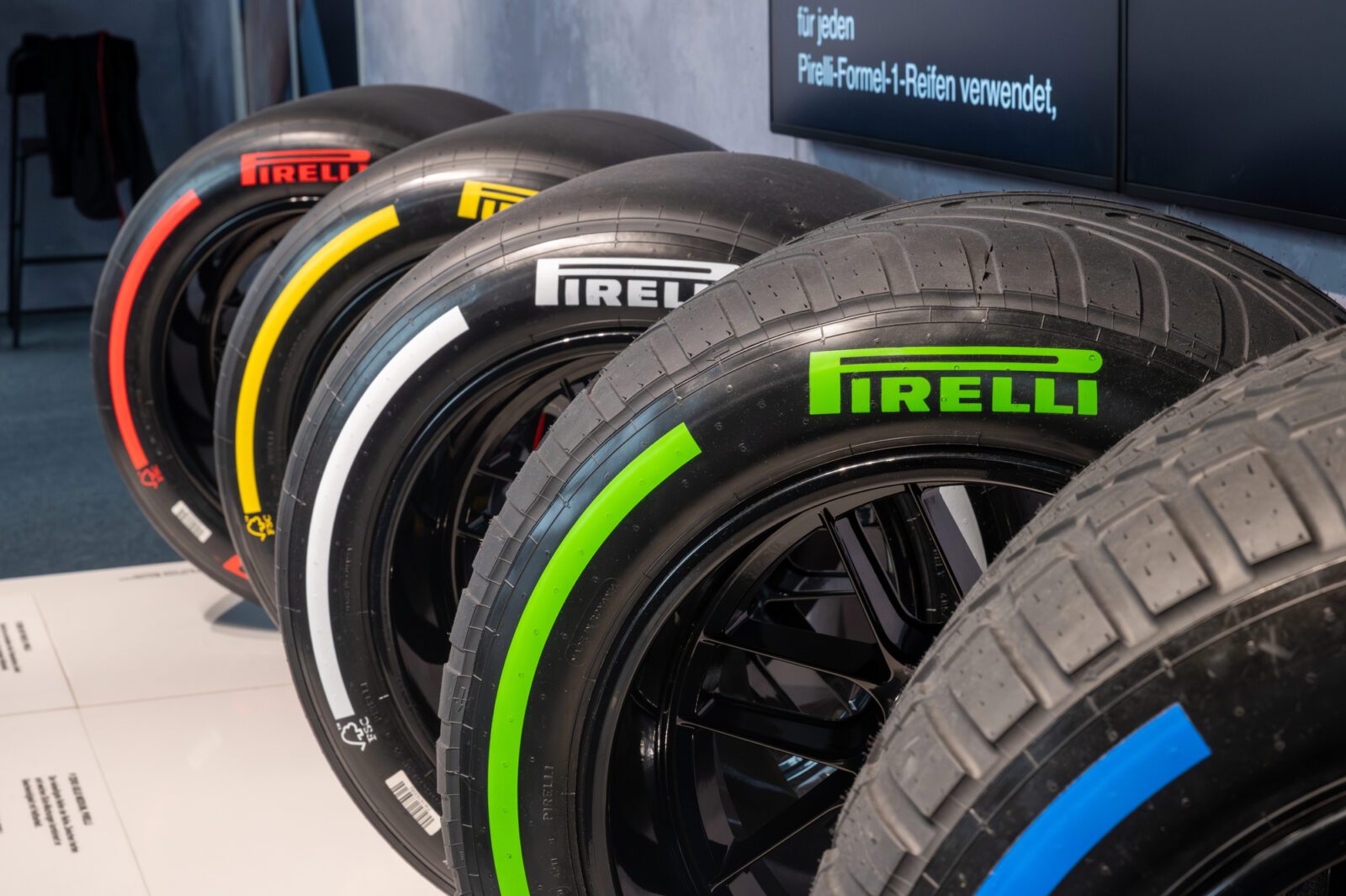
Pirelli nominates three of these five slick compounds for each Grand Prix weekend, labeling them as hard (white), medium (yellow), and soft (red). The specific C-numbers for these designations vary depending on the circuit’s characteristics, such as abrasiveness and cornering loads.
The 2026 regulations also introduced changes to tire dimensions, with front tires becoming 25mm narrower and rear tires 30mm narrower. The overall diameter is also reduced by 15mm at the front and 10mm at the rear, while maintaining the 18-inch wheel rim diameter.
| Compound Code | Characteristic | Typical Use Case |
|---|---|---|
| C1 | Hardest, highest durability, slowest to generate temperature | High-energy circuits, long stints |
| C2 | Hard-leaning all-rounder, good balance of durability and performance | Versatile for various track types |
| C3 | Mid-range, most frequently nominated compound | Balanced performance, common medium choice |
| C4 | Soft-leaning, quicker but shorter-lived | Circuits requiring more grip, shorter stints |
| C5 | Softest, maximum single-lap grip, shortest life | Low-energy circuits, qualifying, short race stints |
The intermediate tires, marked with a green stripe, are designed for damp track conditions or light rain, capable of dispersing a certain amount of water. Full wet tires, identified by a blue stripe, are used in heavy rain to evacuate significant volumes of water and prevent aquaplaning.
Understanding tire degradation in Formula 1
Tire degradation, often referred to as ‘deg’, is the gradual loss of grip and performance as Formula 1 tires wear out or overheat. Managing this degradation is a critical skill for drivers and a key factor in race outcomes.
There are two primary forms of degradation: thermal degradation and wear degradation. Thermal degradation occurs when the rubber overheats, causing its material properties to change and the compound to harden, reducing its ability to stick to the track.
Wear degradation involves the physical loss of rubber from the tire surface due to sliding and friction with the track. This reduces the contact patch and consequently diminishes grip.
Specific mechanisms of degradation include blistering, graining, and abrasion. Blistering happens when tires get too hot, causing ruptures on the surface as the rubber’s polymer chains absorb excessive thermal energy.
Graining occurs when tires are too cold or slide excessively, leading to small chunks of rubber breaking off and forming ‘balls’ on the tire surface. This results in temporary grip loss and vibration, though it can sometimes clear up as the tire warms.
Abrasion is the ‘normal’ wear where small portions of rubber are uniformly worn away as the tire slides across the track surface. This thinning of the tread layer reduces grip over time.
Factors contributing to degradation include the abrasiveness of the track surface, car setup and balance, and the driver’s style. Aggressive driving, constant steering corrections, and following another car closely can all accelerate tire wear.
Managing tire temperatures for optimal performance
Formula 1 tires have an optimal temperature window, or “working range,” where they generate maximum grip. For slick tires, this sweet spot typically lies between 90-110°C (194-230°F).
If tires are too cold, below 80°C (176°F), the rubber compound becomes stiff, leading to significantly reduced grip and erratic handling. This can cause understeer and increased sliding, which paradoxically can spike surface temperatures and accelerate wear.
Conversely, if tires exceed 120°C (248°F) and enter the “overheated” zone, their modulus decreases, and they degrade rapidly. Overheating also causes internal pressure to rise, which can reduce the contact patch and further diminish grip.
Teams and drivers employ various techniques to manage tire temperatures. During formation laps or behind a safety car, drivers weave across the track to generate friction and warm the tire surface, while braking heats the inner structure.
Car setup adjustments, such as tire pressures and camber angles, are crucial for temperature management. Higher tire pressures can help lower overall temperature buildup, while lower pressures increase the contact patch and heat up tires quicker.
Drivers also use techniques like “lift-and-coast” to manage overheating during a race. Furthermore, teams can manipulate brake bias to transfer heat to the wheel rims, which then radiates into the tires, particularly the fronts.
For the 2026 season, Formula 1 regulations have explicitly banned any device, system, or procedure (other than driving the car) whose purpose or effect is to heat,
Cool, or maintain the temperature of the complete wheels, hubs, or brakes, with the exception of tire blankets.
The role of tire strategy in Formula 1 racing
Tire strategy is a fundamental aspect of Formula 1, involving pre-race planning for which Pirelli compounds to use, the number of pit stops, and their timing. This strategy is optimized to achieve the lowest possible total race time.
A mandatory rule in a dry race dictates that drivers must use at least two different slick tire compounds. This rule ensures strategic variety and prevents teams from completing an entire race on a single, most durable compound.
Teams build their strategies from simulations of thousands of lap-time scenarios, considering factors like track characteristics, expected degradation rates, and competitor performance. However, real-time adjustments are often necessary due to unforeseen events.
Common strategic maneuvers include the “undercut” and the “overcut.” An undercut involves pitting early for fresh tires to gain lap time and potentially overtake competitors who stay out longer on older rubber.
The overcut, conversely, involves staying out longer on older tires, hoping to maintain a competitive pace while rivals on new tires struggle to get them into their optimal working window. This can be effective if the track conditions or tire warm-up characteristics favor it.
Safety cars, virtual safety cars, and changing weather conditions can dramatically alter planned strategies, forcing teams to react quickly. The ability to adapt and make optimal decisions under pressure is important for success.