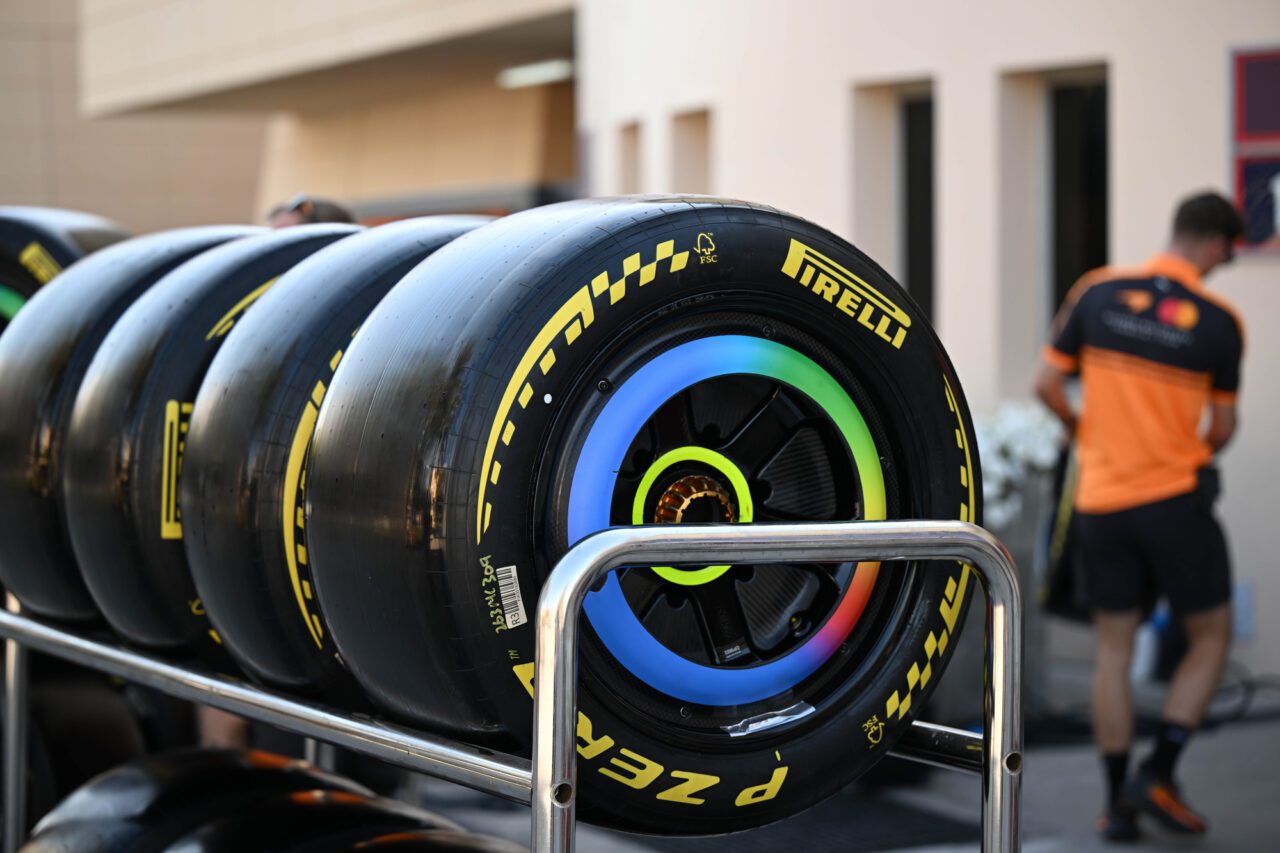
Formula 1 circuits are meticulously engineered facilities where the interaction between tire and track surface is paramount for performance and safety. The asphalt composition, its texture, and environmental factors collectively dictate the available grip, which is a critical element for a car’s ability to accelerate, brake, and corner effectively.
This intricate relationship also drives the phenomenon known as track evolution, where the circuit’s characteristics change over a race weekend.
Grip, the physical friction force between the tire and the track, is fundamental to a Formula 1 car’s entire performance envelope. Without optimal grip, even the most advanced machinery becomes unstable, impacting lap time consistency and driver confidence.
Managing this grip is one of the most critical aspects of race preparation and circuit design.
The composition of Formula 1 circuit asphalt
Formula 1 tracks utilise high-performance asphalt mixes, distinct from standard road materials, specifically engineered for extreme load tolerance, drainage, and consistent grip retention. These specialised surfaces commonly employ stone mastic asphalt (SMA) or polymer-modified asphalt.
The primary components of this asphalt include a bitumen binder, which acts as the adhesive, and various aggregates such as coarse gravel, fine sand, and filler dust. The precise ratio of bitumen to aggregate, along with the chosen stone type, directly influences the macro and micro roughness of the surface.
Macro-roughness refers to the broader spacing and protrusion of the aggregate stones, visible to the naked eye. Conversely, micro-roughness describes the finer texture of individual stones.
Both characteristics are crucial for how tires interact with the track, affecting mechanical grip and molecular adhesion.


Grip characteristics and tire interaction
Tire grip fundamentally arises from two complementary mechanisms: indentation and adhesion. Indentation occurs as the tire deforms around the track’s roughness, generating friction through mechanical resistance.
Adhesion involves molecular bonding between the rubber polymers and the track surface at a microscopic level.
A higher macro-roughness provides more physical anchoring for the tires, enhancing mechanical grip. Meanwhile, micro-roughness boosts the molecular bonding through adhesion.
These two forces operate simultaneously, with their relative contributions varying based on the track’s surface and conditions.
The viscoelastic nature of rubber allows tires to conform to the microscopic features of the track surface, forming a base layer of traction. The tire’s compound also plays a role, with softer compounds offering higher grip but degrading more quickly, while harder compounds provide durability at the expense of immediate traction.
Understanding track evolution in Formula 1
Track evolution is a dynamic process where the circuit surface gradually changes and improves over a race weekend, primarily due to the deposition of rubber from the tires. As Formula 1 cars circulate, they shed small amounts of rubber onto the track, particularly along the racing line.
This deposited rubber fills in the surface voids, reducing macro-roughness and enhancing both adhesion and indentation, thereby increasing grip levels. Early sessions on a “green” track are typically slower because the surface lacks this rubber build-up and may contain dust and grit.
As more laps are completed, the racing line becomes progressively “rubbered in,” appearing darker and offering significantly more traction. This improvement in track conditions allows drivers to achieve faster lap times as the weekend progresses towards qualifying and the race.
Factors influencing track evolution and grip levels
Several factors beyond rubber deposition influence track evolution and overall grip. Track temperature is a critical variable; warmer surfaces soften the tire compound, allowing for better conformity and increased grip.
However, excessively high temperatures can push tires beyond their optimal operating window, leading to degradation issues like blistering or graining. Conversely, colder conditions make the rubber less pliable, limiting adhesion and increasing the risk of sliding.
External conditions such as rain, wind, and debris also play a significant role. Rain can wash away the accumulated rubber, effectively resetting the track to a “green” state with reduced grip.
Dust and grit on the surface are swept away by the cars’ aerodynamic forces and tire action, further contributing to grip improvement.
Resurfacing a circuit can drastically alter its grip characteristics. New asphalt, often sealed with bitumen, may initially offer very low grip until the top layer wears down to expose the aggregates.
The 2020 Turkish Grand Prix served as a notable example of a newly resurfaced track with minimal initial grip.
Strategic implications for teams and drivers
The dynamic nature of track grip and evolution presents significant strategic challenges for Formula 1 teams and drivers. Understanding how the track will evolve is important for optimising car setup, tire choice, and race strategy.
Teams closely monitor track and ambient temperatures, as these directly impact tire performance and degradation. Pirelli, the official F1 tire supplier, designs compounds to operate within specific temperature windows, typically between 90-110°C for optimal grip.
Drivers must adapt their driving style to the changing grip levels throughout a session and race. This includes adjusting braking points, cornering speeds, and throttle application to maximise performance while managing tire wear.
The FIA mandates Grade 1 standards for circuits, which include rigorous testing for friction, uniformity, and water evacuation. These inspections often influence track upgrades and resurfacing projects, ensuring consistent and safe grip characteristics across the calendar.
| Characteristic | Description | Impact on Grip |
|---|---|---|
| Macro-roughness | Spacing and protrusion of aggregate stones. | Higher macro-roughness provides mechanical anchoring; can be reduced by rubber build-up. |
| Micro-roughness | Texture of individual aggregate stones. | Boosts molecular bonding (adhesion); can be hidden by bitumen on new surfaces. |
| Track Temperature (Warm) | Asphalt and tire compounds soften. | Increases tire conformity and adhesion, generally improving grip. |
| Track Temperature (Cold) | Asphalt and tire compounds harden. | Reduces tire flexibility and adhesion, limiting grip. |