Formula 1 pit stops are a critical element of race strategy, demanding precision and coordination from both drivers and pit crews. The stationary time for a tyre change is often measured in the low two-second range, with elite stops achieving times below two seconds.
However, the total race-time cost of a pit stop is significantly higher, encompassing the entire process from pit entry to rejoining the track.
The 2026 Formula 1 season introduces a new era of technical regulations, impacting car design, power units, and consequently, race strategies. These changes necessitate a refined approach to pit stop planning and execution.
Mandatory pit stop rules in Formula 1
In a dry Formula 1 race, every driver must make at least one pit stop to use a minimum of two different dry tyre compounds. This regulation, outlined in Article B6.3.6 of the 2026 Sporting Regulations, makes a single pit stop compulsory.
Should a race be declared wet and intermediate or full wet tyres are used, the requirement to use two different dry compounds is waived. This means a driver could theoretically complete the entire race without stopping if conditions remain wet.
There is no upper limit to the number of pit stops a team can make during a Grand Prix. However, the time lost during each stop naturally restricts teams from making excessive visits to the pit lane.
For the 2025 Monaco Grand Prix, an experimental rule mandated two pit stops, requiring drivers to use at least three different tyre sets. This rule was widely disliked and subsequently abandoned for the 2026 season, returning Monaco to the standard one-stop minimum requirement.
Formula 1 pit stop times and records
The stationary time for a Formula 1 pit stop, which is the duration the car spends in its pit box, is typically between two and three seconds for a clean tyre-only change. The fastest pit stops can fall below two seconds, showcasing exceptional teamwork and efficiency.
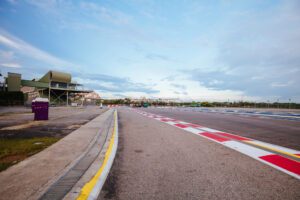

The current world record for the fastest stationary pit stop is 1.80 seconds, achieved by McLaren for Lando Norris at the 2023 Qatar Grand Prix. This record highlights the incredible speed and coordination of modern pit crews.
Red Bull Racing previously held several records, including a 1.82-second stop for Max Verstappen at the 2019 Brazilian Grand Prix. Other notable fast stops include 1.88 seconds for Max Verstappen at the 2019 German Grand Prix and 1.91 seconds for Pierre Gasly at the 2019 British Grand Prix.
The average stationary pit stop time across the first twelve races of the 2026 season was 2.05 seconds per driver. The overall average pit stop time in 2026, across 564 recorded stops, was 2.92 seconds.
| Pit Stop Condition | Approximate Total Race-Time Loss |
|---|---|
| Green Flag Conditions | 21.88 seconds |
| Virtual Safety Car (VSC) | 18.13 seconds |
| Full Safety Car (SC) | 14.24 seconds |
The total race-time cost of a pit stop is considerably more than the stationary time, as it includes the time spent slowing down for pit entry, adhering to the pit lane speed limit, and accelerating back onto the track. Under green flag conditions, this total time loss is approximately 21.88 seconds.
Strategic advantages can be gained by pitting under a Virtual Safety Car or a full Safety Car period, as these conditions significantly reduce the overall time loss. A VSC period saves about 3.8 seconds, while a full Safety Car can save approximately 7.6 seconds compared to a green flag stop.
Pit stop time loss at monaco
The Monaco Grand Prix presents unique challenges for pit stop strategy due to its tight and twisty street circuit layout. The average pit stop time loss in Monaco, including the stationary stop, is approximately 19.92 seconds.
The narrow confines of the Monaco pit lane and track make overtaking extremely difficult, placing a premium on qualifying performance and strategic timing. The 2026 regulations have seen the abandonment of the mandatory two-stop rule that was trialled in 2025, which aimed to inject more strategic variance but ultimately proved ineffective.
Drivers must exercise extreme caution with pit lane speed limits in Monaco, as penalties for speeding are common. These penalties can sometimes arise from drivers inadvertently cutting the white line that defines the fast lane, which shortens the measured distance and can lead to a fractional speed infringement.
Formula 1 race strategy in 2026
Formula 1 race strategy in 2026 is a complex interplay of tyre compound selection, precise pit stop timing, and maximized execution efficiency. The new regulations for the 2026 season have fundamentally reshaped these strategic considerations.
The cars are now lighter, with a minimum weight of 768 kilograms, and narrower, with a maximum width of 1.9 meters. These changes, along with reduced downforce and drag, aim to make the cars more nimble and promote closer racing.
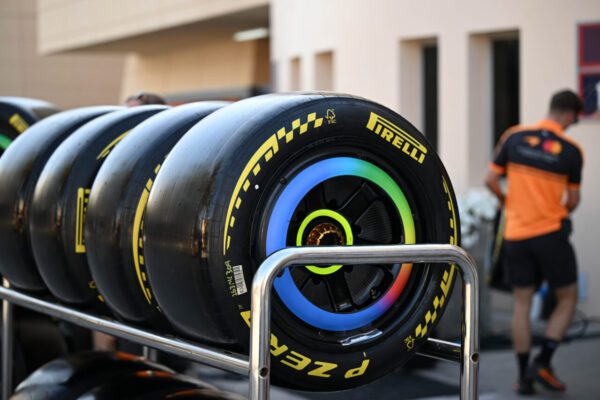
Pirelli continues as the sole tyre supplier, providing five dry compounds (C1 to C5, from hardest to softest) and two wet weather options. For each Grand Prix, Pirelli nominates three dry compounds based on track characteristics and climate.
A significant strategic element for 2026 is the new power unit, which features a 50% electrical power requirement and advanced energy management systems. The introduction of a ‘Manual Override’ mode, replacing the Drag Reduction System (DRS), provides a temporary power boost for overtaking, contingent on the battery’s State of Charge.
Teams utilize sophisticated simulation software to model tyre degradation and predict optimal pit stop windows. The effectiveness of traditional undercut and overcut strategies may also be influenced by the new aerodynamic regulations, which are designed to improve following capabilities.