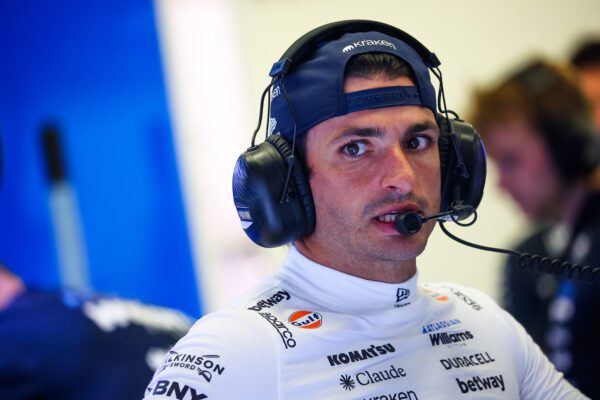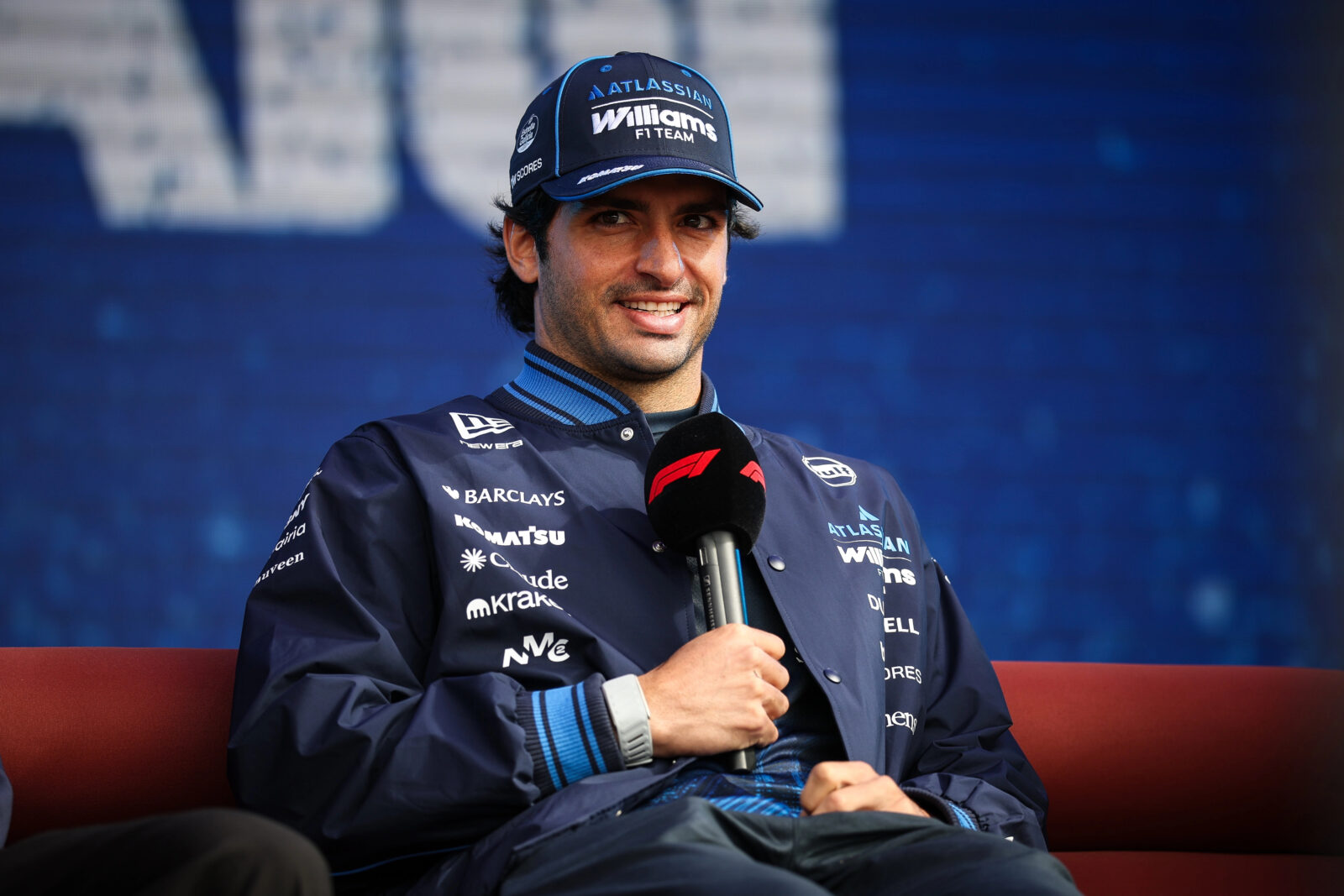
Carlos Sainz has detailed the significant performance struggles faced by Williams during the 2026 Formula 1 season. The Spanish driver revealed that the Grove-based squad has been approximately one second per lap slower than the midfield pacesetters, Racing Bulls.
This stark reality contrasts sharply with Williams’ position just 12 months ago. Last year, Sainz was on the cusp of securing his second podium finish of the season in Qatar, ultimately helping the team clinch fifth place in the Constructors’ Championship.
Despite being the first team to publicly declare its full focus had shifted to the new 2026 regulations, Williams has endured a challenging campaign. The team currently languishes ninth in the standings, having accumulated just 16 points from 21 rounds to date.
Speaking before the recent Las Vegas Grand Prix, Sainz openly discussed the immense gap Williams must bridge. He emphasized the need to return to the competitive standing they held a year prior, when they were the closest challengers to the leading four teams.
Sainz highlighted the current deficit, explaining the difficulty in scoring points with such a performance gap. He pointed out that Racing Bulls consistently secures the ninth and tenth positions when the top teams face no issues.
“Right now, we are one second off VCARB (Racing Bulls), who are finishing P9 and P10 when the top four are not having any issues. They are taking the P9 and P10, which is two and one points in the board, and that’s one second off for us. So the chances of points really are very, very small.”
The four-time race winner attributed Williams’ disastrous season to a poorer interpretation of the current technical rules. This initial performance deficit has proven irrecoverable throughout the opening year of the new regulation cycle, where development rates have been high.
Any progress made by Williams has unfortunately been offset by the gains of their rivals. This ongoing struggle has prompted Sainz and his teammate Alex Albon to implement experimental setups during recent race weekends.
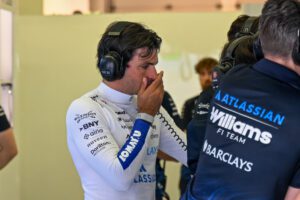

Sainz expressed hope that these experimental approaches will ultimately yield dividends for the 2027 season. He conceded that the team simply lacks overall pace, acknowledging a fundamental slowness across the entire operation.
“We are just not quick enough. We’re slow, I think, as a team in general. We’ve struggled to understand these new regs, and we’re doing everything possible to change the setup, challenge a few things that come to the track, make sure we can give the factory the best possible feedback to know how to develop next year’s car.”
The team is actively evaluating its correlation between wind tunnel data, CFD simulations, and actual track performance. Sainz admitted that bringing consistent performance to the track has been a significant challenge for Williams with this year’s car.
He further elaborated on the team’s current approach, indicating a strategic shift in focus. Sainz suggested that investing time in testing for the team, effectively acting as test drivers, is more beneficial than pursuing other avenues.
“The reality is that we’d rather invest that time in becoming a test driver and testing for the team than actually doing anything else.”
Sainz’s pre-race suspicion that the lower-downforce Las Vegas Strip Circuit would better suit the FW48 proved accurate. Despite starting 20th due to a 10-place grid penalty, the Spaniard successfully ended Williams’ point-less streak by finishing eighth.
Reflecting post-race, Sainz described the result as both “very relieving and very satisfying.” He viewed it as potentially the “last and only opportunity” to score points with the current car before the season concludes.
“Very relieving and very satisfying because I think it’s the last and only opportunity, really, to get points with this car this year. Very proud to see that the team also executed a good race together with me, and we managed to continue the trend from last year, where, whenever there’s a chance to do something special, like the three podiums last year, today there was a chance to come back and get yourself in a good position and score points, which is the maximum we can achieve this year, and we did it again as a team.”
He expressed pride in the team’s execution during the race, noting their ability to continue a positive trend from the previous year. Sainz highlighted that whenever an opportunity arose for something special, like the three podiums last season, they capitalized.
The eighth-place finish in Las Vegas represented the maximum achievable for Williams this year, and they successfully delivered. Sainz conveyed his happiness at maintaining this trend, even during what he described as a “long, painful year” for everyone involved.
“So happy to see that trend, that even on such a long, painful year for all of us, we can get this little reward of finishing eighth in Vegas after I was warning that Vegas would be our only opportunity of scoring points. So kind of right and kind of happy that by saying it, then we are able to do it like we did last year in Baku, like we did in Austin, or like we did in Qatar, and we did this year in the three or four races where we had the chance to score points.”
Sainz had previously warned that Las Vegas would likely be their sole chance to score points, making the result particularly gratifying. He drew parallels to successful outings in Baku, Austin, and Qatar last year, and a few other races this season where they seized opportunities.