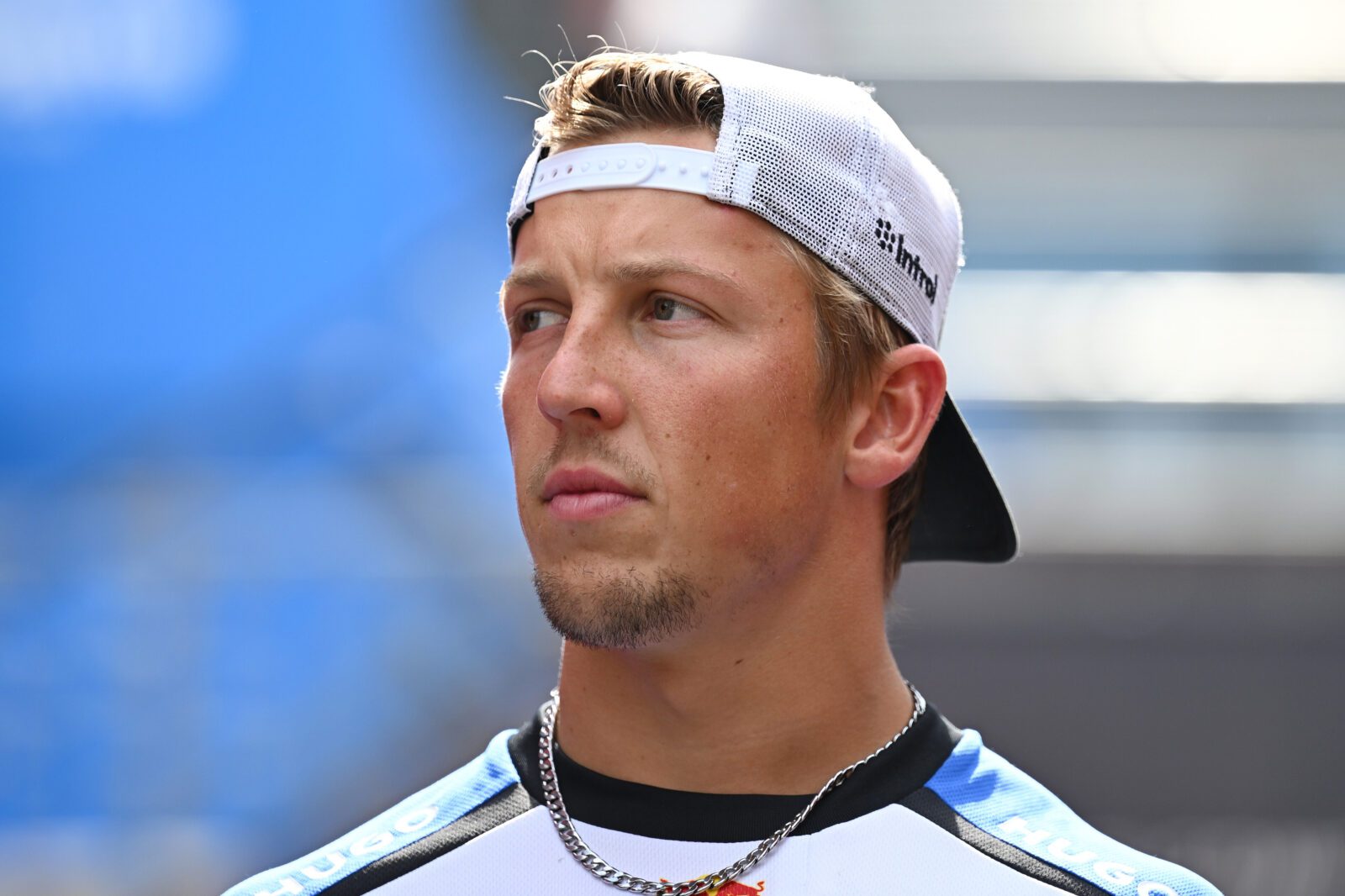
Liam Lawson’s 2026 Formula 1 season has been one that championship standings alone struggle to fully explain. After 21 Grands Prix, the New Zealander sits ninth with 89 points, trailing drivers from Mercedes, Ferrari, Red Bull, and McLaren. On paper, this places him in the lower half of Formula 1’s top ten.
However, by accounting for the inherent advantage of faster machinery, examining his consistency, and comparing his output to teammates, Lawson emerges as a credible candidate for one of the five most impressive drivers of 2026. This assessment extends beyond mere nationalistic sentiment for New Zealand audiences.
Formula 1 itself recognised Lawson’s strong performances, placing him fifth in its official Power Rankings at the season’s halfway point. Judges in these rankings specifically attempt to evaluate driver performance independently of their car’s competitiveness.
Lawson’s results since the mid-season have further bolstered this argument, though a definitive top-five ranking for the entire season remains a subject of debate. The statistics provide a solid foundation for his case.
His points-scoring record is particularly notable for a driver whose usual machinery belongs to the midfield. Lawson has finished in the points in 15 of the opening 21 Grands Prix, which equates to 71.4% of the races held so far.
This achievement is even more striking given the uncertainty that surrounded his season. Lawson temporarily moved to Red Bull to replace the injured Isack Hadjar before returning to Racing Bulls after three races.
This interruption demanded he adapt to two different cars and engineering environments while simultaneously maintaining his championship position. Racing Bulls has accumulated 114 Constructors’ Championship points after the Las Vegas Grand Prix.
Of this total, Lawson contributed 75 points while racing for the Faenza-based team, representing 65.8% of Racing Bulls’ entire championship tally. This is despite the New Zealander missing three rounds during his substitution for Hadjar at Red Bull.


The distinction is crucial, as Lawson’s 89 Drivers’ Championship points also include the 14 points he earned during his temporary promotion to Red Bull. Racing Bulls teammate Arvid Lindblad has contributed 38 points, while Yuki Tsunoda scored one point during his brief period with the team.
Lawson has therefore been central to Racing Bulls maintaining fifth place in the standings, ahead of Alpine, Haas, Audi, and Williams. His results include a fifth-place finish at Monaco and a sixth at Silverstone, alongside consistent finishes between seventh and ninth.
At Mexico City, he demonstrated his ability to convert a compromised weekend into valuable championship points by recovering from a pit-lane start to finish seventh. Following that race, Lawson acknowledged the difficulty but emphasised the positive outcome.
“It was a tough race today,” Lawson stated, describing the points recovery as a positive outcome for the team.
This performance underscored one of the strongest characteristics of his campaign: the ability to collect points even when a weekend does not unfold ideally. The comparison with Lindblad offers another important metric.
The British rookie arrived in Formula 1 with an impressive junior-category record and significant expectations within Red Bull’s development programme. Lindblad immediately showcased competitive speed, making several Q3 appearances and regularly scoring points.
Nevertheless, Lawson has established a significant advantage over his teammate. Lawson’s overall championship lead is partly influenced by his three appearances with Red Bull, meaning the 89–38 points comparison should not be treated as a pure measure of their performances in identical cars.
The head-to-head race results are more informative, with Lawson finishing ahead in 14 of the 18 comparable Grands Prix. This suggests his advantage has been more pronounced over race distance than in qualifying.
However, Lindblad has performed well enough to prevent a simplistic conclusion that Lawson has dominated every aspect of their internal battle, as the qualifying contest remains relatively close. This matters when evaluating Lawson against other drivers on the grid.
He has been the more effective Racing Bulls competitor, but he has also benefited from a genuinely competitive midfield car. Lawson’s brief return to Red Bull was one of the most significant tests of his career.
In 2025, his initial promotion to the senior team had concluded after only two races, raising doubts about his ability to handle the pressure of competing alongside Max Verstappen. When Hadjar suffered an injury during 2026, Lawson received another opportunity.
This time, he proved more competitive, scoring points in the Netherlands and Spain, collecting 14 across his three-race return. While he did not match Verstappen, he displayed greater confidence and adaptability than during his first appearance with the team.
Red Bull team principal Laurent Mekies praised Lawson’s progress, highlighting the composure and concentration shown by the New Zealander. This evaluation was important because Lawson had to learn a different car with minimal preparation while maintaining his Racing Bulls responsibilities.
His performances did not establish him as a future world champion, but they helped challenge the suggestion that his initial Red Bull setback represented his ultimate potential. This recovery ultimately contributed to Racing Bulls confirming Lawson and Lindblad for 2027.
At the halfway point of the season, Formula 1 published its official driver Power Rankings, based on assessments from a five-member judging panel. These judges aimed to evaluate performances independently of machinery, rather than solely by championship points.
The list placed Kimi Antonelli first, followed by Verstappen, Hamilton, and Pierre Gasly, with Lawson completing the leading five. This ranking supported the view that his performances deserved recognition beyond the midfield.
However, there are limitations to this assessment. The published list covered only the opening 11 rounds, not the complete season. Additionally, the Power Rankings are expert assessments rather than a purely mathematical calculation of driver ability.
Lawson’s fifth-place position is therefore evidence that respected observers considered him among the standout drivers, not definitive proof that he has been the fifth-best competitor throughout 2026. His challenge is to demonstrate that the standard established in the first half has continued across the entire championship.
The difficulty of placing Lawson among the season’s five best becomes clearer when examining his competition. Antonelli has won the World Championship with 402 points, delivering the most successful season of any driver.
Verstappen has collected four victories and helped Red Bull recover from a difficult start to the championship. Hamilton has returned to winning form with Ferrari, considerably recovering from the problems of his first season at Maranello.
Hadjar has established himself as a consistent points scorer alongside Verstappen in one of Formula 1’s most demanding teammate positions. Gasly has produced outstanding qualifying performances for Alpine, including a pole position at Monza, and has frequently extracted competitive results from a car that has not always belonged near the front.
Arguments can also be made for Norris, Leclerc, and Russell, depending on the importance placed on victories, consistency, and performance relative to machinery. Lawson’s strongest argument is not that his results match those of Antonelli or Verstappen.
Instead, it is that he has consistently delivered results near the upper limit of what Racing Bulls can reasonably expect, while successfully adapting to an additional three races with Red Bull. The fifth position is genuinely debatable, making it more interesting than an artificial ranking designed to produce a predetermined answer.
Lawson’s Las Vegas weekend offered another example of the distinction between speed and results. The New Zealander finished 14th, outside the points. However, he recorded the fastest lap of the Grand Prix with a 1:35.591 on the final tour, ahead of every other competitor.
This performance was impressive but did not earn an additional championship point, as Formula 1 abolished the fastest-lap bonus after 2024. It also did not change the fact that Lawson failed to score.
His fastest-lap performance in Las Vegas illustrated the potential available in the Racing Bulls under favourable conditions, but a single lap cannot compensate for a disappointing overall result. This serves as an important counterargument in assessing his season.
A driver claiming a place among Formula 1’s five strongest performers must demonstrate more than occasional speed; the results must be sustainable over complete weekends. Lawson has often met that requirement, though not without exceptions.
One of the most compelling aspects of Lawson’s campaign is how significantly his position within Formula 1 has changed. At the beginning of 2025, his career appeared to be moving rapidly towards a permanent place alongside Verstappen.
The abrupt demotion that followed created serious doubts about his future. By late 2026, the situation looks different. Lawson has demonstrated consistent points-scoring ability, handled a temporary return to the senior Red Bull team, and secured another season at Racing Bulls.
He has also established himself as the leading New Zealand driver in Formula 1 and a central figure in the team’s championship campaign. His assessment of the season reflects this transformation.
“I feel like I’ve done a very strong season,” Lawson said while discussing his future during the Mexico City Grand Prix weekend. His confidence is supported by the results.
There is a credible case for Lawson in the top five when performances are judged relative to machinery, consistency, and teammate results. The 89 championship points are impressive, but his 75-point contribution to Racing Bulls, the 14–4 race advantage over Lindblad, and his successful Red Bull substitution are stronger evidence.
These achievements show a driver who has adapted to changing circumstances while delivering valuable results for two different teams. The argument is not indisputable.
Gasly’s performances, Hadjar’s adaptation to Red Bull, and the achievements of several leading-team drivers provide serious competition. Lawson has also failed to score on occasions when the Racing Bulls showed competitive pace.
A top-five placing remains a defensible editorial assessment rather than a statistical certainty. What is considerably harder to dispute is that Lawson has established himself as one of the outstanding midfield drivers of 2026 and one of Formula 1’s most impressive comeback stories.
With Qatar and Abu Dhabi remaining, he has two final opportunities to strengthen that argument.