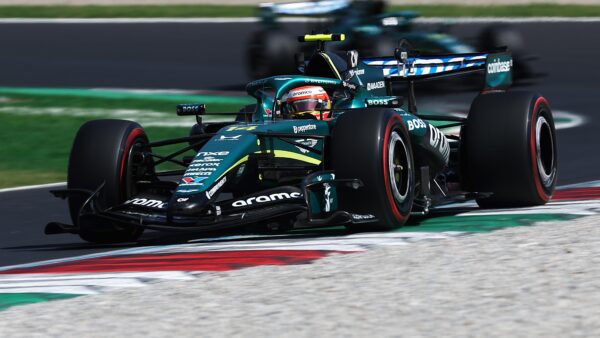




In Formula 1, an ‘interval’ refers to the time difference between two cars on the track. This measurement indicates how far ahead or behind one car is compared to the car directly in front of it.
It is a fundamental aspect of live race timing, providing immediate context to on-track battles and overall race dynamics.
Intervals are typically displayed in seconds or milliseconds on live timing screens and television graphics during races. This constant update allows teams, drivers, and fans to track the evolving positions and competitive gaps throughout a Grand Prix.
How interval timing is measured in Formula 1
The precise measurement of intervals in Formula 1 relies on advanced timing technology. Each F1 car is equipped with a transponder, a small electronic device that emits a unique signal.
As cars pass various timing points and loops embedded around the circuit, these transponders send signals that are picked up by receivers. The system records each pass with millisecond accuracy, calculating the time difference between consecutive cars.
Historically, there were fewer timing loops per lap, but modern Formula 1 circuits feature numerous loops, sometimes every 150-200 meters. This extensive network ensures that interval data is updated almost constantly, providing real-time information to all stakeholders.
The accuracy of these systems is paramount, as even tiny gaps can be decisive in Formula 1 racing. This robust timing infrastructure ensures fair results and provides strong data for strategic analysis.
The strategic importance of intervals
Intervals play a crucial role in Formula 1 race strategy and tactical decision-making. Teams use this real-time information to assess their car’s performance relative to competitors and to plan critical moments like pit stops.


For instance, knowing the interval to the car ahead helps strategists determine the optimal pit window, ensuring a driver can rejoin the track without losing too many positions or emerging into heavy traffic. A car typically loses between 20 and 30 seconds during a pit stop, making precise timing essential.
Furthermore, intervals are vital for the activation of the Drag Reduction System (DRS). A driver must be within one second of the car in front at a designated DRS detection zone to be eligible to open their rear wing on the subsequent straight.
This one-second interval rule directly influences overtaking opportunities and defensive driving tactics. Drivers are constantly informed of their interval to the car ahead via team radio, allowing them to manage their pace and position effectively.
Interval versus gap to leader: a critical distinction
While often used interchangeably by casual observers, ‘interval’ and ‘gap to leader’ represent distinct measurements in Formula 1 timing. Understanding this difference is key to fully comprehending race dynamics.
An ‘interval’ specifically refers to the time difference between a car and the car immediately ahead of it in the running order. This measurement is important for understanding direct battles for position and the immediate competitive landscape.
Conversely, the ‘gap to leader’ is the total time difference between any given car and the race leader. This provides a broader perspective on where each car stands relative to the front of the field.
For example, a driver running in sixth position might have a large ‘gap to leader’ (accumulated from the five cars ahead) but a very small ‘interval’ to the car in fifth place. This indicates they are in a close battle despite being far from the lead.
The only driver for whom the interval and gap to leader are identical is the car running in second place, as the car directly ahead of them is also the race leader. For all other positions, these numbers will differ.
| Term | Reference Point | Information Provided | Primary Use |
|---|---|---|---|
| Interval | Car directly ahead | Immediate time difference to the next car | Overtaking opportunities, DRS window, defensive driving |
| Gap to Leader | Race leader (P1) | Total time difference from the front of the race | Overall race pace assessment, pit stop windows, strategic overview |
Intervals in varying race circumstances
The significance of intervals can change dramatically depending on the phase and conditions of a Formula 1 race. Early in a Grand Prix, small intervals often highlight intense battles for position as drivers jostle for track space.
During the middle stages of a race, steady intervals might indicate periods of tire and fuel management, where drivers are holding their positions. However, even a slightly larger interval late in the race can be challenging to close if cars have similar pace.
Under a safety car or virtual safety car period, intervals between cars are significantly reduced as the field bunches up. Following a restart, these tight intervals often lead to a burst of intense action and overtaking attempts.
Conversely, during long green-flag runs, intervals can stretch out, allowing teams to focus more on car care, tire degradation, and long-term pit stop plans. The dynamic nature of intervals reflects the ever-changing competitive landscape of Formula 1.
Intervals beyond race day
While most prominently featured during races, intervals are also utilized in Formula 1 practice and qualifying sessions. In these contexts, intervals typically reflect differences in lap times rather than real-time gaps between cars circulating simultaneously.
During practice, teams analyze interval data to fine-tune car setups and understand their performance relative to competitors. In qualifying, intervals between drivers’ best lap times determine their starting positions for the race.
This data helps teams and drivers assess where they stand in the pecking order and identify areas for improvement. The consistent application of interval timing across all sessions underscores its fundamental importance in Formula 1.