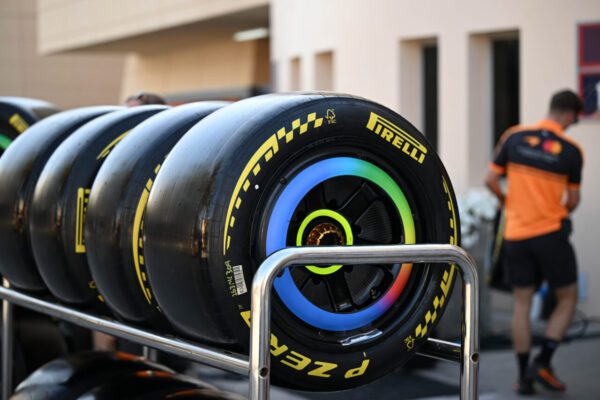
A single Formula 1 tire costs approximately $2,700. This figure includes the base production cost, global freight, and engineering support, with the raw manufacturing cost estimated at around €600.
Consequently, a complete set of four tires for a Formula 1 car amounts to roughly $10,800.
While these individual unit costs are substantial, Formula 1 teams do not purchase tires on a per-unit or per-set basis. Instead, the sport operates under a unique financial model with its exclusive tire supplier.
Formula 1 teams’ annual tire expenditure
Formula 1 teams pay an annual flat fee to Pirelli, the sport’s sole tire supplier, to cover all tire usage throughout the season. This annual fee is approximately $5 million per team.
This fixed payment encompasses all tires used during practice sessions, qualifying, and races across the entire Grand Prix calendar. This system ensures equitable access to tires for all competing teams.
Pirelli’s role as exclusive tire supplier
Pirelli has held the exclusive contract to supply tires to Formula 1 since 2011, a role they are contracted to continue through at least the end of the 2028 season. The FIA and Formula 1 exercised an option to extend this contract in June 2026.
This exclusive arrangement extends beyond Formula 1 to include Formula 2, Formula 3, and F1 Academy. Pirelli’s overall expenditure to support Formula 1, covering manufacturing, logistics, research, testing, and trackside support, ranges from $1.2 million to $1.5 million per Grand Prix.
Tire allocation and usage in 2026
For the 2026 Formula 1 season, the FIA has established specific tire allocations for each driver during Grand Prix weekends. These allocations vary slightly between standard race weekends and Sprint events.


On a standard Grand Prix weekend, each driver receives 13 sets of dry-weather slick tires, five sets of intermediate tires, and two sets of full wet tires. Drivers who advance to Q3 in qualifying are provided an additional set of soft tires, which must be returned immediately after the session.
During Sprint weekends, the dry tire allocation is reduced to 12 sets per driver, comprising two hard, four medium, and six soft compounds. The wet-weather allocation for Sprint events includes six intermediate and two full wet sets.
A mandatory regulation for dry races requires drivers to use at least two different slick tire compounds. This rule necessitates at least one pit stop during a dry Grand Prix.
Technical specifications and regulations for 2026 tires
The 2026 Formula 1 season introduces new technical regulations that impact tire dimensions, aligning with the goal of lighter and more agile cars. While the wheel rim diameter remains at 18 inches, the tires themselves are narrower.
The front tires are 25 millimeters less in width, and the rear tires are 30 millimeters less. The overall diameter of the front tires is reduced by 15 millimeters, and the rear tires by 10 millimeters.
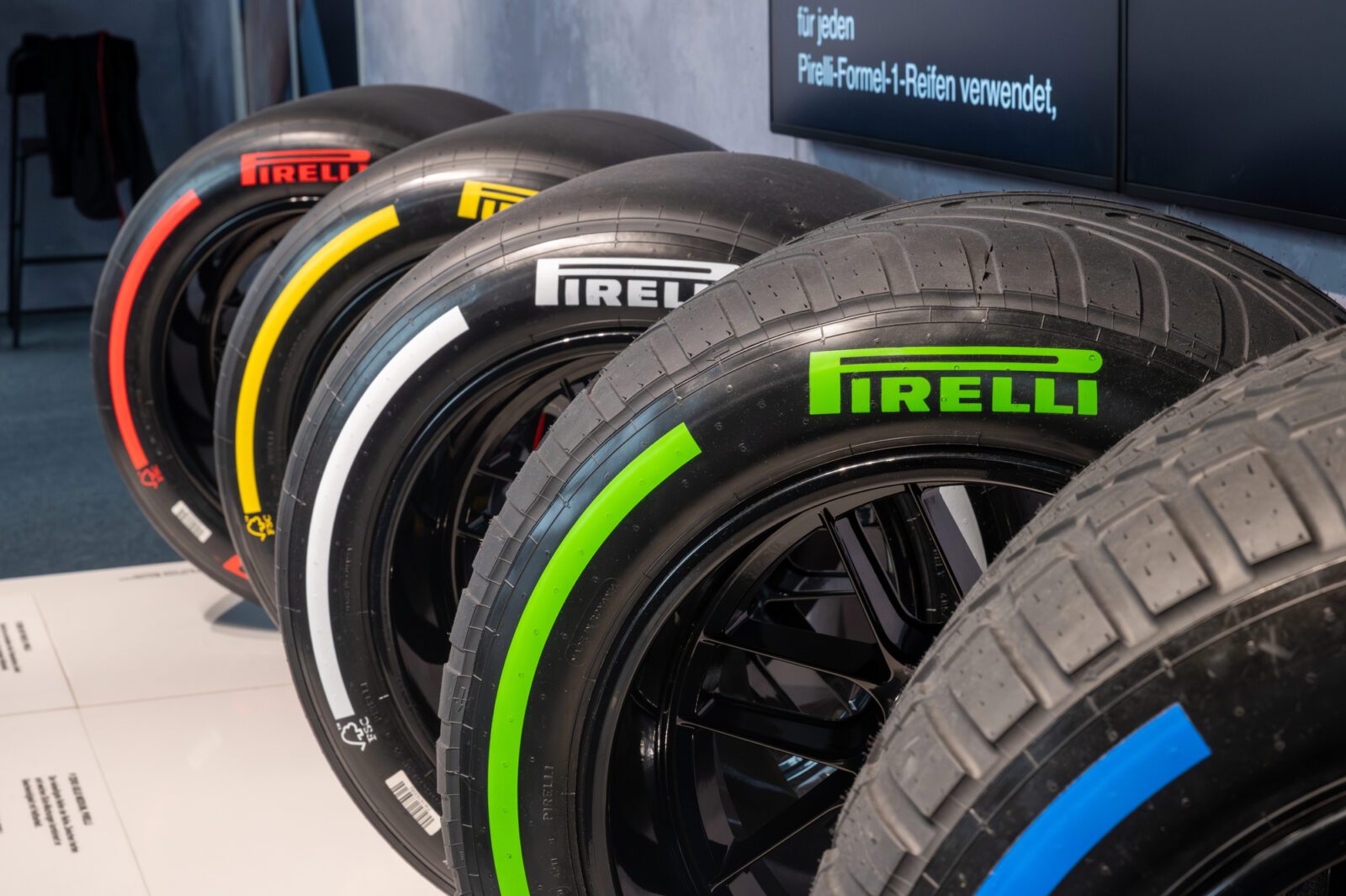
Pirelli continues to supply five slick compounds, designated C1 (hardest) through C5 (softest), along with intermediate and full wet tires for varying weather conditions. The C6 compound, used in 2025, has been discontinued for 2026.
For each Grand Prix, Pirelli selects three specific dry compounds from its range, based on the track characteristics and expected climate. These selected compounds are then designated as hard, medium, and soft for that particular event.
The operational costs of tire management
Beyond the annual flat fee paid to Pirelli, Formula 1 teams incur significant operational costs related to tire management throughout a race weekend. This includes the use of tire blankets, which are still permitted in 2026 but with reduced maximum heating temperatures.
The FIA has also banned auxiliary heating devices inside wheel rims for the 2026 season. The running costs associated with generators, warmers, and heating ovens for tire blankets can reach up to $27,500 per car per race weekend.
Over a 24-race season, these operational costs for tire heating alone can total approximately $1.32 million per team. This substantial expense highlights the complex and costly nature of tire strategy and management in Formula 1.
| Aspect | Detail |
|---|---|
| Single F1 Tire Cost (Estimated) | $2,700 (approx. €600 base manufacturing cost) |
| Full Set of F1 Tires Cost (Estimated) | $10,800 |
| Team Annual Flat Fee to Pirelli | $5 million per team |
| Pirelli Contract Duration | Exclusive supplier until end of 2028 |
| Standard GP Dry Tire Allocation (per driver) | 13 sets |
| Sprint GP Dry Tire Allocation (per driver) | 12 sets |
| 2026 Front Tire Width Reduction | 25 mm |
| 2026 Rear Tire Width Reduction | 30 mm |
| Tire Blanket Operational Cost (per car, per weekend) | Up to $27,500 |