




Adrian Newey and Cadillac Team Principal Marcin Budkowski have publicly supported the concept of providing Formula 1 teams further down the championship standings with additional financial flexibility under the sport’s cost cap regulations. This proposal aims to extend existing handicap systems already integrated into the technical rules.
The current F1 cost cap for the 2026 season stands at $215 million. This figure represents an increase from the $135 million cap in 2025, though this adjustment primarily accounts for rule changes and additional costs now included within the limit, such as the removal of the separate capital expenditure cap.
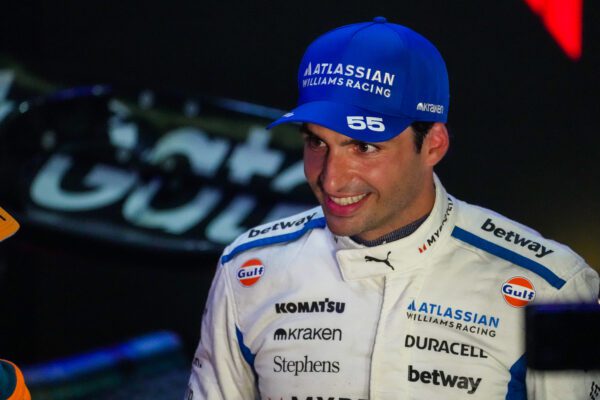
Williams Team Principal James Vowles has been a vocal advocate for modifying the financial rules. He argues that the current flat-rate spending ceiling risks entrenching a two-tier championship, disadvantaging teams that are attempting to close performance gaps.
Vowles’s proposed solution involves implementing a sliding-scale cost cap for the 2027 season. This mechanism would allocate budget limits based on a team’s position in the Constructors’ Championship, granting lower-placed teams more financial headroom.
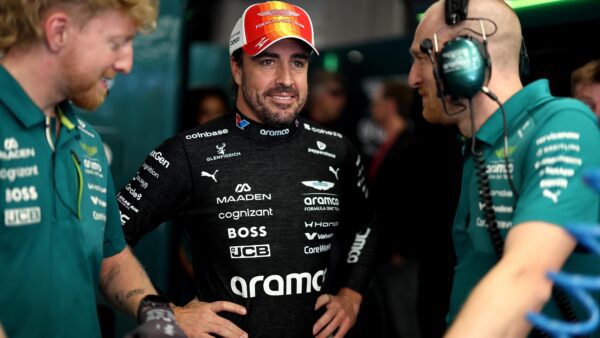
Newey, currently Team Principal, Technical Director, and co-owner at Aston Martin, stated during an FIA press conference in Austin that the existing handicaps in other regulations make a similar spending mechanism reasonable. He suggested a small extra allowance for teams behind.
Cadillac, which debuted as the 11th team on the grid in 2026, also supports the principle. Marcin Budkowski, appointed Team Principal in August 2026, agreed with the need for a fairer opportunity for teams to catch up.
Budkowski, however, drew a clear distinction, emphasizing that Cadillac is not in favour of any balance-of-performance mechanism. He stated that Formula 1 should continue to reward the best teams and drivers.
The sport already employs a sliding scale for aerodynamic testing restrictions (ATR). Under these rules, the Constructors’ Champion receives 70% of the reference aerodynamic-testing allowance, while teams classified tenth or lower, including new entrants like Cadillac, receive 115%.


Another existing mechanism is ADUO, or Additional Development and Upgrade Opportunities, integrated into the 2026 power unit regulations. This system acts as a safety valve, allowing power unit manufacturers whose Internal Combustion Engine (ICE) performance lags by 2% or more to receive upgrade opportunities and financial allowances outside the main cost cap.
The ADUO system is designed to prevent prolonged dominance by one power unit supplier, providing a structured route for trailing manufacturers to catch up without resorting to political disputes over mid-cycle engine rule changes.
Support for Vowles’s sliding-scale cost cap proposal extends beyond Williams, Cadillac, and Aston Martin. Alpine and Audi are also reported to favour the change.
Audi, which completed a full takeover of the Sauber team in March 2026, will benefit from a regional adjustment to the cost cap from 2026. This offset accounts for the higher living and salary expenses associated with operating from Switzerland, compared to the UK or Italy where many other teams are based.
Conversely, McLaren, Red Bull, Ferrari, and Mercedes are expected to oppose the proposed sliding scale for the cost cap. Haas and Racing Bulls are currently undecided or leaning against it.
The F1 Commission is scheduled to vote on the cost cap proposal in November 2026. For the rule change to be implemented for the 2027 season, it requires a majority of six votes from the 11 teams.
Allan McNish, Audi racing director, acknowledged the importance of the cost cap for Formula 1’s long-term stability. He expressed confidence in the FIA’s ability to evolve the regulations, though he did not explicitly endorse a specific sliding scale.