A modern Formula 1 car represents the pinnacle of automotive engineering, with its construction involving cutting-edge technology and exotic materials. The estimated cost to build a single, fully assembled Formula 1 car typically ranges between $15 million and $22 million.
This figure encompasses the physical components and initial assembly, though it does not include the extensive research and development expenditures that precede production.
The financial landscape of Formula 1 is heavily influenced by the FIA’s budget cap, which for the 2026 season is set at $215 million for teams participating in a calendar of 24 races or fewer. A separate cost cap of $190 million applies to power unit manufacturers for the same year.
These caps aim to foster a more competitive environment by limiting spending on car performance, development, and race operations, while excluding elements such as driver salaries and marketing costs.
The power unit: the heart of the expense
The power unit stands as the single most expensive component of a Formula 1 car, often accounting for a substantial portion of the total build cost. Estimates for a complete power unit range from $8 million to $11 million, though some sources indicate figures as high as $18.32 million.
These sophisticated 1.6-liter V6 turbocharged hybrid engines comprise an internal combustion engine, turbocharger, motor generator units (MGU-K and MGU-H), energy store batteries, and control electronics. For the 2026 season, the MGU-H system is being removed to simplify the power unit and reduce overall costs, potentially lowering the entry barrier for new manufacturers.
Customer teams typically do not purchase individual power units outright but instead pay an annual fee for their supply, which can be in the region of €12 million to €15 million per season, equivalent to approximately $13 million to $16 million. This arrangement covers the use of a limited number of units per car per season, with penalties applied for exceeding these allocations.
The chassis: driver protection and structural integrity
The chassis, specifically the monocoque, forms the foundational structure of a Formula 1 car and serves as the driver’s survival cell. Constructed from multiple layers of carbon fiber, it is engineered to be exceptionally strong yet lightweight, capable of withstanding immense aerodynamic loads and protecting the driver in high-speed impacts.

The estimated cost for a carbon fiber monocoque ranges from $650,000 to $1.5 million. This price reflects the intricate manufacturing process, which involves hand-layering carbon fiber sheets and curing them in an autoclave to achieve the required strength and durability.
The transmission: precision gear shifting
Formula 1 cars utilize highly advanced semi-automatic gearboxes with eight forward gears and one reverse, enabling gear changes in as little as 0.05 seconds. These transmissions are critical for transferring power efficiently to the rear wheels and must endure thousands of shifts during a single race.
The cost of an F1 gearbox is estimated to be between $350,000 and $600,000. Some teams develop their own gearboxes, while others, like Haas, procure them from engine suppliers such as Ferrari.
Beyond the individual unit cost, the annual spending by teams on gearbox development, maintenance, and spares can exceed $6 million. Drivers are typically limited to a specific number of gearboxes per season, with penalties incurred for additional units.
Aerodynamic components: shaping the airflow
Aerodynamic components, particularly the front and rear wings, are crucial for generating downforce and managing airflow around the car. These parts are constantly refined and updated, making them significant cost drivers due to their complex designs and the materials used.
A front wing and nosecone assembly, which is the most aerodynamically critical component and frequently damaged, can cost between $141,500 and $300,000. Rear wings, while smaller, are equally vital for downforce and, until 2025, incorporated the Drag Reduction System (DRS).
For the 2026 season, new regulations will replace DRS with active aerodynamics, allowing front and rear wing flaps to open for low drag on straights and close in corners. A complete front and rear wing setup can cost around $250,000.
Critical control and safety systems
The Formula 1 steering wheel is far more than a simple control device; it is a sophisticated, bespoke computer console. Equipped with numerous buttons, dials, and switches, it allows drivers to manage engine mapping, brake balance, energy recovery, and new power modes like Overtake Mode and Boost.
The estimated cost of an F1 steering wheel ranges from $40,000 to $100,000, with top-team units potentially exceeding this range due to extensive development and customization. Each wheel is hand-laminated from carbon fiber, with its complex electronics package contributing significantly to the overall price.
The braking system is another high-cost area, essential for stopping F1 cars from over 200 mph in seconds. A single carbon-carbon brake rotor can cost up to $3,000, with calipers priced around $5,600 each, and pads at $780 each.
A complete F1 brake system can amount to approximately $66,000.
Hydraulic systems, which control vital functions such as power steering, clutch operation, and gear shifts, are estimated to cost around $170,000. The halo, a mandatory titanium safety device introduced to protect the driver’s head, costs approximately $17,000.
Tyres and other essential components
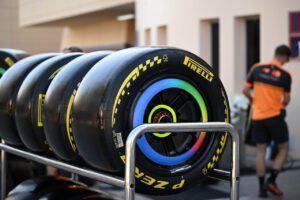
Pirelli, as the exclusive tire supplier, provides highly specialized tires for Formula 1. While a single F1 tire costs approximately $2,700, teams do not pay per tire.
Instead, each team pays an annual flat fee of about $5 million to Pirelli, which covers all tires used throughout the season for practice, qualifying, and races.
A full set of four tires costs around $10,800. Additionally, tire blankets, used to pre-heat the tires, can cost up to $27,500 per car per race weekend.
Other significant components include the fuel tank, a specialized rubber bladder, estimated at $115,000. The car’s electronics system, including the chassis loom, can collectively cost around $500,000, while the suspension system is also estimated at $500,000.
| Component | Estimated Cost (USD) |
|---|---|
| Power Unit | $8,000,000 – $18,320,000 |
| Chassis (Monocoque) | $650,000 – $1,500,000 |
| Gearbox | $350,000 – $600,000 |
| Front Wing/Nosecone | $141,500 – $300,000 |
| Rear Wing | $84,000 – $150,000 |
| Steering Wheel | $40,000 – $100,000 |
| Complete Brake System | $66,000 – $78,000 |
| Hydraulic System | $170,000 |
| Halo | $17,000 |
| Fuel Tank | $115,000 |
| Electronics (overall) | $500,000 |
| Suspension | $500,000 |
| Cooling System | $172,000 |
| Single Tyre | $2,700 |
| Annual Tyre Fee (per team) | $5,000,000 |
The high cost of individual components means that crashes can be incredibly expensive for teams. Replacing damaged parts from a single significant accident can easily cost $1 million or more, highlighting the financial pressure on drivers and teams within the budget cap era.