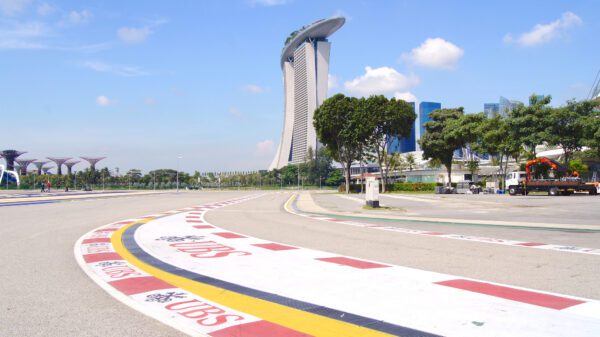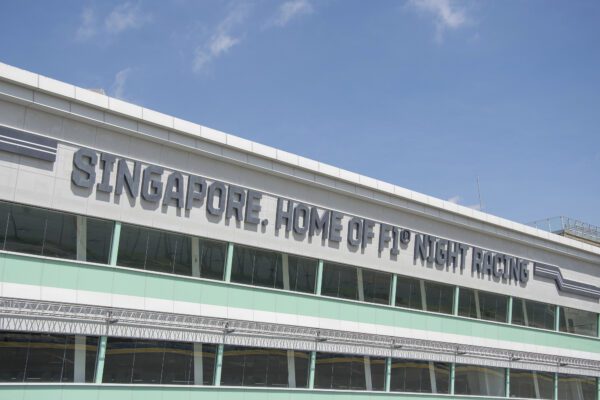



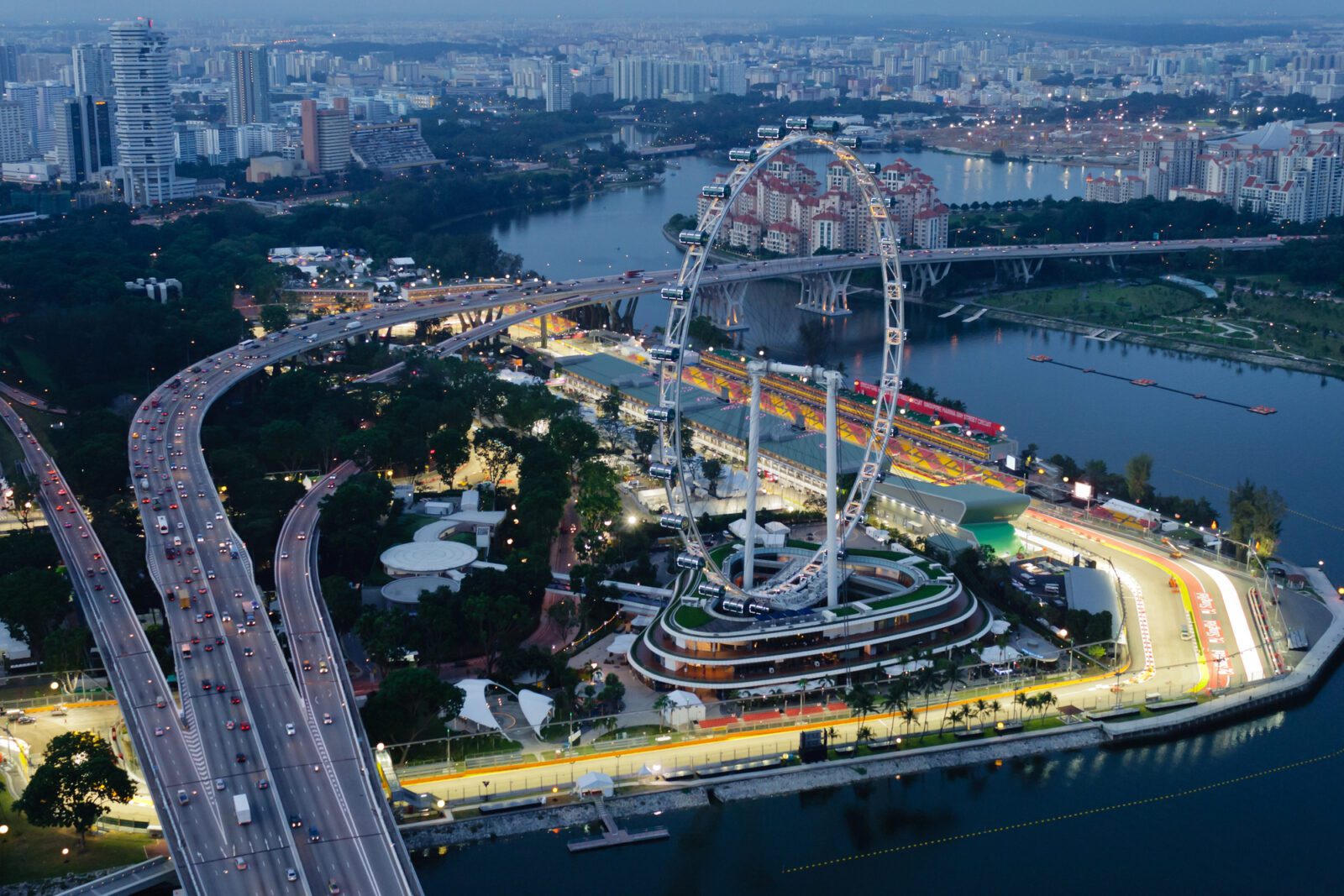
The Marina Bay Street Circuit stands as a unique fixture on the Formula 1 calendar, renowned globally as the sport’s inaugural night race. Since its debut in 2008, the Singapore Grand Prix has captivated audiences with its illuminated cityscape backdrop and the intense challenge it presents to drivers.
This temporary street circuit, winding through Singapore’s downtown waterfront, combines high-speed sections with tight, technical corners.
The circuit’s character is defined by its public road nature, featuring bumpy surfaces and unforgiving concrete walls that offer minimal run-off areas. These characteristics demand absolute precision and unwavering concentration from drivers throughout the entire race distance.
The tropical climate, marked by high temperatures and humidity, further amplifies the physical and mental strain on competitors.
The circuit layout and its evolution
The Marina Bay Street Circuit currently measures 4.927 kilometres in length and features 19 challenging turns. Its anti-clockwise direction adds another layer of complexity, requiring drivers to adapt to different physical demands compared to most circuits.
The layout has undergone several significant modifications since its inception to enhance racing and safety.
A notable change occurred in 2013 with the removal of the infamous ‘Singapore Sling’ chicane at Turn 10, replaced by a single-apex left-hand bend to increase corner entry speed. Further refinements were made to Turns 11, 12, and 13 in 2015 to improve the flow and create potential overtaking opportunities.
The most substantial alteration arrived ahead of the 2023 Grand Prix, which saw the former Turns 16 to 19 replaced by a near-400-metre straight along Raffles Avenue. This modification reduced the total number of corners from 23 to 19, creating a faster overall lap time and introducing a new overtaking zone.


Minor refinements in 2025 settled the current 4.927 km configuration.
The unique challenge of night racing
The Singapore Grand Prix holds the distinction of being Formula 1’s first-ever night race, a format that has become a signature element of the event. Over 1,600 custom floodlights illuminate the entire circuit, creating daylight-like conditions for racing while showcasing Singapore’s iconic skyline.
This unique setting provides a visually spectacular experience for both spectators and television audiences worldwide.
Racing under floodlights, however, introduces specific challenges beyond the aesthetic appeal. Drivers must contend with potential glare and varying light conditions, particularly as the track surface evolves throughout the evening.
The cooler ambient temperatures at night, while still high due to tropical humidity, can affect tyre performance and strategy compared to daytime races. Teams often operate on European time schedules to help drivers and personnel manage jet lag and maintain peak performance for the late-night sessions.
Demanding conditions and driver endurance
The Marina Bay Street Circuit is widely regarded as one of the most physically and mentally demanding races on the Formula 1 calendar. The combination of its twisty, low-to-medium speed layout, the constant braking and acceleration, and the oppressive tropical humidity pushes drivers to their absolute limits.
Drivers can lose as much as three kilograms in body weight during the 62-lap race due to dehydration. The enclosed nature of a street circuit, with its concrete canyons, traps heat and limits airflow, leading to extremely high cockpit temperatures.
The bumpy public road surface adds another layer of difficulty, making it challenging to find a consistent rhythm and place the car accurately. Concentration is paramount, as even the smallest error can result in contact with the barriers and a race-ending incident.
Historically, the Singapore Grand Prix has had a high probability of safety car deployments, although the 2024 and 2026 races notably ran without one. The race often approaches its two-hour time limit, making it a true test of endurance and focus.
Key circuit statistics and records
The Marina Bay Street Circuit’s specifications highlight its demanding nature. The current layout, refined over the years, balances technical sections with opportunities for high speed.
The circuit features four designated DRS zones, strategically placed to aid overtaking: after Turn 5, after Turn 13, after Turn 14, and on the start/finish straight after Turn 19. These zones are crucial for generating slipstream and facilitating passing manoeuvres on a track where overtaking can be challenging.
| Statistic | Value |
|---|---|
| Circuit Length | 4.927 km |
| Number of Turns | 19 |
| Race Laps | 62 |
| Race Distance | 305.337 km |
| Direction | Anti-clockwise |
| Race Lap Record | 1:33.808 (Lewis Hamilton, 2025) |
| Qualifying Lap Record | 1:30.984 (Carlos Sainz, 2023) |
| Most Wins (Driver) | Sebastian Vettel (5) |
| Most Wins (Constructor) | Ferrari, Mercedes, Red Bull (5 each) |
Sebastian Vettel holds the record for the most victories at the Singapore Grand Prix with five wins, showcasing his mastery of this challenging circuit. Lewis Hamilton follows with four wins.
The 2026 Singapore Grand Prix marked a new chapter for the event, hosting a Sprint weekend for the first time, with Max Verstappen securing both the inaugural Singapore Sprint victory and the Grand Prix win. The event continues to be a highlight, combining world-class motorsport with a vibrant city festival atmosphere.