




Lando Norris is focusing on precise execution for McLaren at the Mexico City Grand Prix, following a competitive showing in Friday’s free practice sessions. The British driver finished second quickest in Free Practice 2, indicating potential for the team at the Autódromo Hermanos Rodríguez. The field remains exceptionally tight, placing a premium on qualifying performance.
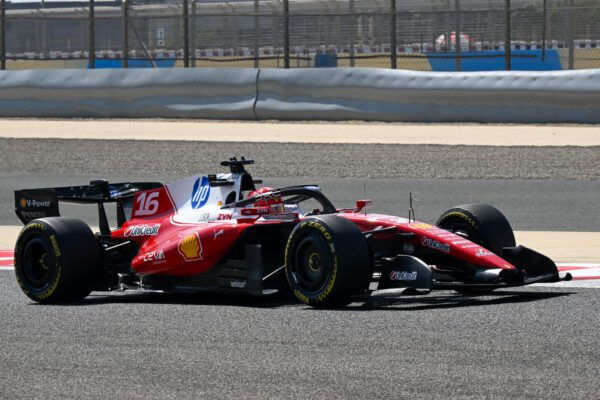
During Free Practice 2 on Friday, October 30, Norris recorded a lap time of 1m17.930s, placing him 0.103 seconds behind Ferrari’s Charles Leclerc, who topped the session with a 1m17.827s. George Russell secured third for Mercedes, followed by teammate Kimi Antonelli in fourth. Max Verstappen completed the top five for Red Bull.
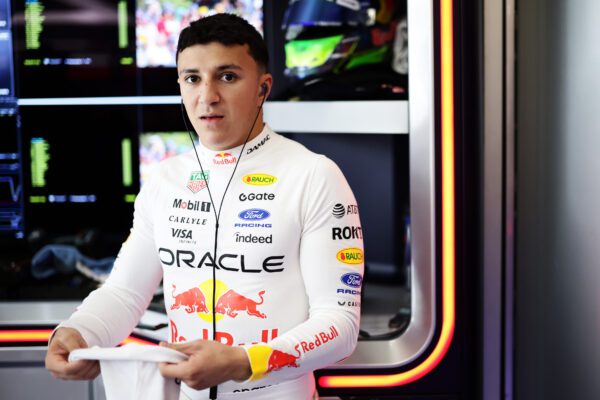
Norris did not participate in Free Practice 1, with McLaren reserve driver Leonardo Fornaroli taking his place. Fornaroli completed the session in 17th position.
Despite the strong timesheet performance, Norris noted that the MCL40 car remains challenging to drive. He emphasised that extracting its full potential will depend on flawless execution during the upcoming qualifying session.
“Not a bad day on the timesheets at the end of Free Practice 2, but the car is still proving a challenge to drive. The pace is definitely there, but the field is incredibly tight at the minute, so it will come down to execution in qualifying.”
McLaren’s Senior Director of Racing, Randy Singh, echoed Norris’s assessment, highlighting the close competition among the top four teams. Singh also identified power unit and brake temperature management as critical factors for the remainder of the weekend, particularly in race conditions and traffic.
The Autódromo Hermanos Rodríguez presents unique technical challenges due to its high altitude, situated over 2,200 meters above sea level. This thin air significantly reduces aerodynamic downforce and drag, while also complicating cooling for engines, brakes, and tyres.
Teams typically employ maximum-downforce aerodynamic packages to compensate for the reduced air density, yet still experience less absolute downforce compared to sea-level circuits. The 2026 regulations, including the removal of the MGU-H and a more powerful electrical system, further intensify the demands on power unit management.

Braking is another critical area, with Brembo simulations indicating that cars will require an additional 46 meters to brake at Turn 4 compared to the 2025 season. Brake temperatures are projected to approach 1000°C.
The circuit, which is 4.304 kilometres long with 17 turns, has undergone resurfacing between Turns 16-1 and 7-16 for the 2026 event. This introduces an element of uncertainty regarding grip levels and tyre behaviour. Pirelli has supplied its softest compounds: C3 (hard), C4 (medium), and C5 (soft).
Overtaking at the Autódromo Hermanos Rodríguez is historically difficult, underscoring the importance of a strong qualifying position. The track features three Straight Mode zones, allowing for adaptive aerodynamic configurations to balance downforce and drag.
Elsewhere in Free Practice 2, Lewis Hamilton’s session was cut short due to an engine problem with his Ferrari. An incident between Max Verstappen and Liam Lawson also occurred, leading to a post-session investigation.
Looking ahead to the championship, Mercedes driver Kimi Antonelli is on the verge of securing the 2026 Formula 1 World Championship, requiring only two more points to clinch the title. Additionally, Sergio Perez is set to mark his 300th Grand Prix start at his home race in Mexico City.
Qualifying for the 2026 Mexico City Grand Prix is scheduled to commence today, Saturday, October 31, at 15:00 local time.