Formula 1 mechanics are integral to a team’s success, responsible for the meticulous preparation, assembly, and maintenance of the highly complex F1 cars before, during, and after each race weekend. Their role demands a unique blend of technical expertise, problem-solving skills, and unwavering dedication under immense pressure.
These professionals work with cutting-edge technology, transforming components into race-ready machines and executing rapid pit stops.
The job requires a fusion of mechanical engineering knowledge, the ability to troubleshoot under pressure, and a deep understanding of the machinery. Mechanics are tasked with assembling the car from scratch and making critical adjustments based on real-time data and driver feedback.
The demanding race weekend schedule
A typical race weekend for a Formula 1 mechanic begins well before the cars hit the track, often starting on Tuesday or Wednesday. Mechanics travel to the circuit early to set up the garage infrastructure and equipment.
They unpack dozens of shipping crates, lay miles of telemetry cabling, and meticulously assemble the cars piece by piece around the bare chassis. Wednesday and Thursday are primarily dedicated to the car’s build and initial setup.
On Friday, the physical grind intensifies with Free Practice 1 (FP1) and Free Practice 2 (FP2) sessions. Between sessions, mechanics make crucial tweaks and adjustments to the car based on driver feedback and real-time data.
After the opening two practice sessions, the car is often rebuilt on Friday evening, with the crew installing race engines and gearboxes, and stripping the car down to its racing weight. Parc Fermé regulations limit changes after qualifying, but preparation remains constant.
Saturday involves Free Practice 3 (FP3) and the all-important qualifying sessions. During qualifying, the pressure is exceptionally high, and mechanics must be ready to react instantly to any issues.


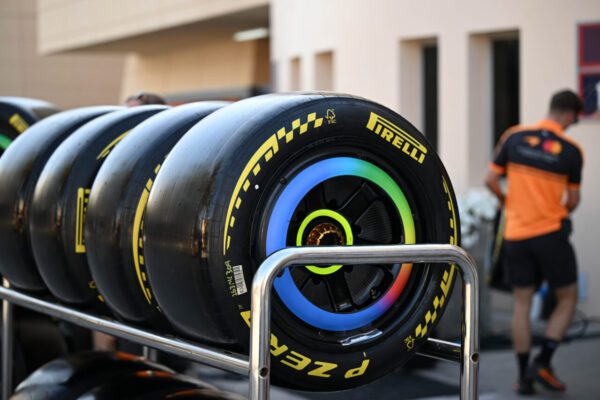
Race day, Sunday, is defined by extreme choreography, especially during pit stops. Every mechanic has a highly specialized role, from operating the pneumatic wheel gun to steadying the chassis, where a single hesitation can cost the driver the race.
The moment the checkered flag drops, the mechanics’ day is far from over. They immediately begin the process of stripping down and packing away the entire garage and cars for transport to the next event or back to the factory.
Life on the road and travel logistics
Formula 1 mechanics face an intense travel schedule, attending all races on the calendar, which can include over 20 events across multiple continents. They are often away from home for long periods, sometimes for weeks at a time during triple-headers.
Teams typically move 80-120 core personnel, including engineers, mechanics, and strategists, with larger teams sometimes deploying up to 200. Travel is meticulously planned, often involving chartered flights or commercial routes with schedules fine-tuned to the minute.
For long-distance races, equipment is shipped in massive sea freight containers months in advance, with multiple sets leapfrogging across continents. The cars themselves, along with vital and time-sensitive equipment, are transported by air freight on specially chartered cargo jets.
The coordination of logistics is military-grade, ensuring that every screw and sensor has a designated spot in the garage, ready for assembly upon arrival. This global operation happens every other week, making it a multi-million-dollar logistical ballet.
The role of a number one mechanic
Within an F1 team, the number one mechanic holds significant responsibility for the build and readiness of a specific Formula 1 car. This is a genuine job title, not merely a term of endearment.
The number one mechanic is accountable for their assigned car, with front-end, rear-end, hydraulics, and gearbox technicians reporting to them. They liaise with the race engineer, chief mechanic, and team manager.
Ultimately, the decision that the car is ready to leave the garage rests with the number one mechanic. They signal for the engine to be started and usher the car into the pit lane, physically vouchsafing its proper preparation and safety.
This role demands not only mechanical knowledge and troubleshooting abilities but also strong people management skills to get the best out of their crew. They must remain calm and focused, especially during high-pressure situations like qualifying.
Off-season duties and continuous development
The F1 off-season, typically between December and March, is far from a period of rest for mechanics. It is a crucial time for preparing for the upcoming season.
Mechanics are heavily involved in the factory, working on component strip-downs, rebuilds, sub-assembly preparation, and quality checks for the new car. The new car can be built and stripped multiple times to ensure everything is perfect.
A significant part of the off-season involves intensive pit stop practice. Mechanics spend thousands of hours executing tire swaps on a “mule car” to perfect their timing and precision for the sub-two-second pit stops.
This training includes practicing specific roles, such as a wheel gunner refining their angle or a tire-on mechanic perfecting the lift-and-slide motion. Cross-training in other positions is also common to ensure team adaptability.
Physical conditioning is also a part of the off-season, as mechanics are athletes in their own right, needing to be in top shape to handle the physical demands of the job. The off-season also allows for continuous learning and development, staying abreast of new regulations and technologies for the 2026 season and beyond.
Qualifications and skills for an F1 mechanic
Becoming an F1 mechanic typically requires a combination of formal qualifications and extensive hands-on experience. Many mechanics begin with a Level 3 Diploma, HND, or a foundation degree in motorsport engineering or automotive technology.
While not always mandatory, a degree in mechanical engineering, aerospace, or automotive technology is highly recommended, especially for specialized roles. However, exceptional vocational training and racing experience can sometimes compensate for a lack of a degree.
Hands-on experience is paramount, with many F1 mechanics gaining their initial experience in junior formulas like Formula 2, Formula 3, or touring cars. Starting at the bottom, sweeping floors and working on lower-tier race cars, is a common path.
Key skills include perseverance, resilience, time management, organizational skills, and excellent communication. Mechanics must also be comfortable with data, able to read run sheets, spot patterns, log issues, and provide useful feedback to engineers and drivers.
The role demands precision, attention to detail, and the ability to work effectively within a team under extreme pressure. Flexibility and a willingness to travel extensively and work unsociable hours are also essential attributes.
| Aspect | Description |
|---|---|
| Typical Qualifications | Level 3 Diploma, HND, Foundation Degree in Motorsport Engineering or Automotive Technology; Mechanical/Aerospace Engineering Degree (recommended) |
| Essential Skills | Technical knowledge, problem-solving, perseverance, resilience, time management, organizational skills, communication, data literacy, attention to detail, teamwork, flexibility |
| Experience Pathway | Junior formulas (F2, F3), touring cars, apprenticeships, starting in entry-level garage roles |
| Working Hours (Race Weekend) | Long hours, often Tuesday to Monday, with curfews in place but still demanding; 5-6 hours sleep common |
| Travel Frequency | Attends all races (20+ per season), extensive global travel, often away from home for weeks |
| Off-Season Activities | New car assembly/disassembly, component testing, intensive pit stop practice, physical conditioning, continuous learning |