

Circuit Zandvoort, officially known as Mascot Circuit Zandvoort, is a historic motorsport venue located in the coastal dunes of the Netherlands. This challenging track has become a celebrated fixture on the Formula 1 calendar, renowned for its unique characteristics and vibrant atmosphere.
Its design, featuring significant elevation changes and steeply banked corners, provides a demanding test for drivers and an exhilarating spectacle for fans.
The circuit’s return to Formula 1 in 2021, after a 35-year hiatus, marked a new era for the Dutch Grand Prix. It is set to host its final Formula 1 race under the current promoter agreement in 2026.
History and evolution of circuit zandvoort
The origins of racing in Zandvoort trace back to a successful street race held on June 3, 1939, which inspired the development of a permanent facility. Construction was delayed by World War II, but the Circuit van Zandvoort officially opened on August 7, 1948.
Formula 1 quickly adopted the course, with the first Dutch Grand Prix held in 1952, and it remained a regular fixture until 1985. Over the decades, the circuit underwent several modifications to enhance safety and meet evolving motorsport demands.
In the late 1980s, financial difficulties and safety concerns led to the circuit being drastically shortened to an ‘interim circuit’ of approximately 2.5 kilometers. A significant restoration in 1999 extended the track to a full Grand Prix length of 4.3 kilometers, allowing it to attract higher-profile series once again.
The most substantial renovations occurred in 2020, preparing the circuit for Formula 1’s return. These improvements included changes to the iconic Tarzanbocht and the addition of steeply banked sections at Hugenholtzbocht and Arie Luyendykbocht.
Track layout and key characteristics
Circuit Zandvoort is a 4.259-kilometer (2.646-mile) FIA Grade 1 circuit, featuring 14 corners and notable elevation changes of 15 meters. Its location amidst the coastal dunes of North Holland, near the North Sea, gives it a unique, rollercoaster-like feel.
The track is renowned for its narrow width, undulating terrain, and limited run-off areas, often featuring unforgiving gravel beds. This design philosophy places a high premium on driver precision and commitment, making even minor mistakes costly.
The circuit is driven clockwise and demands a balanced aerodynamic setup to manage both straight-line speed and cornering grip. Its flowing nature, combined with blind approaches and changing gradients, makes it a challenging and rewarding track for drivers.
Iconic corners and their challenges
Zandvoort boasts several distinctive corners that contribute to its unique character and challenge. These turns require specific techniques and offer prime opportunities for overtaking or showcasing driver skill.
The Tarzanbocht (Turn 1) is a famous 180-degree right-hander immediately after the main straight, known for its wide radius and camber that allows for multiple racing lines and strong overtaking chances. The Hugenholtzbocht (Turn 3) is a steeply banked, full-throttle corner with a 19-degree banking, offering drivers various lines to navigate.
Further into the lap, Scheivlak (Turn 6) is a high-speed left sweep through the dunes, often affected by crosswinds, making it a thrilling and aerodynamically sensitive section. The final corner, the Arie Luyendykbocht (Turn 14), is a breathtaking 18-degree banked right-hander taken flat-out, designed to launch cars onto the start-finish straight and aid in setting up overtakes into Tarzanbocht.
Circuit Zandvoort features two DRS zones to facilitate overtaking. The primary DRS zone is located on the main straight, leading into Tarzanbocht, while the second is positioned between Turns 10 and 11.
Dutch Grand Prix: a fan experience
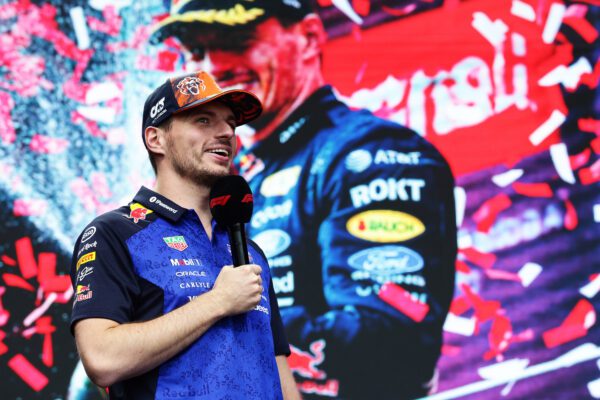
The Dutch Grand Prix at Circuit Zandvoort is celebrated for its electric atmosphere, largely fueled by the passionate “Orange Army” supporting home hero Max Verstappen. The circuit can accommodate 105,000 spectators, creating a vibrant, stadium-like environment.
Its unique location, a stone’s throw from the beach and approximately 35 kilometers west of Amsterdam, makes it easily accessible, with public transport highly encouraged. Fans can reach the circuit via a short train ride from Amsterdam Centraal to Zandvoort aan Zee.
Grandstand options cater to various preferences, including the Main Grandstand overlooking the start/finish line and pit lane, and the Tarzan-In Grandstand for prime overtaking views. The Arena Grandstands (around Turns 11 and 12) are particularly popular for their lively, amphitheater-like atmosphere.
General Admission areas, situated within the natural dunes, offer excellent elevated vantage points for those willing to explore. The 2026 Dutch Grand Prix will also feature an F1 Sprint for the first time on Dutch soil, adding another layer of excitement to the race weekend.
Circuit zandvoort statistics and records
| Statistic | Detail |
|---|---|
| Circuit Length | 4.259 km (2.646 miles) |
| Number of Turns | 14 |
| Race Laps | 72 |
| Race Distance | 306.587 km |
| FIA Grade | 1 |
| Capacity | 105,000 |
| First Grand Prix | 1952 |
| Circuit Opened | August 7, 1948 |
| F1 Race Lap Record | 1:11.097 (Lewis Hamilton, 2021) |
| F1 Pole Position Record | 1:08.662 (Oscar Piastri, 2025) |
| Most F1 Wins (Driver) | Jim Clark (4 wins) |
| Most F1 Wins (Constructor) | Ferrari (8 wins) |
| Elevation Change | 15 m |
Oscar Piastri holds the fastest qualifying lap ever recorded at Circuit Zandvoort, achieving a 1:08.662 during the 2025 Dutch Grand Prix qualifying. Lewis Hamilton set the official race lap record of 1:11.097 in 2021.
The 2023 Dutch Grand Prix notably holds the record for the most overtakes in a single Formula 1 Grand Prix, with 186 passes. This highlights the circuit’s capacity for thrilling on-track action despite its narrow layout.