


Silverstone Circuit, nestled in Northamptonshire, England, stands as a legendary venue in motorsport, particularly as the enduring home of the British Grand Prix. This iconic track hosted the inaugural Formula 1 World Championship race on May 13, 1950, marking the birth of the sport’s premier series.
The circuit has since held all but 17 of the British Grand Prix races, solidifying its status as one of the fastest, most exciting, and challenging events on the global racing calendar. Its unique character, born from a former Royal Air Force bomber station, continues to captivate drivers and fans alike.
Silverstone: the historic home of Formula 1
The British Grand Prix is the oldest race on the Formula 1 calendar, with its origins tracing back to 1926, though Silverstone became its permanent home for the World Championship era in 1950. King George VI, Queen Elizabeth, and Princess Margaret were notably in attendance at that historic first World Championship event.
The circuit’s layout initially utilized the runways of the former RAF Silverstone airfield, which was operational between 1943 and 1946. Over the decades, Silverstone has undergone numerous modifications, yet it has consistently maintained its essential character as one of F1’s fastest tracks.
The challenging layout of silverstone circuit
The current Grand Prix layout of Silverstone spans 5.891 kilometers (3.660 miles) and features 18 corners, comprising 10 right-handers and 8 left-handers. The circuit boasts a relatively flat elevation change of only about 11 meters across the entire lap, a characteristic inherited from its airfield origins.
Despite the lack of significant gradient, Silverstone is renowned for its raw speed, with sequences like Copse and the Maggotts-Becketts-Chapel complex taken at close to 300 km/h. These sections generate lateral forces in excess of 5g, demanding immense precision and bravery from drivers.
Key corners and their unique demands
A lap at Silverstone begins on the Hamilton Straight, named in tribute to Lewis Hamilton, leading into Abbey, a flat-out right-hander. This flows into Farm Curve, a fast left kink, before drivers face the first heavy braking zone at Village, a tight right-hander.
The Loop follows Village, representing the slowest part of the circuit and a crucial area for energy harvesting. Drivers then accelerate through Aintree onto the Wellington Straight, which leads into Brooklands, a medium-speed left-hander, and Luffield, a long, sweeping right-hander.

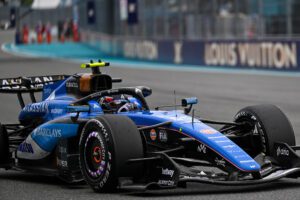
Woodcote precedes Copse, one of the fastest corners on the track, which then opens into the iconic Maggotts, Becketts, and Chapel sequence. This rapid-fire left-right-left-right combination is a true test of a car’s high-speed downforce and aerodynamic efficiency.
Exiting Chapel, cars blast down the Hangar Straight, reaching speeds of up to 325 km/h before braking hard for Stowe, a fast, sixth-gear right-hander with a blind entry. The lap concludes with Vale, the circuit’s hardest braking zone, and Club, a double-apex corner, before returning to the Hamilton Straight.
Technical specifications and race dynamics
The British Grand Prix is contested over 52 laps, covering a total race distance of 306.198 kilometers. The official lap record for the current Grand Prix configuration is 1 minute 27.097 seconds, set by Max Verstappen in 2020.
Under the 2026 Formula 1 regulations, the traditional Drag Reduction System (DRS) has been replaced by active aerodynamics, featuring ‘Straight Mode’ and ‘Overtake Mode’. Silverstone incorporates four designated Straight Mode zones where cars can trim their front and rear wings to reduce drag and boost top speed, available to all drivers on every lap.
These Straight Mode zones are located on the Hamilton Straight (from Turn 18 to Abbey), the Wellington Straight (from Aintree into Brooklands), a short burst from Luffield towards Woodcote and Copse, and the Hangar Straight (from Chapel down to Stowe). The new Overtake Mode allows a driver to recharge more electrical energy and sustain higher speeds for longer, activated if they are within one second of the car ahead at the detection point after Turn 17, with activation before Turn 18.
| Specification | Detail |
|---|---|
| Circuit Length | 5.891 km (3.660 miles) |
| Number of Turns | 18 |
| Number of Laps | 52 |
| Race Distance | 306.198 km |
| Official Lap Record | 1:27.097 (Max Verstappen, 2020) |
| Fastest Qualifying Lap | 1:24.303 (Lewis Hamilton, 2020) |
| Elevation Change | Approximately 11 meters |
| Driving Direction | Clockwise |
Fan experience and circuit facilities
Silverstone is renowned for its passionate and knowledgeable British F1 fans, who create an electric atmosphere throughout the race weekend. The circuit attracts some of the largest crowds on the F1 calendar, with attendance figures reaching 480,000 across the 2026 weekend.
The circuit’s grandstands, such as the International Pit Grandstand and those around Maggotts and Becketts, offer excellent views of the action. The Wing pit complex, completed in 2011, is a state-of-the-art facility that houses the Paddock Club during the Grand Prix.
Beyond the racing, Silverstone offers extensive facilities, including multiple hospitality suites, conference rooms, and event spaces. The Wing Conference Centre alone can accommodate up to 1,200 delegates, making Silverstone a versatile venue for various events.
The future of the british Grand Prix at silverstone
The future of the British Grand Prix at Silverstone is secured for the long term, following a new contract extension announced in September 2026. This agreement ensures Silverstone will host the British Grand Prix until at least 2040, extending a relationship that began in 1950.
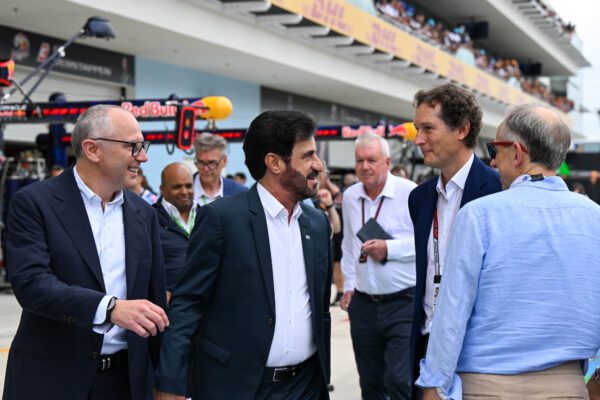
This long-term commitment reflects the importance of the British Grand Prix to Formula 1 and acknowledges Silverstone’s ability to deliver a world-class experience. Formula 1 CEO Stefano Domenicali has even expressed willingness to discuss keeping Silverstone on the calendar “forever,” highlighting its irreplaceable status.
Recent British Grand Prix winners include Lando Norris in 2025, securing his first home win, and Charles Leclerc in 2026. Lewis Hamilton holds the record for the most victories at the event, with nine wins, including his 2024 triumph.