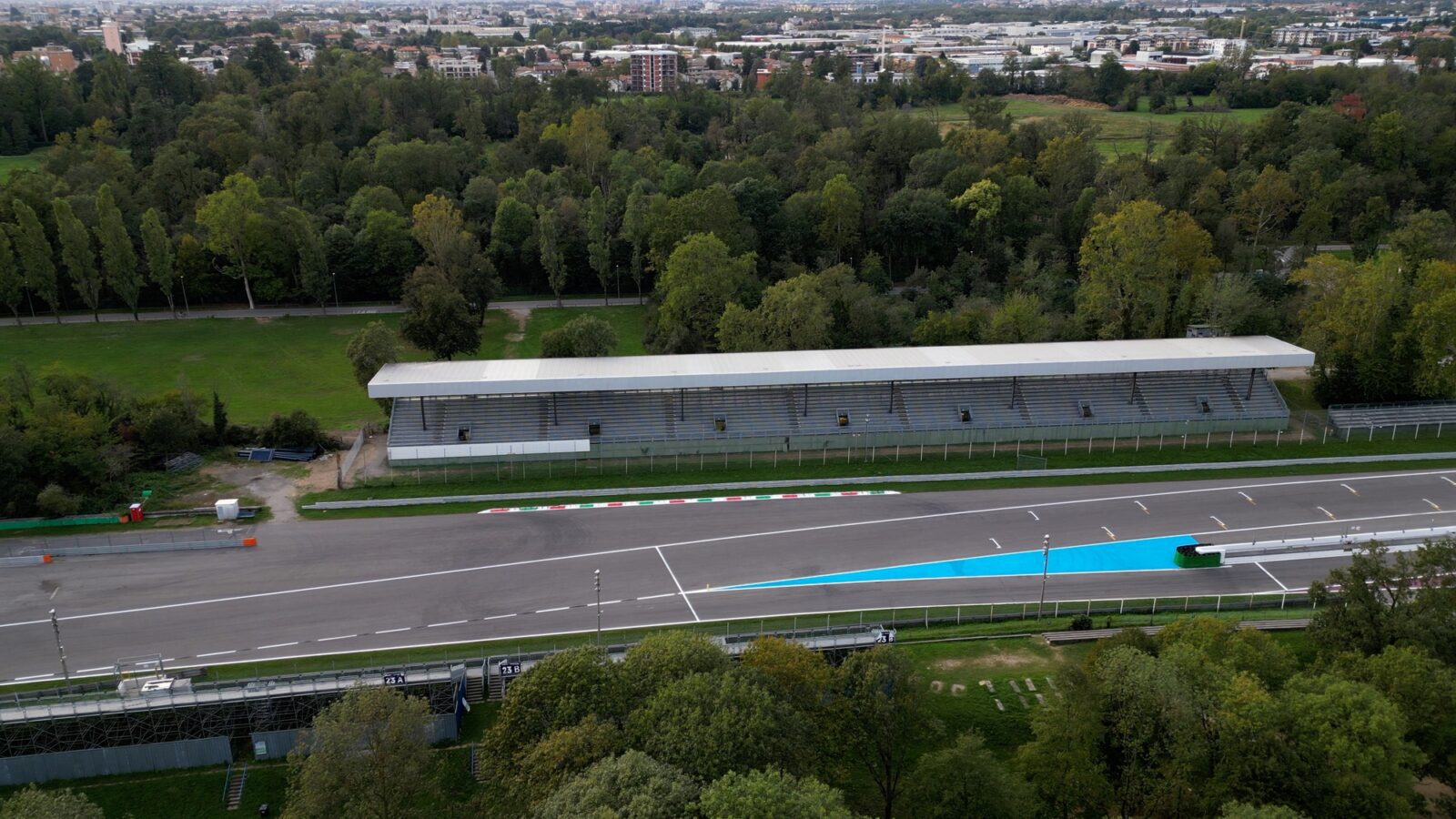
The Autodromo Nazionale Monza, universally celebrated as the ‘Temple of Speed,’ stands as a monumental fixture in the world of motorsport. Located within the lush Royal Park of Monza, north of Milan, this iconic circuit has captivated fans and challenged drivers for over a century.
Its unique blend of blistering straights and demanding chicanes ensures it remains one of Formula 1’s most anticipated and distinctive venues.
Monza’s enduring appeal stems from its relentless pursuit of speed, a characteristic deeply embedded in its design and history. The circuit demands a specific setup from Formula 1 teams, prioritizing low downforce to maximize straight-line velocity.
This approach often leads to thrilling slipstreaming battles and dramatic braking zones, defining the essence of racing at this legendary track.
A century of high-speed heritage
The Autodromo Nazionale Monza was conceived in January 1922 by the Automobile Club of Milan, aiming to commemorate the association’s 25th anniversary. Construction commenced on May 15, 1922, and was completed in a remarkable 110 days by 3,500 workers.
The circuit officially opened on September 3, 1922, hosting the second Italian Grand Prix just one week later.
The original layout was an ambitious 10-kilometer hybrid, combining a 5.5 km road course with a 4.5 km high-speed oval featuring steeply banked curves. This innovative design, which allowed cars to run parallel on the main straight, made Monza the world’s third purpose-built permanent racing circuit, following Brooklands and Indianapolis.
The banked oval, known as the ‘Sopraelevata,’ reached gradients of approximately 80 percent, creating one of motorsport’s most dramatic features.


Over the decades, Monza underwent numerous transformations to enhance safety and adapt to evolving car technology. Major rebuilding efforts in 1938-39 removed the high-speed ring and introduced new bends, resulting in a 6.300 km Grand Prix lap.
After World War II, the circuit was renovated and rejoined the inaugural Formula 1 World Championship calendar in 1950, a position it has held every year since, with the sole exception of 1980 when the Italian Grand Prix was held at Imola.
The combined road circuit and high-speed ring were utilized for the Italian Grand Prix in 1955, 1956, 1960, and 1961. However, safety concerns, particularly after the tragic 1961 Italian Grand Prix, led to the permanent retirement of the banked oval from major single-seater races in 1969.
The iconic banking still stands today, a weathered but visible monument to Monza’s unique past.
The modern layout: a test of raw pace and precision
The current configuration of the Autodromo Nazionale Monza measures 5.793 kilometers and features 11 turns, characterized by long straights punctuated by tight chicanes. This layout places an immense premium on engine power and braking stability, demanding a delicate balance from both engineers and drivers.
The lap begins with the Variante del Rettifilo, the first chicane at the end of the pit straight. Drivers approach this heavy braking zone at speeds exceeding 350 km/h, decelerating sharply to around 70-80 km/h for the tight left-right sequence.
This chicane is a prime overtaking spot and a frequent scene of first-lap incidents.
Following the Variante del Rettifilo, cars sweep through the Curva Grande, a long, flat-out right-hander that rewards commitment and aerodynamic efficiency. The circuit then leads into the Variante della Roggia, the second chicane, another crucial braking zone after a long acceleration.
This left-right ‘S’ bend was modified in 2000 to further reduce speeds.
The two Lesmo corners, Lesmo 1 and Lesmo 2, are demanding right-handers that require precision and speed conservation. These corners, originally known as ‘Curva della Querce’ due to the surrounding forest, are entered at high speeds, with drivers aiming for optimal exits to maintain momentum onto the subsequent straights.
A mistake here can easily lead to a spin into the gravel traps.
After a long straight, the track features the Variante Ascari, a challenging three-part left-right-left chicane named after the legendary Italian driver Alberto Ascari, who tragically lost his life at Monza in 1955. This complex tests a car’s balance and a driver’s ability to carry high speed through a technical sequence.
The final corner, Curva Alboreto, formerly known as the Parabolica, is a long, increasing-radius right-hander that feeds directly onto the main straight. A perfect exit from Curva Alboreto is paramount for a strong run down the start/finish straight and for setting up potential overtaking opportunities into the first chicane.
Technical demands and strategic imperatives
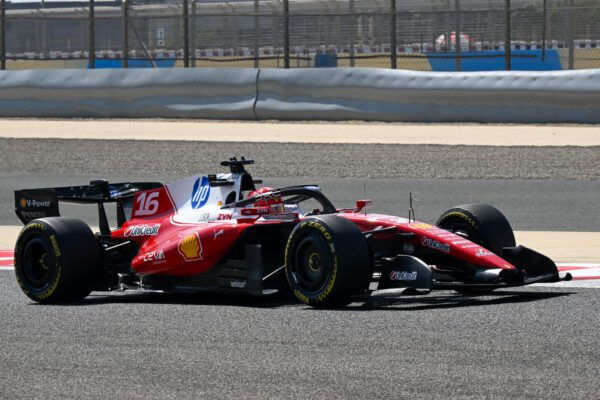
Monza’s unique characteristics impose specific technical demands on Formula 1 cars and teams. The circuit is renowned for its “low downforce” setup, where teams configure their cars with minimal wing angles to reduce drag and maximize straight-line speed.
This makes Monza an outlier on the calendar, contrasting sharply with high-downforce tracks.
Engines endure immense stress at Monza, operating at full throttle for nearly 80 percent of the lap. This sustained high-revving environment often pushes power units to their limits, making engine reliability a critical factor.
The long straights also create significant slipstreaming opportunities, a tactical element that drivers strategically employ during qualifying and the race to gain an aerodynamic advantage.
Braking performance is equally crucial, with drivers repeatedly decelerating from over 300 km/h to under 100 km/h for the chicanes. The Variante del Rettifilo, in particular, is one of the heaviest braking zones of the season, demanding exceptional braking stability and driver precision.
The aggressive curbing in the chicanes also requires a careful approach, as hitting them too hard can unsettle the car and lead to loss of control.
Tyre wear at Monza is generally considered low, but the emphasis on traction out of slow corners means the rear tyres still experience significant longitudinal loads. Suspension settings are often softer to effectively manage kerb-riding, which is essential for maintaining speed through the chicanes.
The introduction of ‘Straight Line Mode’ in the 2026 regulations further emphasizes low drag, allowing active aerodynamics to reduce drag on every lap and influencing specific wing designs brought to the Italian Grand Prix.
Iconic moments and enduring legacy
Monza has been the stage for countless iconic moments throughout motorsport history, earning its reputation as a place where legends are made and broken. The circuit has witnessed some of the closest finishes in Formula 1, such as the 1971 Italian Grand Prix where the top five drivers finished within one second of each other, a sign of the circuit’s slipstreaming potential.
The passionate Italian fans, known as the ‘Tifosi,’ create an unparalleled atmosphere, especially when Ferrari achieves success at their home race. Memorable Ferrari victories, including Michael Schumacher’s five wins and Charles Leclerc’s triumph in 2019, are etched into the circuit’s folklore.
The 1988 Italian Grand Prix, where Gerhard Berger and Michele Alboreto secured a Ferrari one-two finish just weeks after the passing of Enzo Ferrari, remains a particularly poignant moment.
Beyond Ferrari’s dominance, Monza has also produced unexpected winners, such as Pierre Gasly’s AlphaTauri victory in 2020 and Sebastian Vettel’s maiden win for Toro Rosso in 2008. These races highlight the unpredictable nature of the circuit and its ability to deliver thrilling and often surprising outcomes.
The circuit’s rich history, combined with its high-speed challenges, ensures its continued status as a beloved and essential venue on the Formula 1 calendar.
Autodromo nazionale monza: key circuit data
| Circuit Length | 5.793 km |
| Number of Turns | 11 |
| F1 Race Laps | 53 |
| F1 Race Distance | 306.72 km |
| Circuit Opened | September 3, 1922 |
| First F1 Grand Prix | 1950 |
| F1 Race Lap Record | 1:20.901 (Lando Norris, McLaren, 2025) |
| F1 Qualifying Lap Record | 1:18.792 (Max Verstappen, Red Bull, 2025) |
| Maximum Speed Achieved | ~370-372 km/h |
| Full Throttle Percentage | ~80% |
| Capacity | 118,865 |
| FIA Grade | 1 |