



Ferrari continues to grapple with a notable straight-line speed deficit during the 2026 Formula 1 season, particularly when compared to Mercedes. This performance gap was evident at the Italian Grand Prix, despite the Scuderia introducing an engine upgrade at Monza.
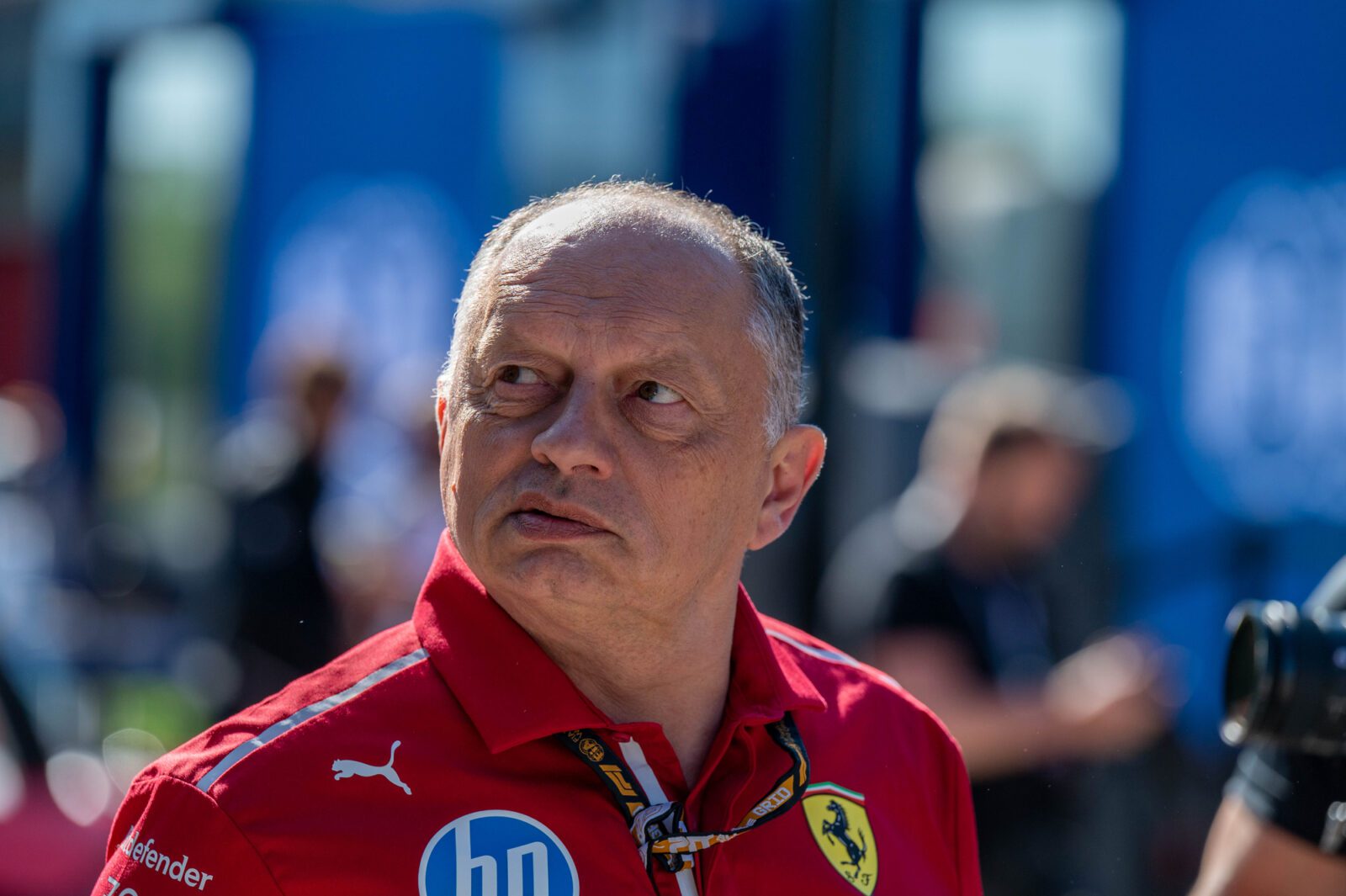
Team Principal Fred Vasseur has underscored the extensive nature of addressing this power unit disadvantage. He stated that engine development is a “mega long” process, contrasting sharply with the quicker turnaround times for chassis upgrades.
Vasseur explained that the lead times for manufacturing engine components are substantial. Furthermore, the sport’s budget cap regulations complicate the process of producing new batches of engines for development purposes.
To assist manufacturers lagging in performance, the FIA introduced Additional Development and Upgrade Opportunities (ADUO) for the 2026-2030 power unit cycle. This mechanism aims to foster closer competition across the grid.
ADUO eligibility is determined by a manufacturer’s Internal Combustion Engine (ICE) performance. If an ICE is at least two percent behind the benchmark, development concessions are granted.
Manufacturers with an ICE deficit of two to four percent receive one additional upgrade opportunity in the current season and another for the following year. Those with a four percent or greater deficit are allowed two upgrades in each season.
Ferrari, along with Audi and Honda, was assessed to be more than four percent behind Red Bull’s benchmark ICE power. Mercedes, by comparison, registered a two to four percent deficit.
Despite these provisions, Vasseur has downplayed the immediate impact of ADUO. He indicated that ADUO 1 and ADUO 2 interventions yield only “small steps” and gains measured in “hundredths of a second.”
The ADUO framework specifically monitors the ICE performance, excluding the Energy Recovery System (ERS). This means the overall power unit performance, which includes the ERS, is not fully captured by the ADUO assessment.
Max Verstappen noted that while Red Bull might lead in ICE performance, Mercedes could hold an advantage in battery deployment. This suggests that overall power unit deployment can be similar despite ICE differences.
The power unit cost cap, which increased to $190 million for 2026, also constrains rapid engine development. While separate from the main team budget cap, it still limits spending on power unit research and production.
The straight-line speed deficiency has particularly affected Ferrari at high-speed circuits such as Monza and Spa. The upcoming Azerbaijan Grand Prix, with its long full-throttle sections, will again highlight this weakness.
Ferrari’s strategy involves a longer-term approach to overcome this challenge. The team is targeting the introduction of a new engine for the 2027 season to achieve a more substantial performance recovery.