
Formula 1 operates under stringent regulations governing the use of power unit components, designed to control costs and promote competitive balance. Teams and drivers must carefully manage their allocation of engine elements throughout the season, as exceeding these limits results in grid penalties that can significantly impact race outcomes.
The 2026 season introduced a new generation of power units, bringing with it revised component allocations and technical specifications that demand strategic planning from every team on the grid.
The 2026 Formula 1 power unit components and allocations
The modern Formula 1 power unit is a complex hybrid system, comprising several key elements. For the 2026 season, these components include the internal combustion engine (ICE), turbocharger (TC), motor generator unit – kinetic (MGU-K), energy store (ES), control electronics (CE), exhaust (EX), and power unit ancillary components (PU-ANC).
Due to the significant overhaul of the power unit regulations for 2026, the FIA granted an additional ‘bonus’ allocation for certain components to account for potential reliability challenges with the new hardware. This temporary increase provides teams with a slight buffer during the introductory year of the new regulations.
| component | 2026 season allocation | 2027 and 2028 season allocation |
|---|---|---|
| internal combustion engine (ICE) | 4 | 4 |
| turbocharger (TC) | 4 | 4 |
| exhaust (EX) | 4 | 4 |
| motor generator unit – kinetic (MGU-K) | 3 | 3 |
| energy store (ES) | 3 | 3 |
| control electronics (CE) | 3 | 3 |
| power unit ancillary components (PU-ANC) | 6 | 5 |
Initially, the plan was for component allocations to reduce further from 2027 onwards. However, the FIA confirmed that the ‘bonus’ allocation introduced for 2026 would remain in place for both the 2027 and 2028 seasons for the main power unit elements, providing continued flexibility for manufacturers.
Understanding grid penalties for component changes
When a driver exceeds their permitted allocation for any power unit component, they incur a grid penalty. These penalties are applied at the first event where the additional element is used, with the severity depending on whether it is the first infringement for that specific component type.
The first time a driver uses an additional component beyond their season’s allowance, a 10-place grid penalty is applied. For any subsequent additional component of the same type, a 5-place grid penalty is imposed.
Penalties are cumulative if multiple components are changed at the same event. For instance, if a driver takes a fifth internal combustion engine and a fourth MGU-K in the same Grand Prix weekend, the penalties would add together.
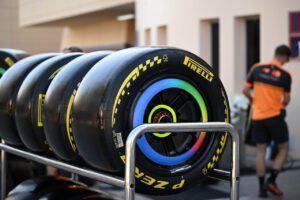

If the total cumulative grid penalty for a single event exceeds 15 places, the driver is automatically required to start the race from the back of the grid, regardless of their qualifying performance.
A power unit element is officially considered ‘used’ once the car’s timing transponder registers that it has left the pit lane during any official session, including practice, qualifying, or the race itself. This strict definition ensures that teams cannot simply fit new components without consequence.
The 2026 power unit: a technical overview
The 2026 Formula 1 power unit represents a significant evolution in the sport’s technical regulations. While retaining the 1.6-litre turbocharged V6 internal combustion engine, the new rules dramatically shift the balance of power towards the electrical components.
A major change for 2026 was the removal of the complex and expensive MGU-H (motor generator unit – heat), which previously harvested energy from exhaust gases. This simplification aims to reduce costs and attract new power unit manufacturers to the sport.
To compensate for the MGU-H’s removal, the MGU-K’s (motor generator unit – kinetic) output has been nearly tripled, increasing from 120 kW to 350 kW. This means the power unit now achieves a roughly 50/50 split between the internal combustion engine (approximately 400 kW or 540 PS) and the electrical power, a substantial change from previous generations.
Furthermore, the 2026 power units operate exclusively on 100% sustainable fuel, marking a significant step towards environmental sustainability in Formula 1. Fuel flow is now regulated by energy content, with a maximum of 3000 MJ per hour, rather than the previous mass flow limit.
Other technical changes include a reduced compression ratio of 16:1 and the prohibition of variable intake systems. The energy recovery system has also been enhanced, allowing for up to 8.5 to 9 MJ of energy to be regenerated per lap, primarily through braking and deceleration.
Drivers now have new tools at their disposal, such as a ‘Boost Button’ and an ‘Overtake Mode’, to strategically manage energy deployment and recovery throughout a lap. These features, combined with active aerodynamics featuring movable front and rear wing elements, add new layers of tactical complexity to racing.
Strategic implications and real-world penalties
The strict component limits and associated grid penalties force teams to adopt meticulous strategies for power unit management. Reliability becomes paramount, as unscheduled component changes can quickly lead to drivers starting races from compromised grid positions.
As the 2026 season progressed, several drivers encountered penalties due to exceeding their allocations. For example, Lewis Hamilton received a 65-place penalty, ultimately sending him to the back of the grid after taking a fifth internal combustion engine and then replacing the entire power unit assembly.
Max Verstappen also faced a 30-place penalty for taking a fifth engine, fifth turbocharger, and fifth exhaust set, resulting in a back-of-the-grid start. Similarly, Sergio Pérez incurred a 30-place penalty for exceeding his allocation of the engine, turbocharger, and MGU-K.
These examples highlight how even minor component changes can accumulate into substantial grid drops, profoundly affecting a driver’s race weekend. Teams continuously monitor component mileage and performance, often making tactical decisions to introduce new elements at circuits where overtaking is easier, or where a grid penalty might be less detrimental.
The ongoing challenge for power unit manufacturers is to balance performance with durability within the confines of these regulations. While in-season performance upgrades are generally restricted, exceptions exist for reliability improvements or if a manufacturer’s engine performance falls significantly below that of its competitors, allowing for limited development opportunities.