
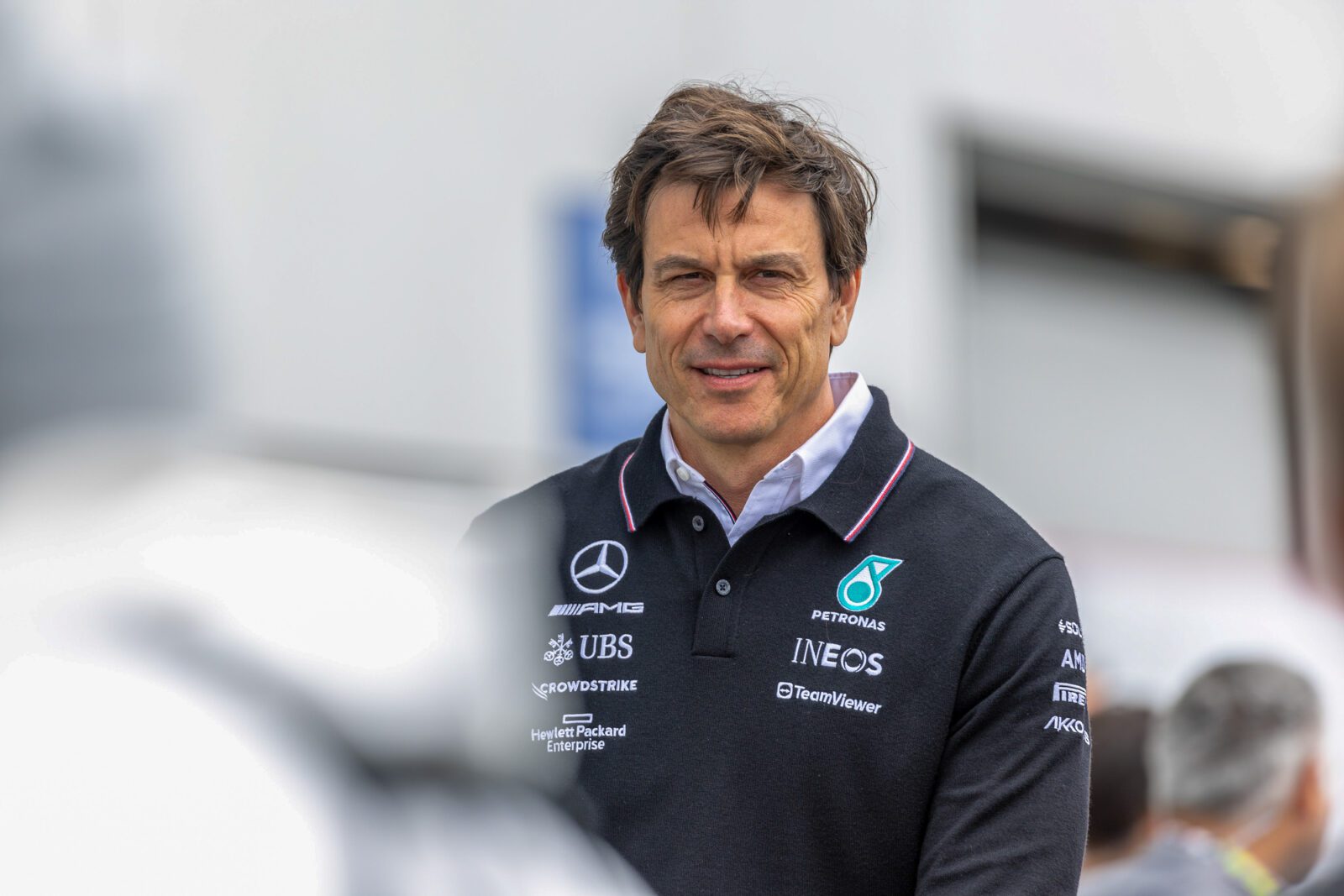
An internal email from Mercedes Team Principal Toto Wolff to staff has been made public following Andrea Kimi Antonelli’s 2026 Formula 1 World Drivers’ Championship victory. Antonelli, aged 20, secured the title at the Mexico City Grand Prix, becoming the youngest champion in F1 history. He surpassed Sebastian Vettel’s previous record from 2010 by over three years.
Antonelli clinched the championship with a third-place finish at the Autódromo Hermanos Rodríguez. This achievement also marks him as the first Italian F1 champion since Alberto Ascari in 1953, ending a 73-year wait.
Wolff’s email, released by Mercedes Deputy Team Principal Bradley Lord, acknowledged the widespread credit attributed to him for promoting Antonelli. However, Wolff emphasized the collective effort behind the Italian’s success.
Success has many fathers. Failure is an orphan. That’s how the saying goes. But as I reflect on Kimi becoming World Champion, I feel that I have been given far too much credit for a story that belongs to so many people.
Wolff detailed Antonelli’s journey, beginning with his parents, Marco and Veronica, who introduced him to racing and instilled core values. He also credited early mentors like Dino Chiesa and Gwen Lagrue for nurturing Antonelli’s talent in karting.
Antonelli joined Mercedes’ junior programme in 2019 and was promoted directly to Formula 1 for the 2025 season, replacing Lewis Hamilton. This decision was met with skepticism due to Antonelli’s youth and lack of F1 experience.
His F1 debut included a crash during his first Free Practice 1 session at the 2024 Italian Grand Prix in Monza. Driving George Russell’s W15, Antonelli lost control at Parabolica, causing a red flag. Wolff publicly stated the incident would have no bearing on his future.
Antonelli’s 2025 rookie season was described as challenging, particularly during the European leg of the campaign. He later admitted that he allowed the pressure to affect his performance during this period.
Peter ‘Bono’ Bonnington, Antonelli’s senior race engineer, played a crucial role in guiding him through this difficult phase. Bonnington, who previously engineered Hamilton to six titles, continued with Antonelli after Hamilton’s departure.
Bonnington, now also Head of Trackside Performance, reportedly had a ‘serious chat’ with Antonelli in 2025, which helped the young driver reset. He highlighted Antonelli’s victories in Monaco, Monza, and Austin as standout performances in 2026.
The Mercedes-AMG F1 W17 E Performance car for 2026, designed under Technical Director James Allison, was pivotal. The W17 was developed for significant new regulations, featuring a hybrid power unit with a near 50:50 combustion and electric split, and active aerodynamics.
The W17’s energy recovery system and active aero implementation provided a performance advantage, particularly out of slow corners. This allowed Antonelli to exploit the car’s strengths, despite it being a demanding machine to drive at the limit.
Wolff also acknowledged the contributions of the wider Mercedes organization, including the engineers at Brackley and Brixworth, and the marketing and communications team led by Bradley Lord, Clare Robertson, and Rosa Herrero Venegas.
George Russell, Antonelli’s teammate, experienced a challenging 2026 season. Despite winning the season-opening Australian Grand Prix, Russell admitted the year was marked by poor performances, bad luck, and reliability issues.
Russell finished sixth at the Mexico City Grand Prix after a power deployment issue and a 10-second penalty for contact with Isack Hadjar. He currently sits fourth in the 2026 Drivers’ Championship standings.
Wolff credited Russell’s experience and leadership as a factor that enabled Mercedes to take the risk on a rookie. He also thanked the Mercedes Board, Ola Källenius, and team partners for their support during Antonelli’s development.
Wolff concluded by emphasizing that Antonelli’s success is a testament to many individuals, not solely his own decision. He expressed confidence in Antonelli’s potential to achieve further titles.