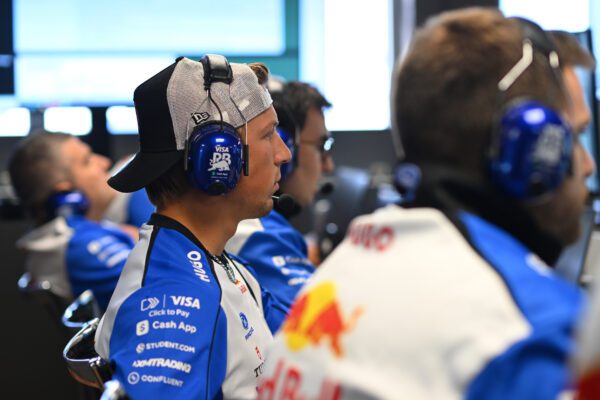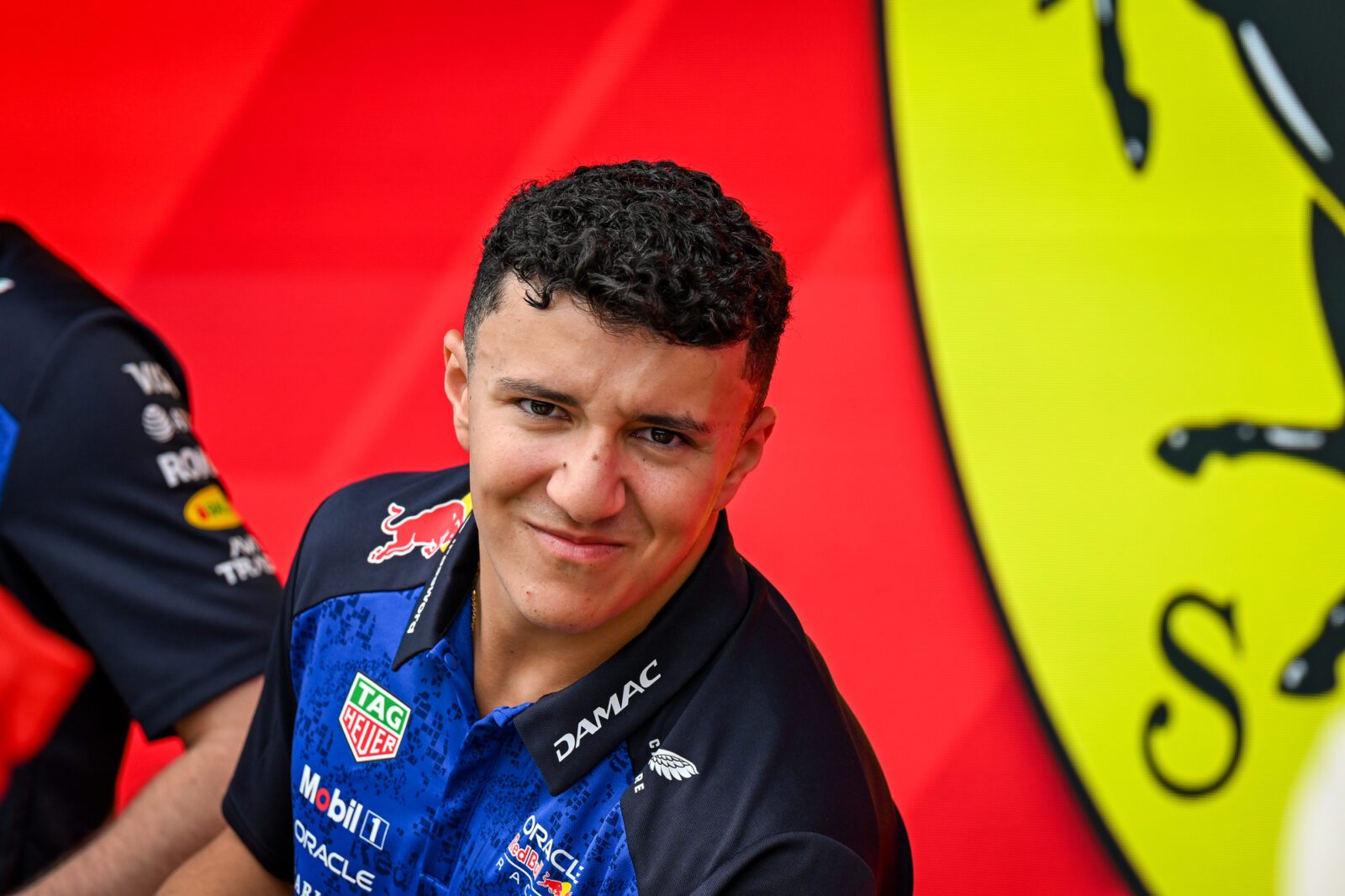
Isack Hadjar, a Red Bull driver, has stated that the upcoming Mexican Grand Prix is expected to be one of the most demanding weekends of the Formula 1 season. He predicts that virtually every component of the car will be severely tested due to the high altitude conditions.
“For the tyres, for the brakes, actually everything will go up in flames,” Hadjar stated. “Probably I myself in the car also.”
The Autódromo Hermanos Rodríguez circuit in Mexico City is situated over 2,200 meters above sea level, making it the highest track on the F1 calendar. This elevation results in a significant reduction in air density, approximately 20-25% lower than at sea level.
The thinner air directly impacts aerodynamic performance, reducing both downforce and drag. Teams are compelled to run maximum-downforce configurations, often comparable to those used at low-speed circuits like Monaco.
Despite these high-downforce setups, the cars still experience substantially lower actual downforce levels, leading to a notably slippery track surface. This lack of grip was a factor in previous Mexican Grand Prix events.
Cooling systems face extreme challenges due to the reduced air density. Managing temperatures for the power unit, brakes, and electrical components becomes considerably more difficult.
Teams typically address this by implementing larger brake scoops and more open bodywork designs, including additional shoulder louvres and increased space around the powertrain.
While modern turbocharged power units do not suffer the same power loss as older naturally aspirated engines at altitude, the turbocharger must work significantly harder to compress the thinner air.
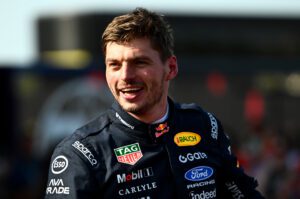
This increased demand on the turbo can lead to reliability concerns, often making the Mexican Grand Prix an attrition race. The 2026 power unit regulations further complicate the management of turbocharger boost and electrical energy deployment.
Cars are anticipated to operate near maximum electrical deployment throughout qualifying and the race, increasing the risk of inadequate torque infilling. Tyre performance is also affected, with high rear tyre temperatures and traction demands influencing degradation.
A two-stop strategy, utilizing medium and soft tyres, is currently projected, though track resurfacing introduces uncertainty regarding potential graining. Drivers themselves are also affected by the reduced oxygen, experiencing quicker fatigue.
Hadjar noted that he is not focusing on the performance of rival teams like Ferrari or Mercedes, acknowledging their competitiveness. His primary focus remains on Red Bull’s own preparation for the demanding weekend.
The Red Bull car has demonstrated strong performance across various circuit types in recent races, providing Hadjar with a degree of optimism. He has consistently been in contention for top-five finishes this season, securing a podium in Baku and a P3 qualifying in Austin.
Despite a throttle issue in Austin that led to a P6 finish and previous technical problems in Sepang and Singapore, Hadjar remains confident in the car’s underlying pace. He also mentioned concerns about turbo lag but has not specifically prepared for it in the simulator.
Hadjar indicated that if turbo lag becomes an issue during the event, the team will adapt to manage it. The overall conditions are expected to present a comprehensive test for all teams and drivers.