Formula 1’s financial regulations dictate a cost cap for teams, set at $215 million for the 2026 season, covering a maximum of 24 competitions. This figure, however, does not represent the total expenditure of a Formula 1 team, as numerous significant costs remain outside this regulated limit.
The actual annual cost of operating a top-tier Formula 1 team can range from approximately $140 million to over $450 million, depending on various factors including manufacturer support and driver contracts.
The introduction of financial regulations in 2021 aimed to foster a more competitive championship and ensure the long-term financial stability of all teams,
Moving away from an era of unregulated spending where richer teams held a significant advantage.
The Formula 1 cost cap in 2026
For the 2026 Formula 1 season, the cost cap is set at US$215 million for teams participating in 24 competitions or fewer. Should the calendar expand beyond 24 events, the cap increases by an additional US$1.8 million for each extra competition.
This figure marks a substantial increase from the initial cap of $145 million in 2021, which then decreased to $140 million in 2022 and $135 million for the 2023, 2024, and 2025 seasons.
What the cost cap includes
The Formula 1 cost cap primarily encompasses expenditures directly related to the performance and operation of the race car. This includes all research, development, and design work aimed at making the car faster and reducing lap times.
Manufacturing costs for new aerodynamic and performance parts, along with general car development, testing, and racing activities, also fall under the cap. Most team personnel salaries, excluding the three highest-paid individuals, are included within this limit.
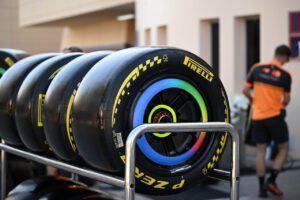

Furthermore, the cost cap covers all car components, ranging from the chassis to the smallest bolts, as well as garage tools, spare parts, and consumables. Essential operating elements such as fuel and lubricants, alongside freight and logistics for transporting the cars globally, are also accounted for.
A significant change for 2026 is the inclusion of annual depreciation costs, following the scrapping of the separate capital expenditure cap which was previously set at $36 million over a rolling four-year period.
Exclusions from the financial regulations
Despite the comprehensive nature of the cost cap, several major expenses are explicitly excluded from the $215 million limit. These exclusions are designed to allow teams operational flexibility and to reward key personnel.
Driver salaries and retainers are not counted towards the cap, nor are the salaries of the three highest-paid staff members within each team, which typically include the Team Principal and Chief Technical Officer.
Other excluded categories include marketing and hospitality costs, race travel expenses, and legal, HR, and finance activities. Costs associated with heritage car programmes, entry fees, FIA licenses, and property costs such as factory maintenance are also exempt.
Additionally, expenses related to non-Formula 1 or road car projects, employee benefits like medical cover and bonuses, and parental and sick leave payments are excluded. From 2026, catering costs at team factories and races, along with health and safety costs, have also been added to the list of exclusions.
A separate financial regime exists for power unit manufacturers, with its own cost cap. This power unit cap, which came into effect in 2023, will rise to $190 million in 2026 to cover the additional costs of manufacturing, supplying, and supporting the new generation of hybrid engines.
The true financial landscape of an F1 team
The $215 million cost cap for 2026 represents only a portion of a Formula 1 team’s total annual expenditure. When all excluded costs are factored in, the actual cost of running a competitive Formula 1 operation can range significantly, often exceeding $450 million annually.
Front-running teams, for instance, might report annual revenues between $350 million and $650 million, while midfield teams could operate with revenues between $160 million and $300 million. Lower-grid teams typically generate between $120 million and $200 million in revenue.
These figures highlight that the regulated cost cap is a limit on a specifically defined slice of spending, known as ‘Relevant Costs,’ rather than an all-encompassing budget for the entire racing business. The distinction is important for understanding the true economic scale of Formula 1 teams.
Evolution and enforcement of the cost cap
The increase of the cost cap to $215 million for 2026 is not indicative of teams being granted a larger spending allowance in real terms. Instead, it is largely a recalculation that accounts for cumulative inflation since 2021 and the integration of several previously excluded cost categories into the cap.
One significant change is the removal of the separate capital expenditure cap, with annual depreciation costs now falling within the main cost cap framework. Furthermore, the rules regarding personnel time allocation have been tightened; if any time is spent on Formula 1 projects, the associated costs are now treated as 100% F1-related.
The FIA continuously refines the financial regulations to prevent teams from exploiting ambiguities and loopholes. Historically, teams have explored creative accounting methods or leveraged affiliated companies and non-F1 divisions to indirectly benefit their Formula 1 operations.
To address these workarounds, the FIA has introduced stricter rules, including a new article for the 2027 season mandating strict physical and IT segregation between F1 and non-F1 activities. This requires teams to separate workspaces and IT systems, tightly control access to technical data, and manage shared facilities carefully.
Additionally, regional adjustments are made, such as the cost offset provided to Sauber (which becomes the Audi works team from 2026) to account for the higher living and salary expenses of operating from Switzerland.
Penalties for breaching the regulations
Adherence to the financial regulations is strictly monitored by a dedicated Cost Cap Administration. Breaches are categorized based on their severity, with different penalties applied accordingly.
A ‘procedural breach’ might involve administrative issues like late or inaccurate account submissions. A ‘minor overspend breach’ occurs when a team exceeds the cost cap by less than five percent of the total limit.
Exceeding the cap by five percent or more is classified as a ‘major’ or ‘material’ breach, carrying more severe consequences. Penalties can range from financial fines and points deductions in the Constructors’ or Drivers’ Championships to limits on aerodynamic testing.
In extreme cases of major overspend, teams could face exclusion from the championship. The FIA retains flexibility to judge each breach individually, ensuring that punishments are proportionate to the offense.