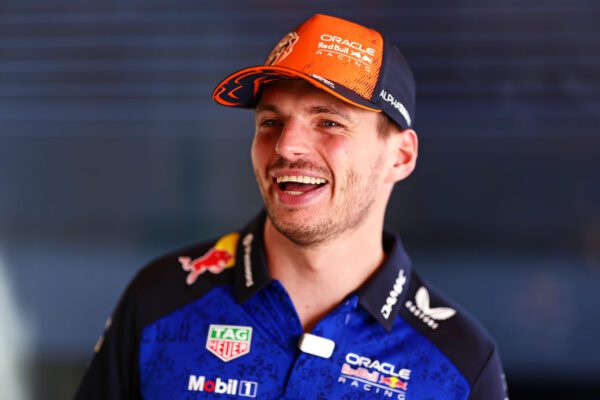
Formula 1 drivers operate at the absolute limits of human endurance, where the physical demands on their bodies are extraordinary. Among these, the strain on the neck muscles stands out as particularly intense, directly impacting performance and safety.
Drivers must possess exceptional neck strength to counteract the immense gravitational forces experienced throughout a Grand Prix.
This specialized physical conditioning is not merely about raw power but also about sustained endurance and precise control under extreme conditions. The ability to maintain a stable head position is important for clear vision and accurate decision-making at speeds exceeding 300 km/h.
The immense forces on a Formula 1 driver’s head
Formula 1 cars subject drivers to powerful G-forces in multiple directions: longitudinal during acceleration and braking, and lateral during cornering. These forces are multiples of Earth’s gravitational acceleration, making the driver’s head and helmet feel significantly heavier.
During heavy braking, drivers can experience between 5 and 6.5 Gs, which attempts to throw their bodies forward with tremendous force. Acceleration, while less intense, still pushes drivers back into their seats with 1.5 to 4 Gs.
The most significant and sustained G-forces occur during high-speed cornering, where lateral loads can reach 4 to 6.5 Gs. This sideways pull is relentless, occurring dozens of times per lap for the entire race duration.
A driver’s head and helmet combined weigh approximately 6.5 to 7 kilograms. Under 5 Gs of lateral force, this mass effectively multiplies to over 32.5 kilograms, and at 6 Gs, it can feel like 40 kilograms or more.
This immense load must be resisted by the neck muscles to keep the head upright and stable, ensuring the driver can see clearly and react precisely. Instantaneous vertical spikes from kerb strikes can also reach 25 Gs, adding further strain.

In extreme circumstances, such as crashes, drivers can endure far greater G-forces. Robert Kubica survived a 75 G impact in 2007, while David Purley endured an estimated 179.8 Gs in 1977.
| G-Force Type | Typical Range (G) | Peak Recorded (G) |
|---|---|---|
| Acceleration | 1.5 – 4 | 4 |
| Braking | 5 – 6.5 | 6.5 |
| Cornering (Lateral) | 4 – 6.5 | 6.5 |
| Kerb Strike (Vertical) | – | 25 |
| Crash Impact | – | 254 (Jules Bianchi, head) |
Specialized neck muscle training regimes
Formula 1 drivers follow highly specialized and rigorous training programs specifically designed to build and maintain their extraordinary neck strength. These routines are a non-negotiable aspect of their physical preparation.
Isometric neck exercises are fundamental, involving static holds against resistance from a wall or a resistance band. Drivers push their heads in front, back, and to both sides for 10-15 seconds per repetition, building static strength and endurance.
Dynamic neck strengthening involves using resistance bands or a neck harness with added weights to perform movements in all directions. This includes flexion, extension, and rotational resistance training, which improves both muscle mass and flexibility.
Many drivers utilize specialized neck devices and rigs, such as cable machines or pulley systems, to provide variable and multi-directional resistance. Weighted helmets are also commonly used to simulate the G-forces experienced during high-speed corners.
Training frequency is high, typically 3 to 5 times per week during the off-season to build foundational strength. During the demanding race season, this schedule is often adjusted to 2-3 maintenance sessions to prevent fatigue.
The focus of these workouts is not merely on lifting heavy weights but on developing sustained isometric tension and dynamic resistance. This ensures the driver can resist immense, unpredictable forces without failure for the duration of a race.
Anatomical adaptations and injury prevention
The human body, particularly the cervical spine and surrounding musculature, undergoes significant adaptations to cope with the repeated and intense G-forces in Formula 1. Drivers develop exceptionally thick and powerful neck muscles over years of targeted training.
This muscular armor is critical for maintaining head stability, which directly impacts a driver’s line of sight, balance, and ability to hit apexes perfectly. Without sufficient neck strength, vision would be compromised, and reaction times would suffer.
Beyond the neck, strong core muscles are equally important, providing a stable base for the upper body to brace against braking and cornering forces. Upper body and shoulder strength also support the neck and help maintain control of the steering wheel.
Recovery and nutrition are integral components of a driver’s regimen, supporting muscle repair and strengthening. Adequate rest, massage, stretching, and a diet rich in protein, omega-3 fatty acids, and antioxidants are crucial for sustained performance.
The evolution of driver fitness and safety
The physical fitness required for Formula 1 has evolved dramatically over the decades, moving from a more relaxed approach to one of elite athleticism. Modern F1 drivers are among the most conditioned athletes in global sport.
Pioneers like Michael Schumacher emphasized comprehensive cardio and strength training, setting new benchmarks for driver preparation in the 1990s. This focus recognized that fatigue directly leads to errors on track.
Safety advancements, such as the HANS (Head and Neck Support) device and the Halo cockpit protection system, have significantly improved driver protection in crashes. However, these devices do not eliminate the need for immense neck strength during normal racing conditions.
The HANS device, for instance, limits head movement in a frontal impact, but the neck muscles still bear the brunt of lateral and longitudinal G-forces during every corner and braking zone. The continuous evolution of car performance means the physical demands on drivers remain at the forefront.
Dedication to neck conditioning: driver examples
Many Formula 1 drivers are renowned for their exceptional neck strength, a sign of their relentless training. This dedication is visible in their physical stature and their consistent performance under pressure.
Former four-time world champion Sebastian Vettel, for example, worked extensively with performance coaches like Antti Kontsas, who highlighted the critical role of neck stability for precise driving. Kontsas emphasized that a stable head provides the brain with better information for decision-making.
Drivers like Oscar Piastri and Fernando Alonso are often cited for their visibly powerful neck muscles, showcasing the results of years of specialized conditioning. Their ability to withstand sustained G-forces lap after lap is a direct outcome of this training.
The commitment to neck training is a universal requirement across the grid, regardless of a driver’s individual physique. It is a fundamental aspect of their preparation, ensuring they can perform at their peak for the entire race distance.