Formula 1 is reportedly considering an engine development freeze from mid-2028, aligning with its planned shift to V8 power units in 2030. This proposal follows an agreement among manufacturers to accelerate the introduction of the next engine regulations, originally expected in 2031.
A key concern driving this discussion involves Cadillac and General Motors, whose future power unit programme might now operate on a different development schedule compared to established engine manufacturers. Cadillac joined Formula 1 in 2026, utilising customer Ferrari engines.
General Motors had initially intended to debut its own power unit in 2029. However, the accelerated timeline for the next regulations could enable the American manufacturer to bypass that interim V6 project. This would allow them to focus entirely on the engines planned for the 2030 season.
Existing manufacturers face an arduous development schedule. Mercedes, Ferrari, Honda, Audi, and Red Bull-Ford must maintain competitiveness under the current 2026–2029 engine regulations. Simultaneously, they are tasked with preparing the next generation of power units.
General Motors, however, could adopt an alternative strategy. If Cadillac continues to use Ferrari engines until the close of 2029, GM would gain greater flexibility. This would allow them to direct technical resources solely towards the V8 programme, without the burden of supporting a competitive current-generation engine.
This potential disparity has reportedly sparked concerns among the established manufacturers. A freeze commencing in mid-2028 would establish a unified point where development of the current power units effectively ceases. This would be subject only to permitted reliability modifications.
Manufacturers could then redirect their focus entirely to the 2030 regulations. This would eliminate the need for continued heavy spending on upgrades for engines nearing the end of their regulatory lifespan.
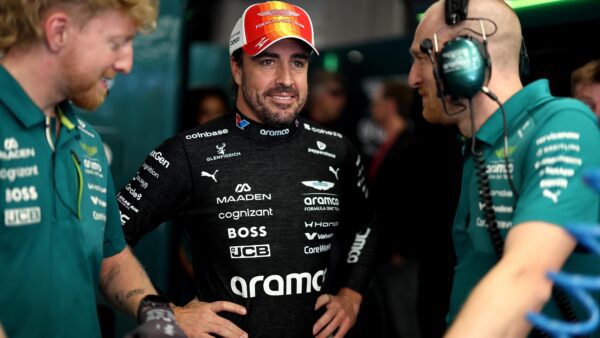
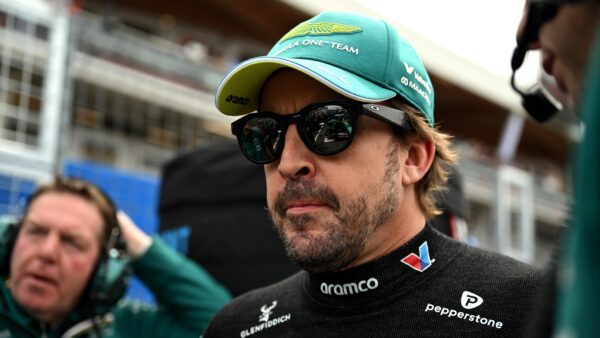
The proposed freeze could also carry significant implications for Honda. The Japanese manufacturer has reportedly encountered difficulties since its return as Aston Martin’s exclusive power unit supplier. Fernando Alonso has consistently highlighted straight-line performance as a primary weakness for the team.


Alonso recently estimated that Aston Martin loses over two seconds per lap on straights at specific circuits. His latest assessment of Honda’s power unit deficit underscores why a development freeze would be particularly sensitive for manufacturers still striving to close performance gaps.
Should Honda fail to recover sufficient performance by mid-2028, a freeze could severely limit its chances to enhance competitiveness before 2030. The proposed measure thus represents a challenging compromise. It balances protecting the next regulatory cycle with allowing manufacturers to improve under current rules.
Formula 1 previously introduced Additional Development and Upgrade Opportunities (ADUO) to aid manufacturers whose engines lagged behind the benchmark. This mechanism provides eligible suppliers with extra development chances following periodic performance assessments.
However, the proposed freeze could prematurely conclude the existing ADUO arrangements. This would particularly impact manufacturers who are currently relying on this mechanism to regain performance.
The FIA’s November assessment of engine competitiveness determined that Red Bull remained the benchmark for internal-combustion performance. They were the only manufacturer deemed ineligible for additional development under the catch-up system.
Any freeze would also necessitate specific rules covering reliability improvements, safety modifications, and permitted changes. These changes would be those that do not offer unrestricted performance gains.
This proposal follows the agreement to introduce new V8 engines in 2030, replacing the 1.6-litre V6 hybrids introduced in 2026. The FIA has indicated that these new regulations will prioritise combustion-engine performance. They will also reduce dependence on electrical energy deployment.
FIA president Mohammed Ben Sulayem welcomed the decision, stating:
“Our vision is clear, lighter, simpler and more affordable cars that put driver skill at the heart of the competition.”
The proposed technical framework includes a significantly reduced electrical contribution. It also places renewed emphasis on the distinctive sound and character associated with V8 engines.
Formula 1 has also been considering limits on the number of teams each manufacturer can supply. This is another issue that could influence the competitive balance from 2030. The complete regulations are not anticipated to be finalised before mid-2027.
While a freeze is under consideration, its proposed implementation date and detailed rules have not yet received formal approval. General Motors could concentrate on developing its 2030 V8 while Cadillac continues with Ferrari engines. This potentially grants them a longer development period than rival manufacturers. Honda is still striving to recover performance with Aston Martin, and an early freeze would diminish the time available for further upgrades.