


The Losail International Circuit, often referred to as Losail, stands as a prominent motorsport venue situated just north of Doha, Qatar. This purpose-built facility has quickly established itself on the Formula 1 calendar, offering a unique challenge under the desert night sky.
Its inclusion in the premier single-seater championship has added a distinctive Middle Eastern flavour, complementing other regional events with its high-speed, flowing characteristics.
Circuit layout and technical characteristics
The Losail International Circuit spans 5.419 kilometres and features 16 corners, comprising six left-handers and ten right-handers. The track runs in a clockwise direction, presenting a demanding sequence of turns that reward precision and aerodynamic efficiency.
A defining feature of the circuit is its exceptionally long main straight, stretching for 1.068 kilometres. This extensive straight provides a significant overtaking opportunity into Turn 1, allowing Formula 1 cars to reach very high top speeds before heavy braking.
Designed primarily for motorcycle racing, the circuit boasts a relatively flat layout with minimal elevation changes, approximately four meters from its highest to lowest point. This characteristic places a greater emphasis on mechanical grip and aerodynamic balance, as drivers cannot rely on significant vertical forces to aid cornering.
The circuit’s asphalt surface, combined with the surrounding artificial grass designed to prevent sand encroachment, contributes to a unique grip profile. Drivers must contend with evolving track conditions, particularly as rubber is laid down and temperatures fluctuate during the night sessions.
The qatar Grand Prix: a brief Formula 1 history
The Qatar Grand Prix made its Formula 1 debut on November 21, 2021, stepping in as a late addition to the calendar following the cancellation of the Australian Grand Prix. Lewis Hamilton secured victory in this inaugural event, marking a significant moment in the championship battle of that season.
After a one-year absence in 2022 due to the FIFA World Cup hosted in Qatar, the Grand Prix returned to the calendar in 2023 under a new ten-year contract. This re-establishment solidified Losail’s place as a long-term fixture in Formula 1, becoming the fourth full-night race on the schedule.
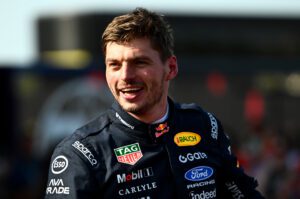
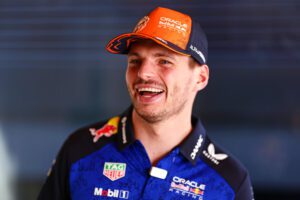
The 2023 return also saw the introduction of the sprint race format to the Qatar Grand Prix weekend, adding an extra layer of competition. Oscar Piastri claimed his maiden Formula 1 sprint victory at this event, while Max Verstappen famously clinched his third World Drivers’ Championship title during the Saturday sprint race.
Max Verstappen has emerged as the most successful driver at Losail, securing three Grand Prix victories in 2023, 2024, and 2025. His dominance underscores the circuit’s demanding nature and the importance of a well-balanced car setup for consistent performance.
Key circuit specifications and records
The Losail International Circuit presents a unique set of specifications that define its racing character and challenges for Formula 1 teams and drivers.
| Specification | Detail |
|---|---|
| Circuit Length | 5.419 km |
| Number of Corners | 16 (6 left, 10 right) |
| Race Distance | 308.883 km |
| Race Laps | 57 |
| Longest Straight | 1.068 km |
| Elevation Change | Approximately 4 meters |
| Lap Record | 1:22.384 (Lando Norris, McLaren MCL38, 2024) |
| Pole Position Record | 1:19.387 (Oscar Piastri) |
The high-speed nature of Losail’s corners places immense stress on the tires, leading to significant degradation. This characteristic prompted the FIA to introduce mandated tire limits, with drivers restricted to a maximum of 18 laps per tire set in 2023 and 25 laps in 2025.
Unique challenges and strategic considerations
Racing under floodlights at Losail introduces several unique challenges, including managing the intense heat and humidity of the Qatari desert. These conditions place considerable physical demands on drivers and test the cooling systems of the Formula 1 cars.
The desert environment also means that sand can be blown onto the track, affecting grip levels and contributing to track evolution throughout the weekend. Teams must constantly adapt their car setups to account for these changing surface conditions.
Strategically, the long main straight and the heavy braking zone into Turn 1 remain the primary overtaking opportunity. A strong exit from the preceding Turn 16 is important for maximizing speed and slipstream potential down the straight, setting up a pass.
Tire management is a critical factor in race strategy, especially given the high degradation rates and the FIA’s mandated lap limits per tire set. Teams often opt for multi-stop strategies to maintain optimal tire performance and manage wear effectively.