




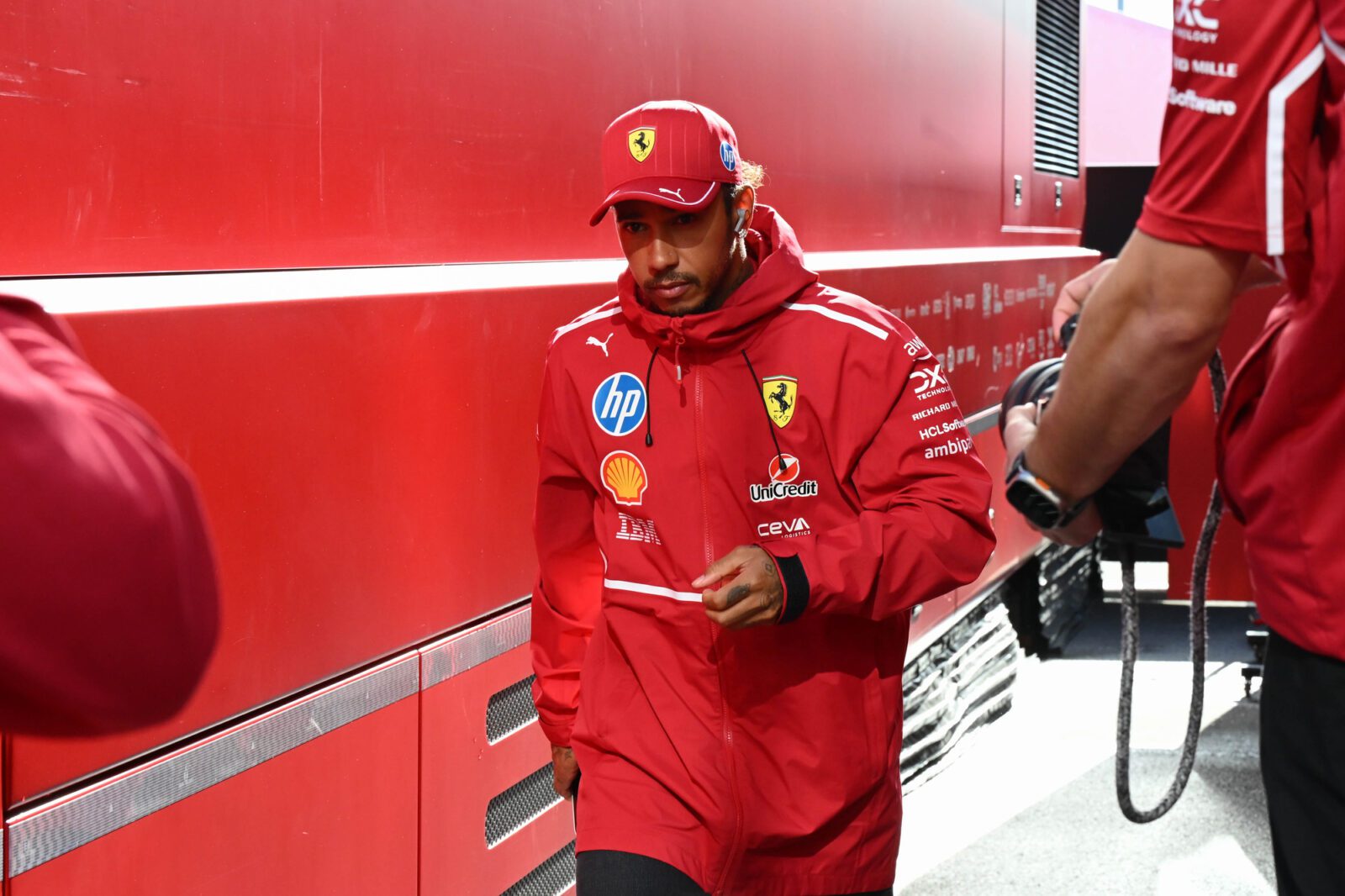
Lewis Hamilton’s initial surge at the 2026 Brazilian Grand Prix, where he gained 11 positions on the opening lap, ultimately yielded a ninth-place finish. McLaren driver Lando Norris secured the victory at Interlagos, with Max Verstappen of Red Bull finishing second and his teammate Isack Hadjar completing the podium.
Hamilton started the race from 20th position on the grid following a complete power unit replacement after issues emerged during Friday and Saturday practice sessions. This escalated from an initial 10-place penalty for exceeding his internal combustion engine allocation.
Ferrari teammate Charles Leclerc also incurred a 10-place grid penalty for similar power unit component changes, starting the race from 14th. Both Hamilton and Verstappen demonstrated strong wet-weather driving on the opening lap, rapidly generating rear-tyre grip.
Telemetry data revealed a significant drop in Hamilton’s pace after his strong start. During the intermediate tyre stint, he ran an average of 2.8 seconds per lap slower than Verstappen.
Hamilton confirmed that his rear tyres ‘ballooned and overheated’ during the initial intermediate stint, compromising his performance. This issue was particularly evident on the exits of Turns 3 and 5, where throttle application was more tentative.
The underlying conclusion from the data indicated that Hamilton overworked his rear tyres on the opening lap while attempting to gain positions. Once the thermal threshold is exceeded on intermediate rubber in wet conditions, performance declines rapidly.
Ferrari’s SF-26 demonstrated struggles throughout the Brazilian Grand Prix weekend. Charles Leclerc described Friday’s practice as his ‘worst feeling behind the wheel of the season.’
The car exhibited difficulties in cornering, an area where Ferrari typically performs well, and continued to lose time on the straights. Team principal Fred Vasseur acknowledged the need for significant work on the car’s balance.


In an aggressive strategic move, Hamilton pitted early for soft tyres as the circuit began to dry. However, this switch did not deliver the anticipated performance dividend.
Hamilton’s pace on the soft compound remained sluggish, and he became trapped behind Arvid Lindblad’s Racing Bulls for an extended period. He eventually executed an overtake on Lap 29.
A further setback occurred when Hamilton spun up the hill, making contact with a barrier with the rear wing of his SF-26. He attributed this to a communication error regarding changing rain conditions in the first sector.
Hamilton stated, ‘I didn’t hear that it was raining more in the first sector, and I passed the pit lane, got to Turn 1 and it was wet, so that unfortunately lost us a couple of places.’
The Ferrari power unit’s deficit, estimated at approximately 20 horsepower compared to leading rivals, contributed to the car’s struggles on Interlagos’s long start-finish straight.
Hamilton’s ninth-place finish, a lap down on the winner, marked his 400th Grand Prix start. Ferrari concluded the weekend as the slowest of the top four constructors.
Mercedes secured the 2026 Constructors’ Championship at the Brazilian Grand Prix, with Kimi Antonelli currently leading the Drivers’ Championship standings.