




Modern Formula 1 cars are sophisticated machines, acting as mobile data centers that generate an extraordinary volume of information during every session. This constant stream of data is fundamental to understanding car performance, driver input, and track conditions, enabling teams to make critical decisions in real time.
The sheer scale of data collection underscores the sport’s reliance on advanced technology to gain a competitive edge.
Each F1 car is equipped with a vast network of sensors, meticulously placed to monitor every conceivable parameter. These sensors are the eyes and ears of the engineering team, providing a continuous flow of telemetry that is important for both immediate adjustments and long-term development.
The sensor network: eyes and ears of the car
A contemporary Formula 1 car typically carries between 250 and 300 sensors, though some sources suggest up to 500 IoT devices are connected to the vehicle. These sensors are integrated into virtually every system, from the power unit and chassis to the suspension and driver controls.
They are designed to capture a wide array of physical quantities and operational states.
The types of sensors vary significantly, including temperature sensors for tires, brakes, and engine components, as well as pressure sensors for tires, fuel, and hydraulic systems. Accelerometers measure G-forces experienced by both the car and the driver, while speed and acceleration sensors track the car’s movement.
Dual-axis sensors provide data on braking and steering inputs, offering detailed insights into driver behavior.
Instrumentation sensors monitor parameters like fuel flow, while monitoring sensors report on the overall health of the car’s various systems. Control sensors translate driver inputs, such as throttle position and brake pressure, into car outputs.

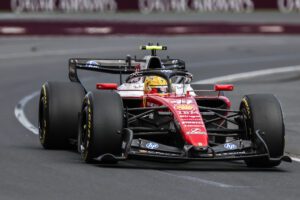
This comprehensive network ensures that no detail of the car’s performance or environment goes unrecorded.
Telemetry’s torrent: data volume and velocity
The volume of data generated by an F1 car is staggering, reflecting the high-frequency sampling rates of its numerous sensors. Each car can generate an astounding 1.1 million telemetry data points every second.
This continuous torrent of information is comparable to streaming a high-definition film in terms of data density.
During a single lap, the live telemetry data transmitted from the car can amount to approximately 30 megabytes. When considering all data, including post-processing and higher-resolution logging, a single lap can generate roughly 1.5 gigabytes of data.
This massive output highlights the intensity of data acquisition in Formula 1.
Over an entire Grand Prix weekend, which includes practice, qualifying, and the race, a single Formula 1 car can produce between 1 to 1.5 terabytes of data. Some estimates suggest this figure can reach 4 terabytes per car, with telemetry alone accounting for around 8 terabytes over a full weekend.
Teams like Mercedes have reportedly processed as much as 11 terabytes of data per car during a race weekend, showcasing the immense scale of information handled.
Across all cars on the grid, and including data from other departments, a Formula 1 team might process between 40 to 50 terabytes of data per week. The entire F1 operation, encompassing all teams and broadcast, can process approximately 160 terabytes of data during a single Grand Prix weekend.
This volume is equivalent to filling 800 million pages of text, illustrating the sheer magnitude of digital information.
| Metric | Value |
|---|---|
| Number of Sensors per Car | 250-300 (up to 500 IoT devices) |
| Telemetry Data Points per Second | 1.1 million |
| Live Telemetry Data per Lap | ~30 megabytes |
| Total Data per Lap (including logging) | ~1.5 gigabytes |
| Total Data per Car per Race Weekend | 1-1.5 terabytes (up to 4-8 TB for telemetry alone) |
| Total Data Processed by F1 (per weekend) | ~160 terabytes |
Real-time transmission and analysis
The data generated by an F1 car is not merely logged; it is transmitted in real time from the car to the pit wall and remote operations centers. This real-time telemetry relies on sophisticated radio frequency (RF) and microwave links, ensuring that engineers have immediate access to crucial information.
The transmission speed is paramount, with many parameters sampled and sent at up to 1,000 times per second.
While data transmission latency is typically in the low milliseconds for insight delivery, it can vary depending on the circuit’s location and network infrastructure, sometimes reaching 300-400 milliseconds in distant venues. Upon arrival, the data is synchronized, encrypted, and fed into advanced software systems like McLaren Applied’s ATLAS, which allows engineers to analyze and review the information instantly.
This immediate feedback loop is important for making split-second decisions during a race.
Strategic advantage: how data drives decisions
The primary purpose of collecting such vast amounts of data is to gain a competitive advantage through informed decision-making. Engineers use telemetry to monitor the car’s health, predict potential mechanical failures, and evaluate driver performance through every corner.
This allows for proactive adjustments to car settings and strategic planning.
Data analysis informs critical race strategies, including optimal pit stop timing, tire compound selection, and fuel management. By overlaying sensor data with competitor information, teams can compare racing lines and identify areas for improvement.
Driver behavior metrics, such as throttle application and braking patterns, provide quantifiable feedback to help drivers refine their technique.
Beyond immediate race management, data is extensively used for predictive analytics and simulations. Machine learning models, trained on historical race data, real-time weather inputs, and driver behavior, help teams simulate various race scenarios and opponent strategies.
This allows for flexible strategies that can adapt to unfolding events on track.
The digital brain: onboard systems and cloud power
At the heart of the car’s data management is the Standard Electronic Control Unit (SECU), mandated by the FIA since 2008. This powerful, small computer acts as the core data storage unit, responsible for processing and transmitting data from the car.
The SECU synchronizes every channel, logs the full dataset, and manages the live telemetry transmission, effectively acting as the car’s digital brain.
Once the data leaves the car, it enters a sophisticated ecosystem of cloud computing and advanced analytics. F1 teams leverage partnerships with major cloud providers like Oracle (Red Bull Racing), Google Cloud (McLaren), and AWS (Mercedes) to handle the immense processing power required.
These cloud platforms enable engineers, both trackside and at the factory, to collaborate on analysis and run thousands of complex simulations in real time.
Specialist software, such as SAP HANA, allows engineers to quickly search through vast historical datasets to find specific information relevant to current performance challenges. This integration of onboard systems with powerful cloud infrastructure ensures that every byte of data is utilized to its fullest potential, driving continuous development and optimizing race performance.
The relentless pursuit of performance in Formula 1 is inextricably linked to the collection and analysis of data. From hundreds of sensors on each car generating millions of data points per second to the terabytes processed over a race weekend, information is the lifeblood of the sport.
This data empowers teams to make informed decisions, refine strategies, and push the boundaries of automotive engineering, ensuring that success is crafted not just on the asphalt, but also in the digital realm.