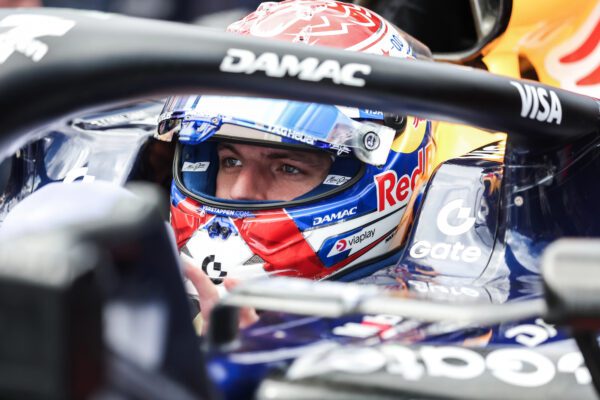



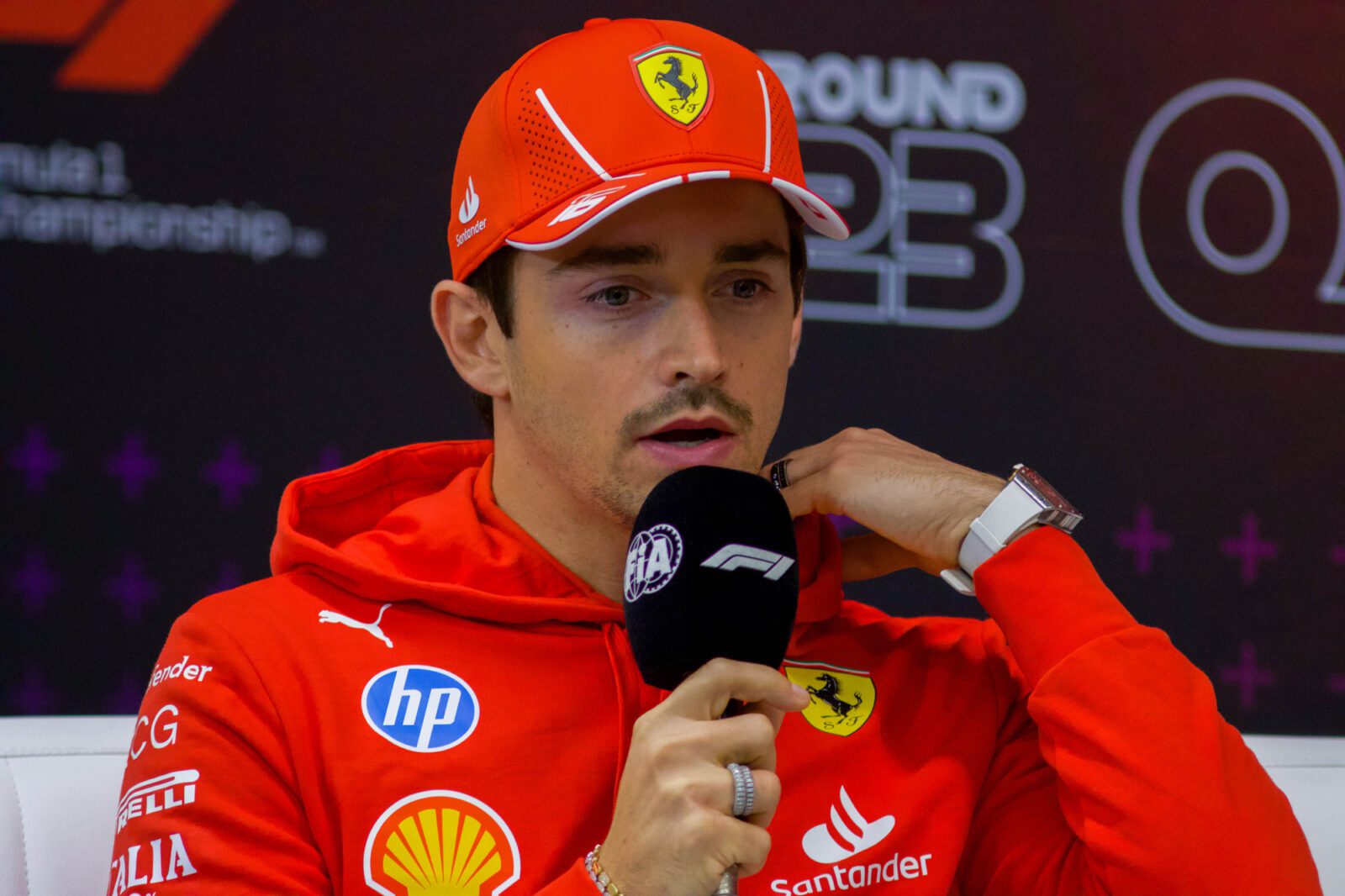
Ferrari’s internal tensions dramatically escalated at the 2026 Las Vegas Grand Prix after Charles Leclerc collided with teammate Lewis Hamilton, prompting a notably severe public reprimand from team principal Frédéric Vasseur. This incident followed previous clashes between the two drivers in Mexico City, which had led to a meeting with Vasseur before the São Paulo Grand Prix. However, those discussions failed to prevent another costly incident in Nevada.
Leclerc hit Hamilton at Turn 7 while they were battling for sixth position. Hamilton spun and dropped to tenth before ultimately recovering to finish seventh. Leclerc crossed the line in sixth but was demoted to tenth after receiving a 10-second penalty. The FIA stewards deemed Leclerc wholly responsible for the collision, concluding that he had attempted the move from too far behind and had not established the required position alongside his teammate.
“It’s unacceptable. It’s a lack of respect for the team, for the sponsors.”
Vasseur made little effort to conceal his anger after the race, stating, “It’s unacceptable. It’s a lack of respect for the team, for the sponsors.” The Frenchman highlighted that Ferrari had already addressed the behaviour of its drivers following their earlier confrontation in Mexico. Vasseur explained, “We passed the message to Charles during the race to think about the team when he was fighting.”
According to the Ferrari team principal, the unique racing conditions in Las Vegas made it impossible to simply order one driver to remain behind the other, as slowing down would expose the car to attacks from rivals benefiting from the slipstream. Nevertheless, Vasseur insisted there was a fundamental difference between competitive racing and taking unnecessary risks against a teammate. He contrasted Ferrari’s inability to manage the situation with the exchanges between Mercedes, McLaren, and Red Bull drivers, who repeatedly overtook each other without causing a comparable collision.
Vasseur’s criticism was directed not merely at the lost points, but at the repeated failure to respect the team’s interests. The tension between Leclerc and Hamilton was evident well before the accident. Leclerc complained over the radio about Hamilton’s defending, warning that the situation could end badly. Hamilton, who was attempting to catch the cars ahead, asked Ferrari to tell Leclerc to back off.
Ferrari subsequently instructed Leclerc to consider the team’s interests when fighting his teammate. However, on lap 37, as Hamilton attempted to challenge a McLaren, Leclerc closed from behind and launched an attack on the inside of Turn 7, leading to the collision and Hamilton’s spin. The FIA determined that Leclerc had not earned the right to the corner and imposed the 10-second penalty.
The collision was particularly damaging because Ferrari’s race pace had been significantly stronger than its qualifying performance suggested. Both drivers had been eliminated in Q2, but Hamilton had recovered through the field and believed he had the speed to challenge for the podium. Hamilton’s afternoon had already been complicated by a separate 10-second penalty for leaving the circuit and gaining an advantage during a battle with Lando Norris, a punishment the seven-time world champion considered excessive, arguing he had taken evasive action.
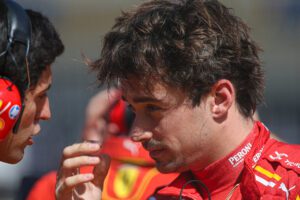
Even after serving that initial penalty, Hamilton recovered strongly before the collision with Leclerc ended his hopes of a significantly better result. Hamilton commented, “I really thought today we could have had a podium.” When asked about the situation with his teammate, the Briton declined to elaborate, replying, “That’s for Ferrari to decide,” and adding, “Obviously, I’ve done all I can, and I’ve said everything and more.” His comments placed responsibility squarely on Ferrari’s management to resolve the recurring tensions.
Leclerc offered no formal challenge to the stewards’ decision, stating, “I’ll accept the blame for whatever comes with this incident.” He explained that he believed there was enough space to attack Hamilton on the inside but accepted that the gap disappeared as the two cars approached the corner. The Monegasque acknowledged the consequences for the team, saying, “I just felt quite embarrassed for the team in general.”
Vasseur was not satisfied with another apology, revealing that he had summoned Leclerc for a conversation immediately after the race and intended to revisit the matter. Vasseur emphatically stated, “No, it was not a discussion – I spoke!” This frustration reflected a broader pattern of incidents involving Ferrari teammates, including clashes in Mexico and Monza earlier in the season. The final classification showed how significantly Ferrari’s afternoon had deteriorated, with the team emerging with points but neither a podium nor any convincing evidence that the internal tensions had been resolved. Ferrari’s next opportunity comes at the Qatar Grand Prix, scheduled for November 27–29.