


Formula 1 teams and tyre supplier Pirelli are currently in a dispute regarding the mandated 27-lap stint length for the Qatar Grand Prix. This restriction was imposed after tyres exhibited 100% wear rates during initial running. Pirelli had already limited each tyre set to 27 laps for safety at the high-speed Lusail circuit, an increase from the 25-lap limit in 2025.
After Friday practice at Lusail, Pirelli identified that certain tyres, specifically the left-fronts, displayed 100% wear after only 15 laps during high-fuel race simulations. The Italian manufacturer also noted gravel cuts on the tyres. While higher tyre pressure could offer protection, no adjustments were made for Saturday’s practice or qualifying sessions.
Teams did not approach the 27-lap stint limit during practice due to the severe wear. However, they might be compelled to extend stints to high-wear levels to avoid an additional third pit stop in the 57-lap race. The current rule already mandates a minimum two-stopper, with an estimated pit-loss of 26 seconds.
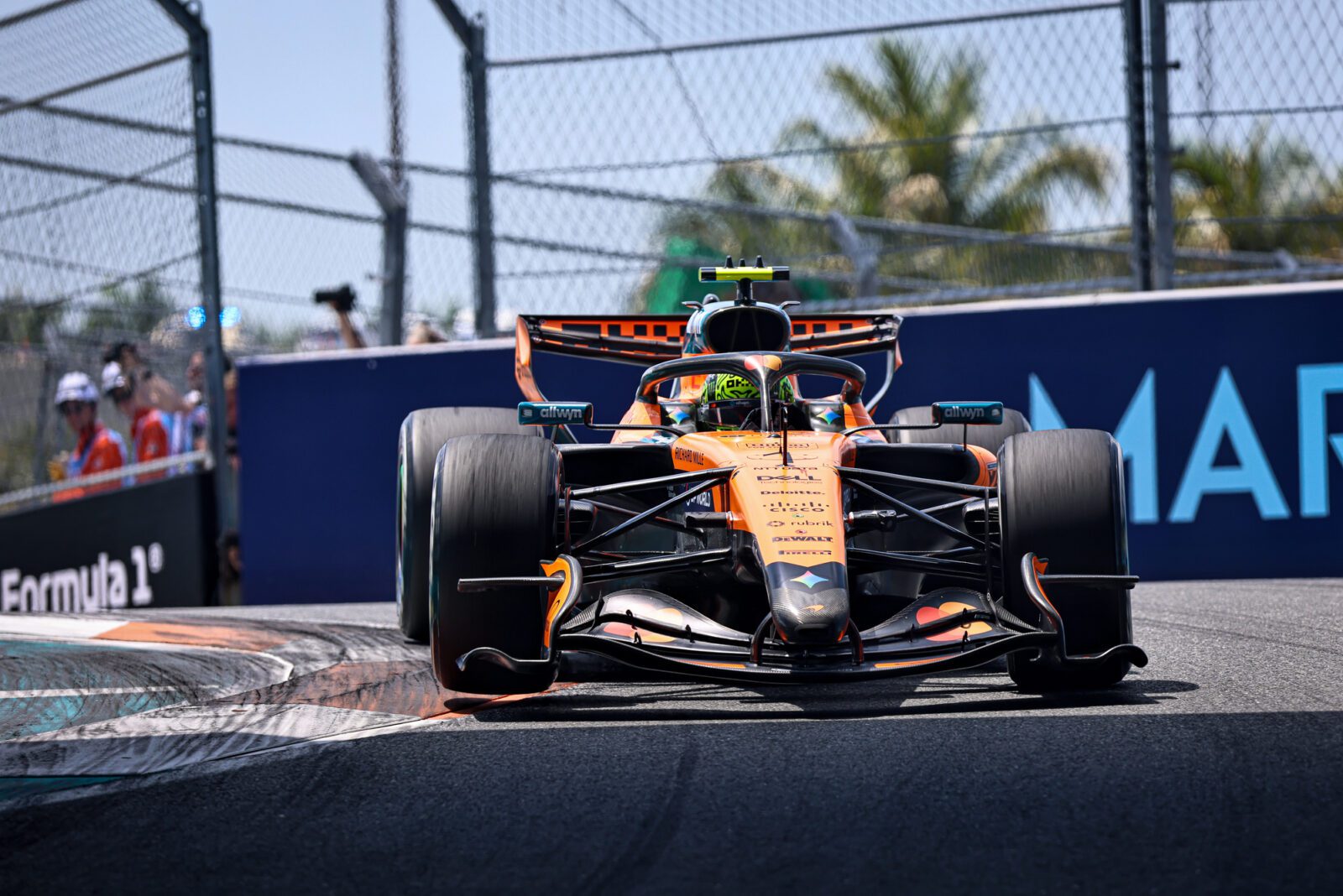
Several teams have reportedly discussed reducing the 27-lap stint length with Pirelli, but the manufacturer remains firm on its pre-weekend directives. McLaren team principal Andrea Stella expressed a desire for “clear guidance” from Pirelli regarding optimal tyre usage.
“What’s interesting is that, relatively early in the stint, and this will be independent of the compound in my view, there will be a very high level of wear, and the tyres will be operating without much rubber left, even though it is only locally,” Stella explained to the media.
Stella further elaborated that “there is a band on the inner side of the tyre that will be left with not much rubber at all after a number of laps, which is a shorter distance than the tyre lap limit that was imposed for structural reasons.” He highlighted that unlike other circuits where lap time degrades with rubber loss, Qatar allows decent lap times even with worn tyres, incentivising teams to stay out for strategic reasons.
This means operating tyres “slightly off the designed condition” due to minimal rubber remaining. Stella emphasised this as “an important technical aspect that we are discussing with Pirelli, and we are inviting them to offer clear guidance on how teams should approach this.”
He confirmed that during practice, no team ran to the tyre lap limit, either for structural concerns or due to lap time degradation. Pirelli’s stance, however, suggests teams must manage the situation themselves, asserting “no reason” to shorten the 27-lap stints.

Pirelli motorsport director Dario Marrasfuschi explained: “The Pirelli position is that the lap limitation is due to the structural characteristics, and there is no reason to reduce the lap limitation.” Marrasfuschi likened it to “exactly the same situation as another race where you cannot do the whole race when you don’t have the lap limitation, and it needs to be managed.”
He views it as a “tool for competitiveness” for teams, where those who manage well can utilise the full 27 laps, while others will face an extra pit stop. The majority of 100% wear rates observed after Friday’s sessions were on the outer shoulder wall of the tyres.
Marrasfuschi assured that this wear would not “propagate” across the tyre. However, he acknowledged that a more worn tyre would be more vulnerable to punctures from gravel cuts or kerb strikes. He stated: “If you run on 100% wear, then on one localised part, this wear will not propagate across the tread wall.”
Marrasfuschi continued: “If the tyre is worn out, gravel is more effective for a potential air loss than a new tyre, and the same for the kerbs, so they are not a problem in general.” He added that “if the tyre is completely worn out, the impact is much more effective,” but he would “not light any alarm in this respect.”
Pirelli reviewed all data and confirmed no issues with the tyre’s construction or structure. Marrasfuschi confirmed “visually high wear, especially on the outer shoulder,” which “needs to be managed during the race.”
He clarified this is “not news” as “we have had other races where the wear was particularly high.” He referenced Alpine’s performance in Madrid, where they ran “all the race but one lap on one set of tyres, and the wear was actually very high, 100% to be clear.”
He concluded that “managing the wear is not something new for Pirelli or the teams.” Pirelli intends to “provide indications to every team based on the car balance, the driving style, the downforce level and the vehicle package characteristics,” and will be “available for any evaluation during the race to help teams make the best choice.”
Andrea Stella denied that teams were pressuring Pirelli when questioned about his disappointment with Pirelli’s ‘figure it out yourself’ approach and whether he would continue to push for changes before the race. He clarified that formation laps, laps to the grid, or post-race cooldown laps would not count towards the 27-lap limit.
Stella stated: “For clarity, we are not pushing Pirelli.” He added: “We do not have the information or the technical competence. We respect that the tyres are their product, managed together with the FIA.”
Instead, teams are “just asking Pirelli to set clear guidelines for operating tyres that will be presenting some very high wear locally, while the lap time may somehow be such that you can strategically decide to stay out.” Stella explained that when operating an F1 car, “you define limits, specifications and boundaries in which you operate the car, you normally add some measurements.”
This allows for quantitative information to make decisions. However, with tyres, “we do not have the luxury of the same sort of detailed information to say: ‘We see this, we make this decision.’” He concluded: “Because we are not the experts, we just ask Pirelli to offer clear guidelines to the teams, to give us some criteria to decide their strategy.”