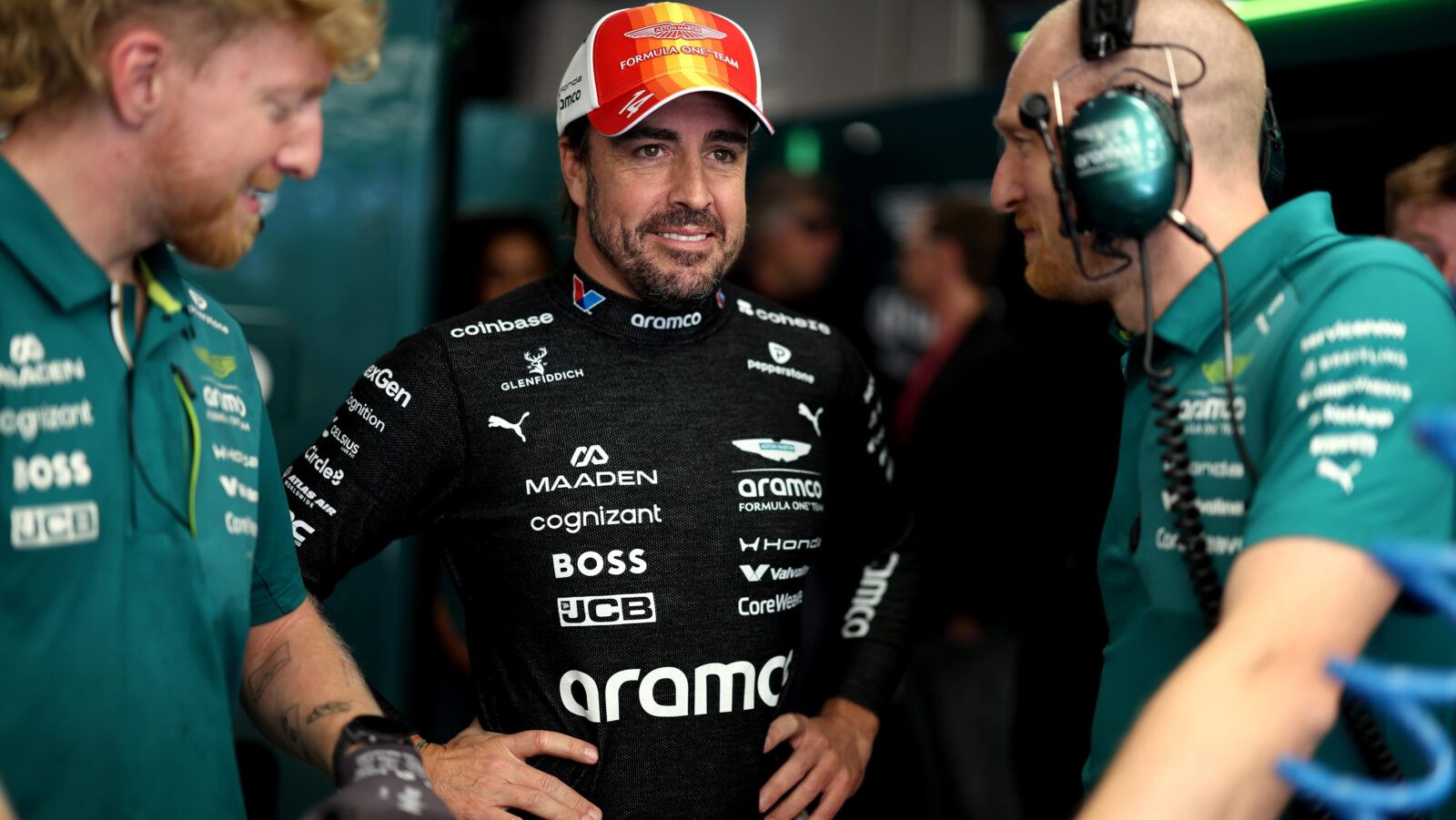
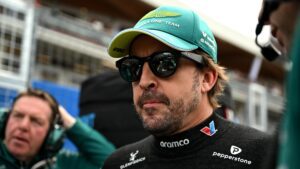
Fernando Alonso retired on the final lap of the Las Vegas Grand Prix, claiming his engine was “broken” and had been “down” throughout the race. The Aston Martin driver reported losing significant time, up to three seconds on the straights, compared to both rivals and teammate Lance Stroll.
This dramatic retirement marked a low point in what Alonso described as the Aston Martin-Honda partnership’s “worst” race of 2026. He had been circulating at the back of the power-sensitive Las Vegas Strip Circuit, ultimately pulling into the pits instead of taking the chequered flag.
However, Honda has contradicted Alonso’s assessment, with chief engineer Shintaro Orihara revealing no issues were found with the power unit. Orihara stated that initial data checks and subsequent physical inspections of the AMR26’s powertrain showed no anomalies.
Despite Alonso’s firm belief that his engine “completely gave up” in the final two laps, Honda’s thorough analysis has yet to yield supporting evidence. Orihara confirmed this to the media, explaining the ongoing investigation into the matter.
“We have checked all the data we have now, and also in the maintenance, we also checked the engine physically. At this moment, we haven’t found any issues with the engine from the data or from the maintenance.”
Orihara emphasised that Honda would continue to value Alonso’s feedback, even as the two parties remain at odds over the precise reason for the retirement. He reiterated the importance of driver input for their development process.
The Honda chief engineer added, “We carefully analysed his comments, and we also respect his comments. That’s why we checked all the data, and we also checked the engine condition.” Honda plans further checks on Friday to gather more feedback from Alonso.
Orihara suggested that the overall lack of competitiveness from their 2026 power unit, particularly exacerbated on the 1.9-kilometre back straight in Las Vegas, might have influenced Alonso’s perception of an engine problem.
He noted that “our engine performance is not enough to give confidence to driver, and then probably they feel some feeling of engine performance is not great.” This hints at a potential psychological factor stemming from performance deficits.
Honda had introduced countermeasures in Las Vegas to prevent a recurrence of the battery failure that affected Lance Stroll’s race in Brazil. Orihara confirmed the team completed almost full race distance without that specific issue.
He also disclosed that another minor revision to improve battery reliability might be introduced at the final round in Abu Dhabi. This ongoing development aims to bolster the power unit’s robustness.
Looking ahead, Honda has significant plans for a complete overhaul of its internal structure for 2027. Orihara stated, “we have plans to update our inside structure to improve our reliability,” targeting a substantial improvement in the power unit’s long-term performance.